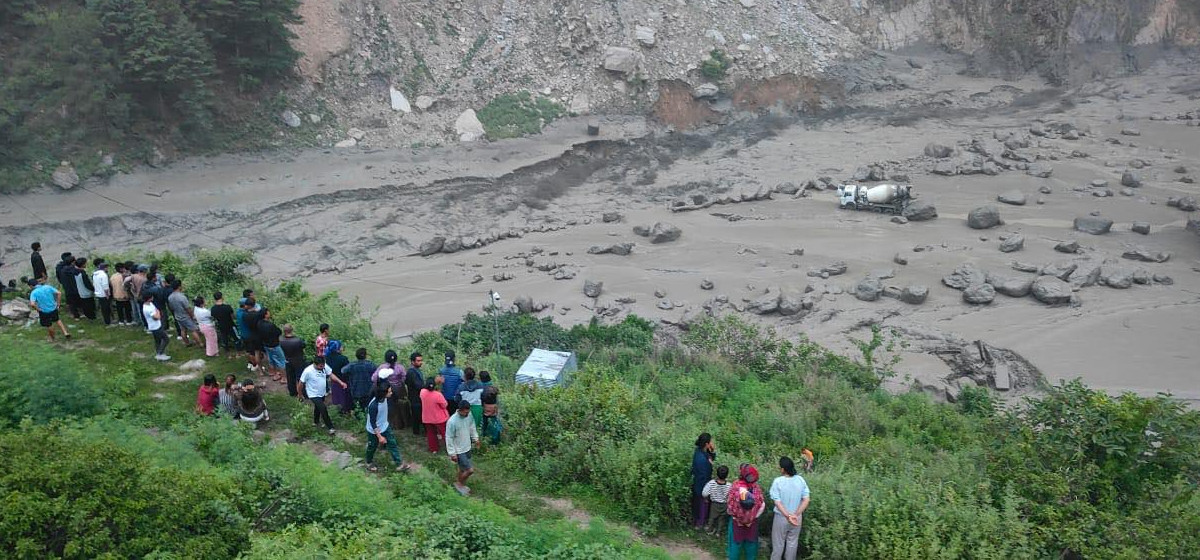
While decision-makers in Kathmandu busy themselves discussing the foreign minister’s latest prank and speculating its diplomatic and political fallout, a seasonal calamity that ravages many parts of Tarai has failed to elicit the kind of national response it deserves. Dozens have lost their lives in the country’s southern flatlands since monsoon set in. Houses have been demolished and hundreds of families displaced by floods in Kanchanpur, Kailali, Siraha and Jhapa, among other districts. The monsoon that arrived with vengeance after a particularly long dry spell this year has inundated vast swathes of cultivated farmland destroying crops. Landslides have blocked highways in several parts of the country disrupting supply of essentials to the flood-hit villages.
So far, rescue and relief effort from the government has hardly matched the extent of the calamity. While people are fighting for life everyday faced with unforgiving nature, there is total absence of coordinated rescue effort, let alone distribution of relief supplies. The best response that has been reported so far is the distribution of some packets of biscuits and chocolates to families rendered homeless by floods in Kanchanpur. This speaks volumes about how seriously authorities are taking the calamity.
Floods occur every year in the flatlands. But this doesn’t mean they can be taken lightly. The government has a full-fledged department to deal with water-induced disasters. But 18 years after coming into existence, the Department of Water Induced Disaster Prevention still has the most basic of tasks at hand – living up to its name and purpose. Rather than limiting itself to the task of preparing reports about how many people lose their lives in floods in a particular year, the department must prove its relevance by coming up with concrete projects of resettling people from flood-prone areas and adopting flood mitigation measures in settlements near major rivers. Also, it should come up with strict policies to stop deforestation so that the risk of landslip is reduced.
More urgently, Kathmandu must extricate itself from its fixation with politics and concentrate on saving people’s lives. A coordinated effort must be immediately launched to send teams promptly to flood-hit villages, evacuate villagers, accommodate them and provide them with safe food and drinking water. With floods come water-induced diseases. Providing safe water to people living in flood-hit areas is essential to prevent another epidemic at a time when people are still losing their lives to an easily curable ailment like diarrhea in western Nepal.
Related story
UN climate summit runs overtime as fury mounts on fossil fuels