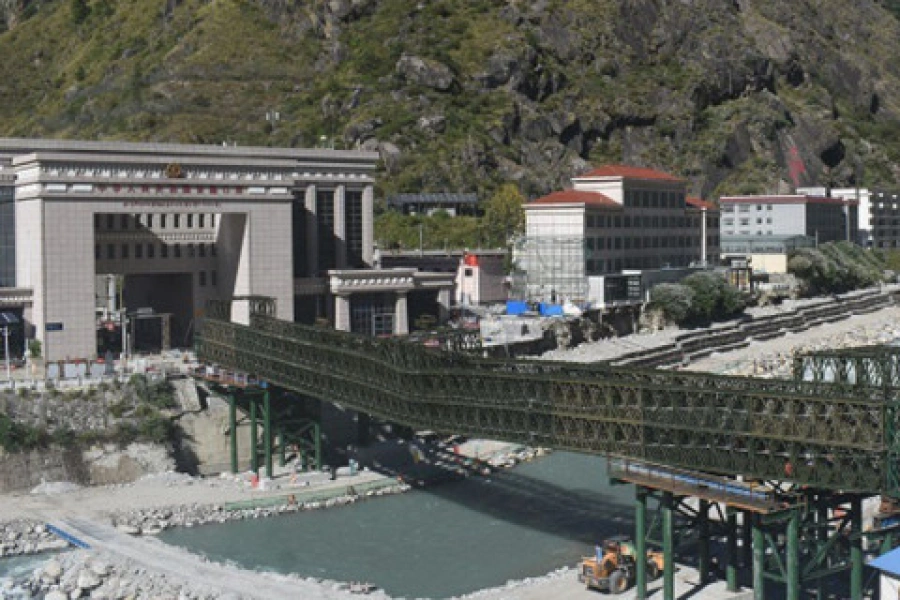
In this line, when Prime Minister Baburam Bhattarai visited India two months ago, he signed the Bilateral Investment Promotion and Protection Agreement (BIPPA), which has further lowered trade barriers between India and Nepal. Nepal was reportedly in line to sign a similar agreement with China during Chinese Premier Wen Jiabao’s planned Nepal visit at end of 2011.
But it wasn’t meant to be. Baburam Bhattarai clearly missed a trick by visiting New Delhi without enough homework on what Nepal wanted from the Indian side. Worse even, the Chinese PM’s visit had to be cancelled, in part owing to Nepal’s inept diplomacy. The dates for Jiabao’s visit were apparently announced without consultations with the Chinese side, in clear breach of international norms. It was also Nepal’s failure to assure the Chinese on the security situation in the country. These events hint that there are some serious problems with Nepal’s diplomatic establishment.
Nepal’s task isn’t easy. If it is seen buttressing its ties with one neighbor, the other gets unduly suspicious. Recently, the likely entry of huge Chinese capital for infrastructure development of Lumbini seems to have spooked the Indians, who fear losing their traditional leverage as China widens its areas of cooperation with Nepal. Likewise, the Indian side has been miffed, time and again, at ‘breaches’ of the 1950 Treaty of Peace and Friendship. China for its part is worried about the increase in anti-Chinese activities on Nepali soil, particularly as Nepal shares a long and porous border with India, home to the exiled government of the Dalai Lama.
Of course, the scope of Nepal’s diplomacy is not confined to its dealings with India and China. The US and the EU have been equally forceful in pushing the government on human rights and of late even been actively engaged in ‘discouraging’ strike and bandhas. It is also a reality that in recent times the two have relied more and more on India to shape their foreign policy vis-à-vis Nepal. But in the last few years India itself has been accused of delegating its Nepal policy to its security agencies. Thankfully, it seems to have realized its folly and has recently looked to buttress regional ties at the political level. India’s pivot on regional development and its willingness to open up its market and trade and transit facilities for its regional allies is a welcome development.
Despite all that’s happened, Premiere Wen is likely to visit Nepal in the next few weeks. The long-awaited visit of Indian PM is also on the cards sometime in the near future. Both China and India seem to learned their lesson: it is important to maintain peace and harmony in the region for their continuous ascent up the global economic ladder. This is wonderful news for Nepal. It is now upon Nepal to fine tune its foreign policy in accordance with the needs of the time and at all cost avoid faux pas like the one that led to cancellation of Wen Jiabao’s visit.
Related story
‘Art Evolves: Nepali Modern Art’: Review



-1200x560-1774606010.webp)