KATHMANDU, Jan 27: The growing use of artificial intelligence and deepfake technology is increasingly distorting Nepal’s electoral discourse ahead of the March 5 House of Representatives election, raising concerns over misinformation and voter manipulation.
A few days ago, a video showing Balendra Shah (Balen), a House of Representatives candidate from Jhapa Constituency No. 5, aggressively pushing his own party cadres during an election campaign, went viral on social media. The clip initially drew praise from supporters, who portrayed it as evidence of Shah’s assertive leadership.
However, as the video continued to circulate, public reaction shifted. Critics began questioning Shah’s temperament and leadership style. Amid the backlash, Shah’s team claimed the video was a deepfake generated using artificial intelligence.
The clarification failed to put the matter to rest. Even days later, artificial intelligence experts remain uncertain whether the clip was manipulated or authentic.
The episode highlights how AI-generated content is increasingly influencing Nepal’s election narrative.
11 licensed firearms submitted in Chitwan

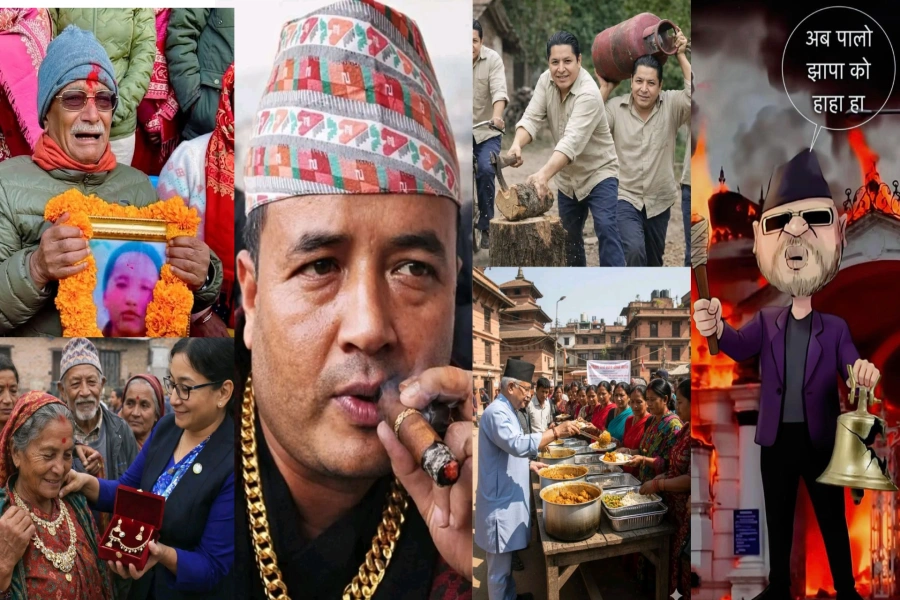
In another instance, a photograph circulated on social media showing the coordinator of the Nepali Communist Party (NCP) Pushpa Kamal Dahal appearing to cry while holding a photograph of a “martyr” from Nepal’s decade-long civil war. While many users expressed sympathy or condemnation, digitally savvy users identified the image as a deepfake. For many others—particularly older or illiterate users—the image appeared genuine.
From fabricated images of senior leaders crying, dancing or pleading for votes to highly charged political messages, Nepal’s social media platforms have become flooded with AI-generated misinformation and hate content. Hundreds of misleading or false videos, images, audio clips and even songs have circulated widely in recent weeks.
IT and AI expert Dovan Rai told Republica that artificial intelligence and deepfakes are being used primarily to defame political opponents and artificially generate public support.
“During an election period, people should be debating party manifestos, ideologies and policy promises,” Rai said. “Instead, they are trying to figure out what is real and what is fake. This is a worrying trend. People are increasingly entertained by political stunts rather than engaged in meaningful discussion.”
Rai added that while digital platforms have expanded access to information, they have also weakened critical engagement and fact-based analysis. She stressed that addressing the challenge requires co-regulation involving the government, media, civil society and individual users, guided by strong civic values.
Recognising the growing threat, the Election Commission (EC) brought social media activities under the election code of conduct, effective from January 17.
According to the EC, the code prohibits the operation of fake social media accounts or websites intended to influence elections. It bans the belittling of candidates, the spread of misinformation, insults and hate speech, regardless of whether artificial intelligence is used.
The regulations also state that any information or material published or broadcast for any purpose must not be modified, reposted, commented on, live-streamed, tagged or mentioned on social media with the intent of influencing voters.
Despite these measures, enforcement remains a major challenge.
The EC said it is receiving more than 100 formal and informal complaints on average related to social media violations of the election code of conduct. The commission can issue warnings, impose fines of up to Rs 100,000 or even cancel candidacies. Records of violations are maintained by the EC.
EC Deputy Spokesperson Kul Bahadur GC described misinformation and AI-generated content as emerging challenges accompanying rapid technological change. At the same time, he noted that some traditional electoral malpractices are declining.
“The excessive use of pamphlets, placards, wall paintings, wall writing, plastic materials and environmentally harmful campaign tools is being discouraged,” he said. “Political parties have also become more cautious about overspending during elections.”
With the election just weeks away, however, Nepal has limited time to roll out a nationwide digital literacy and misinformation awareness campaign. While some media outlets and independent fact-checkers have begun verifying sensitive content, false narratives often spread widely before corrections reach the public.
The government has also intensified its response. On Sunday, Home Minister Om Prakash Aryal instructed law enforcement agencies not to wait for higher-level directives to act against those spreading misinformation on social media. He also directed the Cyber Bureau of Nepal Police to step up monitoring of online platforms ahead of the polls.