KATHMANDU, APRIL 29: The Maoists´ attempt to appoint a justice of their preference as head of the judiciary ended Tuesday evening with the Constitutional Council selecting Min Bahadur Rayamajhee as the new chief justice. [break]
In a brief meeting held at the prime minister´s residence at Baluwatar, the Constitutional Council recommended Justice Rayamajhee to parliament for a confirmation hearing, continuing the tradition of choosing the seniormost Supreme Court justice for the top judicial post. Rayamajhee was among six apex court justices eligible for the coveted appointment.
There had been widespread concern about a possible breach of the tradition of seniority by the Maoists whose chairman Pushpa Kamal Dahal is head of the Constitutional Council. These fears arose after Law Minister Dev Prasad Gurung and other senior Maoist leaders spoke publicly of breaking the tradition of seniority while choosing the new chief justice.

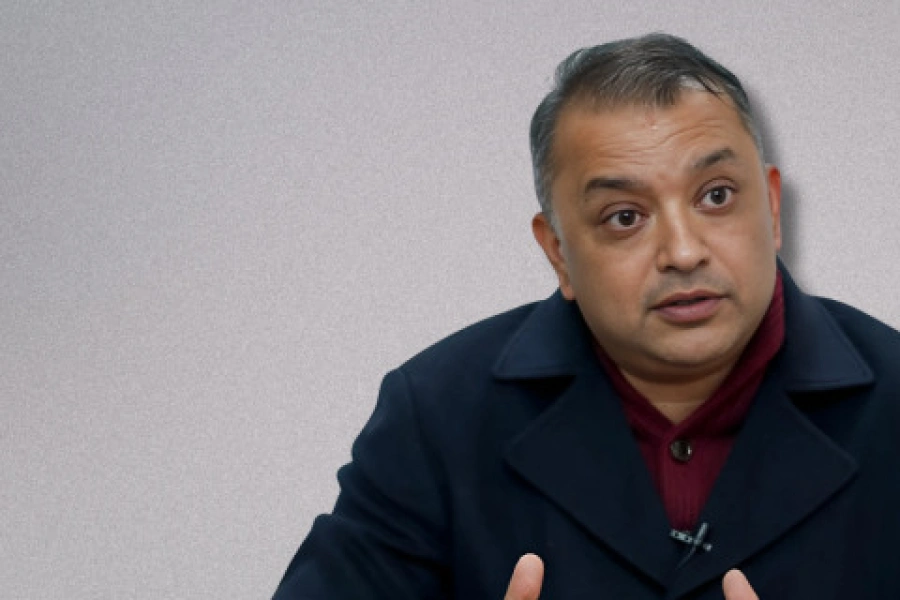
New Chief Justice Rayamajhee at his residence in New Baneshwar on Wednesday.
Bhaswor Ojha
Related story
Constitutional Council nominates fourth-ranked justice as CJ, b...

But the Maoists could not get their way because they are in minority in the seven-member Constitutional Council and Chairman of the Constituent Assembly Subas Nemwang was adamant on continuing the seniority tradition in the Supreme Court to ward off possible politicization of the third branch of government. Only Prime Minister Pushpa Kamal Dahal and Law Minister Gurung represented the Maoist party on the Constitutional Council.
"The decision to name Rayamajhee as the new chief justice was unanimous. He was chosen on the basis of seniority," Minister Jaya Prakash Prasad Gupta, who represented Foreign Minister Upendra Yadav at the meeting, told reporters while emerging from of the meeting.
Born on December 12, 1944 in Bhojpur, Rayamajhee is known for his boldness and unbending nature. Even at the height of the king´s direct rule, he had dared to order the Supreme Court administration to register a writ petition against the Royal Commission for Corruption Control (RCCC) formed by the king. Some other judges had deferred hearings on the case as many as 19 times. Initially, the court administration had rejected the writ petition but Rayamjahee´s bold order compelled it to entertain it and commence the hearings process.
Rayamajhee, who began his career as a third class gazetted officer on May 22, 1970, was one of the five judges who dissolved the RCCC. The royal government had used the RCCC for political vendetta against pro-democracy political leaders. Its dissolution had huge political ramifications besides coming as a big blow to the government led by the king in 2006.
An MA in Political Science and BL from Tribhuvan University, Rayamajhee was publicly praised in February 2006 when he, along with Justice Anup Raj Sharma, lifted a government ban on broadcasting of news by FM radio stations.
Rayamajhee became a judge as early as 1972 when he was assigned to Khotang District Court. Before joining the Supreme Court as an ad hoc justice on April 9, 2001, he was chief judge at Hetauda Appellate Court. He has experience of working in various capacities at different zonal and appellate courts. He was assistant registrar at the Supreme Court in 1980.
kiran@myrepublica.com