SOLUKHUMBU, March 8: Farmers in the Everest region no longer produce traditionally grown crops like wheat, barley, and millet as they once did. They attribute the decline in farming to irregular weather patterns, rising temperatures, unseasonal rainfall, and dry weather conditions.
Local Pasang Lhamu Sherpa says, "Earlier, we grew wheat and millet abundantly, but now we must leave arable land barren. The lack of water, decreasing soil fertility, and extreme weather changes have made farming increasingly difficult. Even when we farm, the yield is much lower than before. That's why we have stopped cultivating."
The impacts of climate change directly affect local residents in the Everest region. In particular, women and children are struggling with nutritional deficiencies. Climate change has caused a decline in agricultural production, which has impacted the people of the Khumbu region. More significantly, the health of women is suffering. Local health workers say that nutritional deficiencies threaten the health of pregnant women.
Local health worker Dimdoma Sherpa explained that the lack of a balanced diet is increasing the risk of adverse effects on newborns' health. She pointed out that the decline in local production, the failure of traditional farming methods due to climate change, and the growing reliance on imported food have created additional challenges for women in the region.
A recent report released by UNESCO before the COP conference in Azerbaijan highlighted that snow is melting faster in the mountainous region. The temperature increase in this area is higher than elsewhere, causing the snow to melt at an accelerated rate.
Regional Consultation Meeting on “Promoting Nutrition Sensitive...

Tenzing Jangbu Sherpa from Chukung, Khumbu, said that agricultural production in the Himalayan region is significantly declining. He recalled, "Millet crops used to be abundant in the highland areas around here, but now, look, all the lands are barren. Since farming has stopped, why continue struggling? Now, we have completely stopped planting. Some people attribute this to the impact of climate change, and it has caused us many problems."
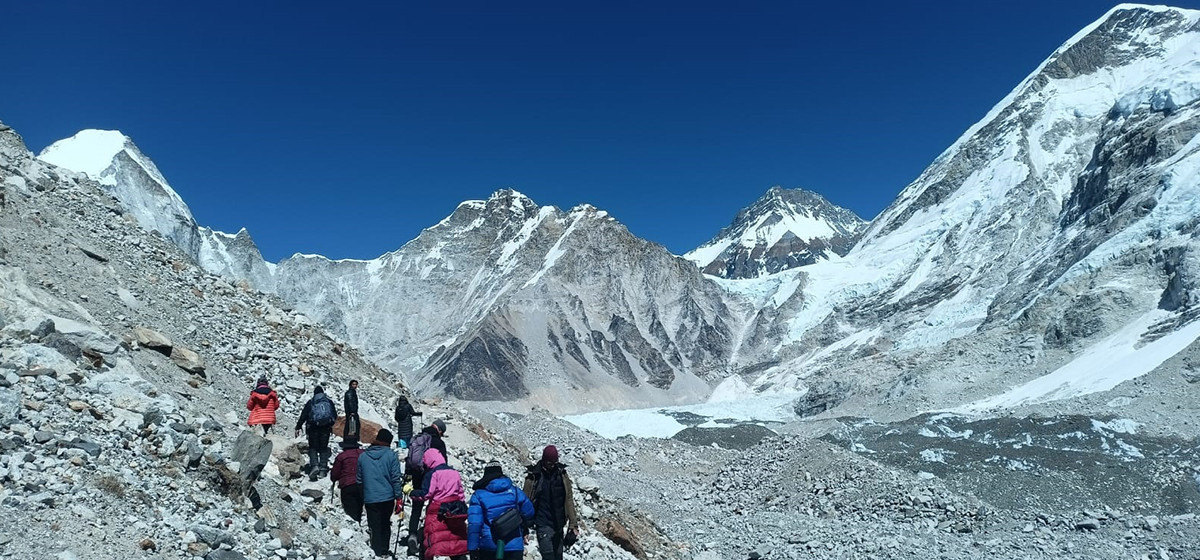
The waste left by Everest climbers at the base camp has also worsened the situation. Experts argue that plastic, food packaging, and other non-biodegradable waste have intensified the effect of sunlight on glaciers.
Tourism has flourished in the Everest region, but it has had a negative impact on the environment. According to tourism entrepreneur Pasang Sherpa, despite the municipality and the Nepali government enforcing strict measures, climbers still leave some of their belongings behind, which is causing environmental imbalance. Local resident Toyakumar Shrestha from Lukla says, "The mountains, which used to shine like silver, are now turning into black hills. The waste left by climbers, industrial dust, and global temperature rise have put the mountainous region at greater risk."
Although from an external perspective, the area may only appear to be turning brown, climate change has brought significant changes to the daily lives of the people in the mountainous region. Local Amrit Magar explained that, due to the lack of timely snowfall, the land is drying up, and during the warmer season, it feels cold, while in colder periods, people feel warmth. He also mentioned that farming and the availability of essential nutrients have been affected.
Climate change is likely to have long-term effects on the health of women in the high Himalayan regions. Environmentalist Dr Rajan Thapa states that industries in powerful nations and global temperature rise directly impact Nepal's mountainous region. Local residents report that water sources are drying up, snow is melting, and seasonal cycles are disrupted.
Women are falling victim to food scarcity, which weakens their economic and social status. Activist Prajita Karki emphasizes the need for collective efforts to mitigate the impacts of climate change. "We must implement special health programs targeting women in the mountainous regions. Long-term plans are essential to reduce environmental imbalance," says Karki.
Local government officials and international organizations emphasize the need for specific plans to mitigate climate change. Experts argue that preserving traditional crops and developing climate-resilient agricultural systems is essential.
They stress that long-term strategies are crucial to reduce the impacts of climate change. Agricultural expert Chandraman Shrestha explains that teaching small farmers climate-resilient farming techniques, exploring alternative irrigation methods, and promoting organic farming are vital steps.
"The main reason for the decline in agricultural production in the mountainous region is climate change, but leaving the fields barren just because farming has stopped is even more concerning. Other methods can be adopted. Also, if indigenous crops do not yield, other developed varieties can be planted," said agricultural expert Shrestha. Local residents are adopting various measures for climate change adaptation.
They have started adopting these measures. However, experts warn that these measures may not be enough in the long term and that more support from both government and non-governmental organizations is needed. The decline in agricultural production, food insecurity, lack of nutrition, and the long-term impacts of climate change are deepening their health crisis. Experts stress the need for local and international organizations to unite and find solutions.