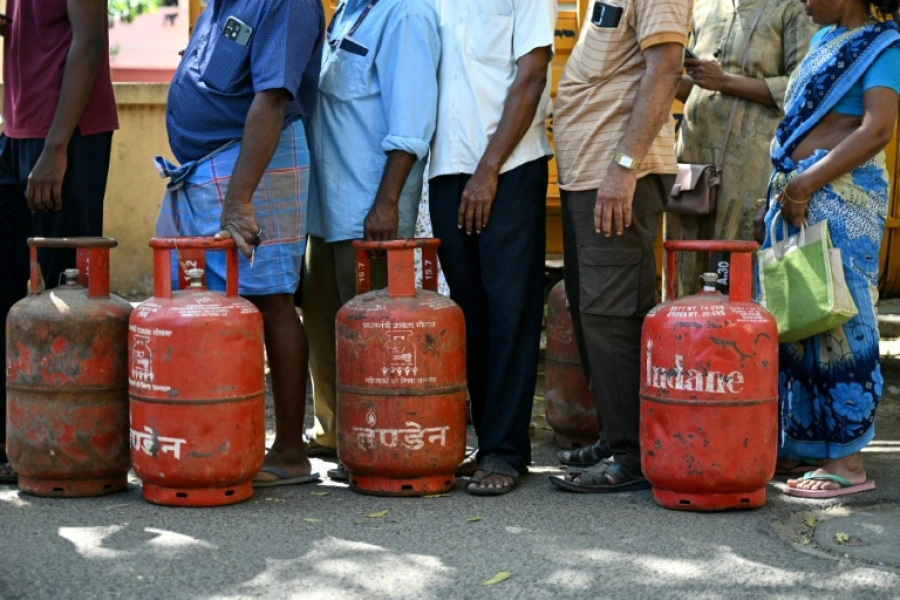
The reason behind the shift is the price factor as LPG has become cheaper compared to kerosene over the period, according to experts.Cost of kerosene and LPG as cooking fuel for urban household was Rs 270 and Rs 410 per month, respectively, in 2000. Now LPG costs less compared to kerosene, according to Amrit Nakarmi, Professor at Center for Energy Studies, Institute of Engineering, Pulchowk.
The cost for a household to cook by using kerosene and LPG per month is above Rs 1,300 and Rs 988, respectively, Nakarmi told Republica.
Experts also say LPG cooks faster compared to kerosene and emits less smoke. Not only in urban areas, many remittance-earning families in rural areas have switched to LPG in recent years, they said.
There has been very little change in the number of people using firewood, cow dung and bio-gas as main cooking fuel over the past 12 years. But number of LPG users jumped by 13 percentage points to 22.4 percent in 12 years, according to Annual Household Survey 2012/13.
Urban households have witnessed acute shortage of LPG as the unofficial blockade by India entered into tenth day on Sunday.
"Many families would have switched to electricity, which is cheaper than LPG, had there been uninterrupted power supply in the country," said Nakarmi.
The cost for using electricity as cooking fuel for households stands at Rs 960 per month. However, officials of Central Bureau of Statistics (CBS) say not a single household has reported electricity as cooking fuel in the census and surveys conducted by it.
"Only the generation of additional 1,300 MW can replace LPG as cooking fuel. It will also reduce fuel imports by around 43 percent as uninterrupted power supply will eliminate the use of generators powered by fossil fuel," added Nakarmi.
Nepal imports petroleum products and LPG worth around Rs 50 billion annually.
Member of National Planning Commission (NPC) Govind Nepal said our dependency on imported cooking fuel is risky in two ways. "On one hand we are becoming vulnerable in energy security as LPG has become a highly essential commodity, particularly in urban and semi urban centers, and on the other importing fuel for cooking purpose is widening our trade deficit," he added.
Introduction of demand side management by installing Time of Day (ToD) tariff, or having different electricity tariff in peak and off-peak hours, can encourage consumers to use electricity for cooking. It will also ease demand during peak hours.
NPC's Member Nepal said only additional hydropower power generation can replace LPG as a preferred cooking fuel in urban centers. We can promote alternative energy sources like bio-gas and briquette as cooking fuel in rural areas, he added.
Related story
Cheaper LPG replaces kerosene as main cooking fuel