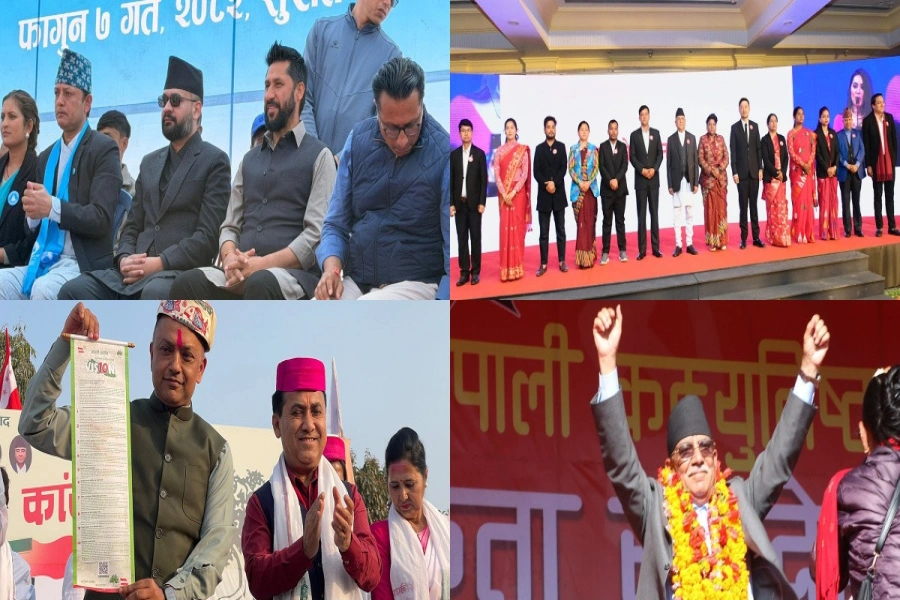
Of the total 139 political parties that have applied for registration at the Election Commission (EC), a majority are regional and ethnic parties.
Former Chief Election Commissioner (CEC) Bhoj Raj Pokhrel said multiple factors have played a role in the increase in the number of regional and ethnic parties. “One of the major reasons is the failure of the big parties to address the aspirations of people at all levels of society,” Pokhrel told Republica, adding, “Also the major political parties have failed to ensure inclusiveness.”
Stating that some of the major political parties have applied for registration in the hope of winning a few seats in the upcoming Constituent Assembly election, Pokharel said, “This is one factor that has led to an increase in the number of regional and ethnic parties,” Pokhrel added. The former chief election commissioner believes that their numbers have increased as they have been accord a higher status compared to their strength.
Political analyst CK Lal maintains that the marginalized groups have lost trust in the “so-called” national political parties. “Removal of the provision related to eligibility threshold for seats under proportional electoral system has also led to an increase in the number of regional and ethnic parties,” Lal added.
Professor Om Gurung argued that political ambition has led to increase in the number of regional and ethnic parties.
“It is true to some extent that the major political parties could not address regional and ethnic discrimination properly,” said CPN-UML Spokesperson Pradip Gyawali, adding, “But concerns of external forces in the name of identity have also contributed to formation of regional and ethnic parties in the country.” While the western forces are concerned over identity politics, India is concerned over regional politics, he said. Gyawali stated ideological erosion in the major political parties is another reason.
“Some forces have also blown up regional and ethnic issues in a bid to destabilize the country,” he argued.
When asked about the implications of the increase in the numbers of such parties, Pokhrel said, “It will be difficult to manage parliament.”
Gyawali claimed that there would be negative implication than positive ones. “It can weaken the party system and polarize our community,” he said.
However, Lal said that the increase in the number of regional and ethnic parties will inspire major parties to be national parties.
Asked about the future of such parties, Professor Gurung stated that only those regional and ethnic parties that would work for the welfare of their respective communities would exist. “Some regional and ethnic parties will merge, others will perish,” he added.
Related story
Museum hotel to reflect Nepal’s cultural, ethnic diversity