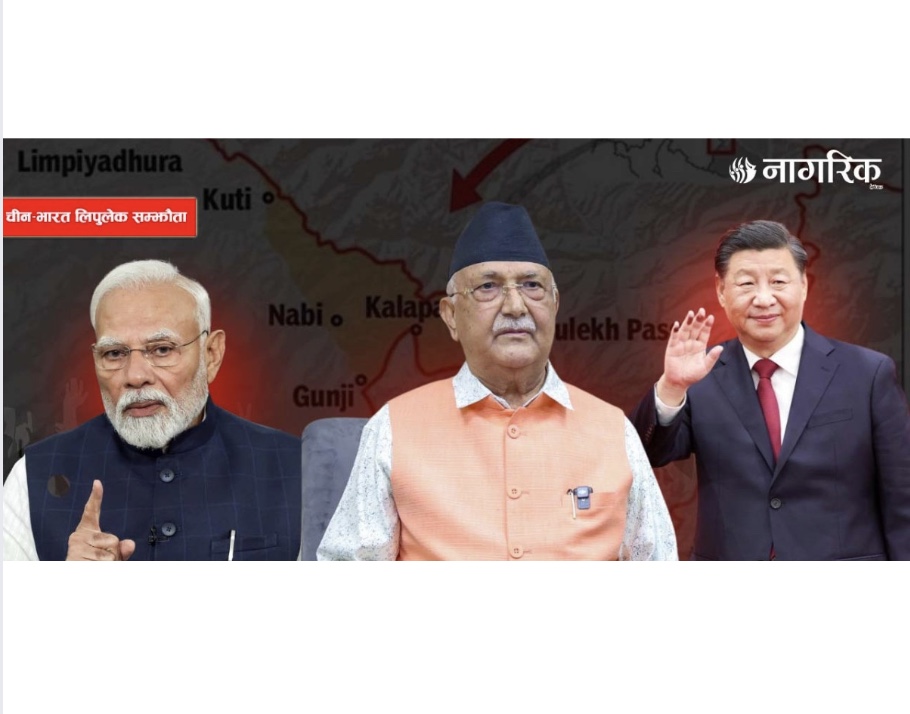
Last week, India announced the 2026 Kailash Mansarovar Yatra through Lipulekh Pass—1,000 pilgrims, 20 batches, June to August—coordinated with China. Nepal was not consulted. Not informed. Not even mentioned.
Four days later, Kathmandu’s Ministry of Foreign Affairs sent diplomatic notes to both New Delhi and Beijing. India’s response was blunt: Nepal’s claim is “untenable.” The Chinese Embassy in New Delhi welcomed the pilgrimage without acknowledging Nepal’s existence in the equation.
The ritual, as I wrote in my last column, is complete again. Protest issued, protest dismissed, sovereignty eroded another inch. But this time, the erosion carries new weight. The Lipulekh route is no longer just about border trade. It is now a pilgrimage corridor, wrapped in civilizational language and bilateral goodwill between two nuclear-armed neighbors. Opposing a trade route is one thing; opposing a sacred yatra is politically costlier. Nepal’s window for meaningful diplomatic action is narrowing.
The Government Must Act, Not Just React
The Balendra Shah government came to power with a massive mandate and a reputation for nationalist assertiveness. As mayor, Shah displayed a “Greater Nepal” map in his office. As opposition, he challenged then-Prime Minister KP Sharma Oli to raise Lipulekh with Beijing. Now, barely over a month in office, his government faces its first real diplomatic test, and the early signs are mixed.
The diplomatic notes are necessary. The reaffirmation of the Sugauli Treaty position is correct. But this government must understand what its predecessors did not: a note verbale is the beginning of diplomacy, not its culmination. Nepal has sent such notes in 2015, 2016, 2020, and again in 2026. Each time, New Delhi has used the same language to dismiss them. If the same tool produces the same result every time, the problem is not the adversary; it is the strategy.
Crusher plants causing noise pollution: Locals

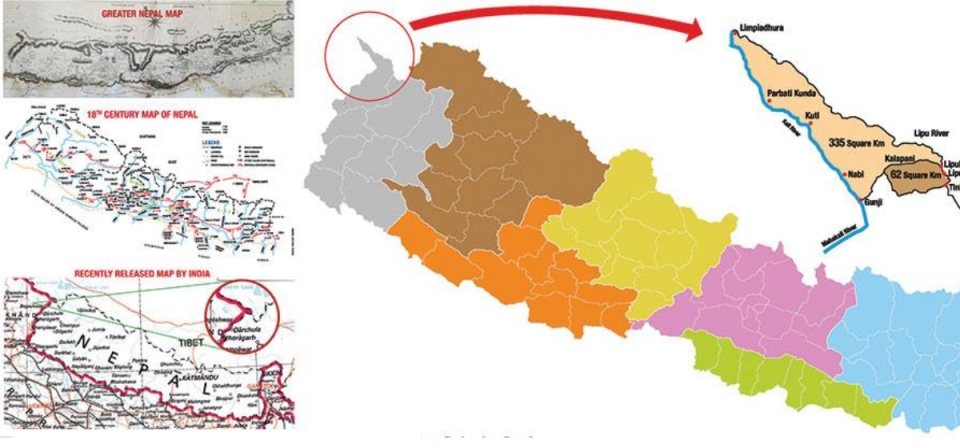
This is not a call to abandon the claim. Nepal’s sovereignty over Limpiyadhura, Lipulekh, and Kalapani, established by the Treaty of Sugauli and affirmed by the 2020 constitutional amendment, is non-negotiable. But firmness of position is no substitute for creativity of method. A serious state does not merely assert; it proposes.
What Nepal Should Propose
Nepal needs a doctrine, not another declaration. The principle is well established in international law: sovereignty preserved, access regulated, benefits shared. The most instructive precedents come from India’s own diplomatic history.
The 1974 India-Sri Lanka agreement on Katchatheevu offers a near-perfect parallel. Signed by Indira Gandhi and Sirimavo Bandaranaike, it confirmed Sri Lankan sovereignty over the small island while Article 5 explicitly preserved Indian fishermen’s and pilgrims’ access for the St. Anthony’s festival, without visas or travel documents. India itself negotiated and accepted that pilgrimage access flows from the sovereign, not around it. The contradiction with today’s Indian position is striking. In 1974, India acknowledged that pilgrimage rights are properly granted by the sovereign state through structured agreement, with reciprocal benefits. In 2026, it invokes pilgrimage as a shield against sovereignty itself.
The 2017 Doklam standoff is even sharper. India’s position then was unequivocal: trijunction boundary points cannot be settled bilaterally between two parties when a third country has a claim. New Delhi invoked this rule to prevent China and Bhutan from settling Doklam without Indian involvement, and was vindicated when Beijing disengaged. Lipulekh sits at exactly such a trijunction, where Nepal, India, and China meet. To deny Kathmandu the procedural standing that India demanded for itself at Doklam is a direct contradiction. Nepal should invoke India’s own Doklam doctrine explicitly, in its diplomatic communications and in any future discussion.
Beyond South Asia, Malaysia and Thailand have run a Joint Development Area in the Gulf of Thailand for decades, sharing costs and revenues without either side conceding the legal position. Such disputes can be managed as sites of mutual gain when diplomacy is creative.
Nepal should propose a four-part framework. First, a formal joint statement that any use of the Lipulekh corridor for trade, transit, or pilgrimage is without prejudice to the final settlement of the boundary dispute. This costs India nothing legally while giving Nepal a critical procedural safeguard. Second, Nepal must demand a seat in the corridor’s operational management: logistics, revenue sharing, and pilgrimage administration—not as a favor but as a stakeholder. Third, Nepal should call for a standing boundary commission with a clear mandate and dispute-resolution mechanism, loosely modeled on the Permanent Indus Commission, which has survived three India-Pakistan wars and still functions. Fourth, Nepal should request a standstill on new infrastructure, military expansion, or further commercial activity in the disputed zone while negotiations are active.
A Word to New Delhi
India’s dismissal of Nepal’s claim as “untenable” is diplomatically unwise. A rising power that aspires to lead its neighborhood cannot afford to treat a smaller neighbor’s sovereignty concerns with contempt. The phrase “unilateral artificial enlargement” may play well in domestic Indian media, but it damages India’s credibility as a regional leader that champions a rules-based order globally.
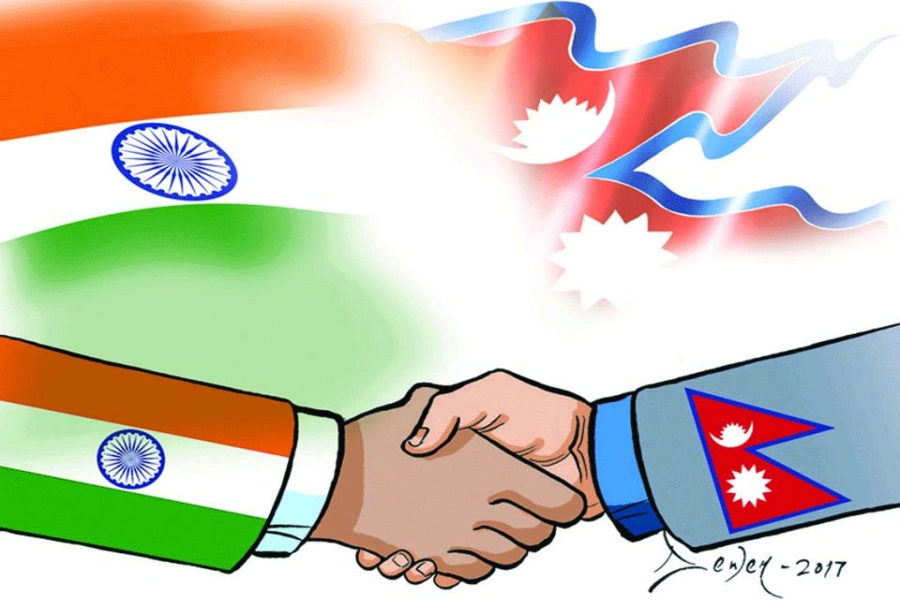
Prime Minister Shah’s upcoming visit to New Delhi could reset the dynamic. A generous gesture—acknowledging Nepal’s concern, agreeing to the “without prejudice” formulation, and inviting Nepal into corridor management—would cost India little strategically but earn it considerable goodwill. It would show that “Neighborhood First” is more than a slogan. The alternative, dismissing Nepal while deepening the bilateral corridor with China, only pushes Kathmandu toward exactly the kind of geopolitical balancing New Delhi claims to find uncomfortable.
The Harder Truth for Kathmandu
Nepal’s political class must confront its own shortcomings. The four-day delay in responding to India’s April 30 announcement was embarrassing. The confusion on social media about the format of Nepal’s diplomatic note was worse. A government that wants to be taken seriously on sovereignty must have a foreign ministry that operates with precision and speed, not one that waits for media queries before issuing its position.
Nepal must also stop treating Lipulekh as a domestic performance. Every parliamentary speech and social media post framing this issue as “India versus Nepal” makes negotiation harder, not easier. The strongest position Nepal can take is not “this is ours, stay out,” but “this is ours, and here is how we propose to manage it together without surrendering what is ours.” That distinction—between exclusion and structured engagement—is the difference between a protest movement and a foreign policy.
The Stakes
The 2026 Yatra will proceed. Nepal cannot stop it. But Nepal can change the terms on which the next one proceeds, and the one after that. The question is whether this government—young, popular, and claiming to be different—will break the cycle of reactive diplomacy and propose something that puts Nepal inside the room.
Sovereignty is not protected by volume. It is protected by strategy, by legal frameworks, by institutional mechanisms, and by the willingness to propose solutions that serve the national interest while remaining credible to the other side. Nepal has the claim, the geography, and now a government with the political capital to be bold. What it still lacks is a playbook.
It is time to write one.