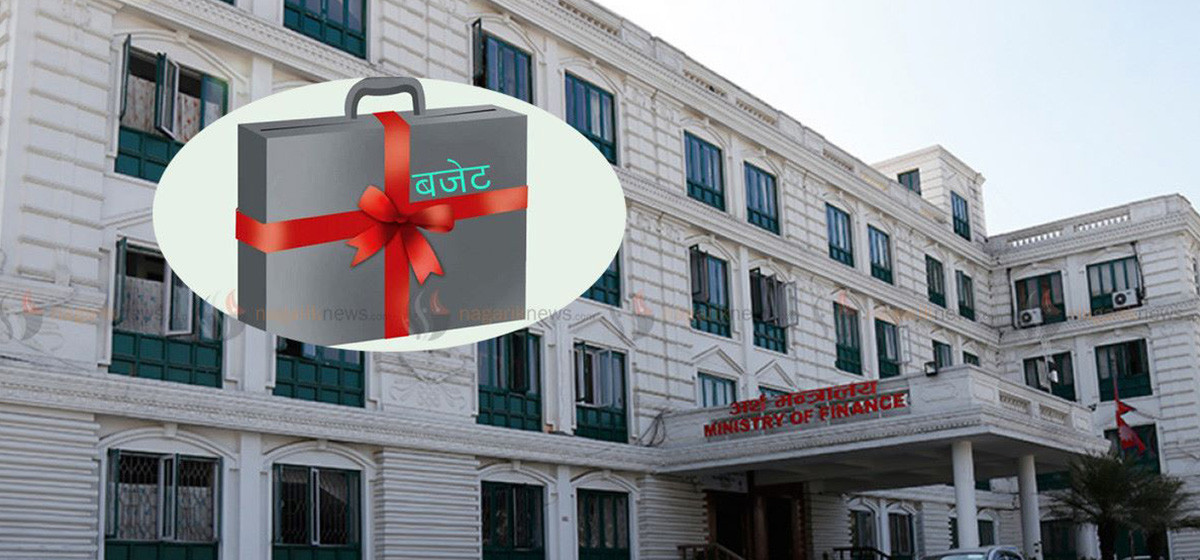
Skimming through Nepal´s past budgets, there is hardly any fiscal year (FY) one can find where the expenditures allocated budget for a specific year was used up fully or satisfactorily. As a glaring example, the government for the current fiscal year vowed to spend Rs 236 billion, but as the fiscal year nears its end, the actual spending is likely to be around Rs 190 billion--80 percent of the earmarked expenditure. Still, it can be argued that 80 percent expenditure is not that bad to be alarmed, particularly at a time when political uncertainty is deepening.[break]
However, one is disturbed while taking a precise look at the budget earmarked for development objectives. According to the government expenditure, the total cash capital expenditure that mainly finances development projects was just Rs 37 billion till June, which is half of the earmarked amount for the current fiscal year.
So what is the use of a bloated budget every year when it can hardly be translated into actions? Yet why do leaders compete every year to bring an inflated budget despite knowing full well that not all the monies will be spent?
It is because there has always been a holier-than-thou attitude of the government in power and its finance minister. As one of the architects of Nepal´s fiscal budgets says, whoever is the finance minister at the helm, he does not want to be seen as chicken-hearted but rather a lion-heart, no matter what negative consequences his budget may cause to the economy.
Therefore, no matter who comes to power, bringing a "big-figure budget" has been a most widely wielded yardstick to compete in bringing a populist budget. As the government has some Rs 15 billion in its coffer by achieving a historical over 30 percent growth in revenue collection, this year´s budget will by no means be an exception from the previous year´s budget, says noted economist Dr Shankar Sharma.
Indications are already evident that the new government, too, is planning a swelled-up budget without fixing the deep-rooted problems related to its implementation. The Ministry of Finance (MoF) officials had a tough time persuading the new finance minister to scale down the budget´s size to around Rs 290 billion from the earlier proposal of Rs 320 billion. However, as the budget day nears, there are chances that the figure might swell again, as last-minute adjustments are going to include clauses imposed by unavoidable political pressures, said an MoF official.
Another high ranking official at the same Ministry adds that there is absolutely no meaning in announcing a big budget as long as the basic structural faults of an overall macro economy are not properly addressed.
"Neither is there zeal among the government agencies and stakeholders to implement budgetary programs nor is there any agency to question why programs underperform despite the availability of funds," he said.
Last year, the MoF faced similar problems when the Maoist-led government announced its Rs 236 billion bubbly budget--almost 45% more than the previous year´s.
"We did all we could to convince the then Finance Minister Dr Bhattarai that Nepal´s institutions don´t have absorptive capacity of that level. But he never listened," said the official, and added, "He, however, somehow understood the reality during the last days of his office."
Instead of bringing an inflated budget, concrete steps to soar up the shattered confidence of the private sector is the need of the hour. There should be careful assessments of why the much-touted Public Private Partnership (PPP) failed, why the industrial relations between stakeholders and employees are deteriorating, and why is Nepal´s export basket shrinking every year, said the official.
prem@myrepublica.com
Related story
What is missing in budget for agriculture?