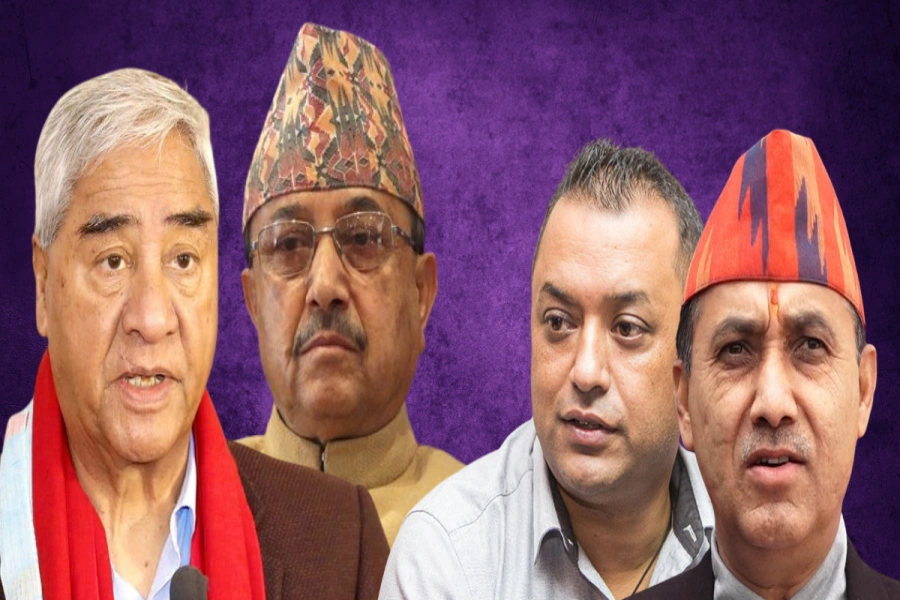
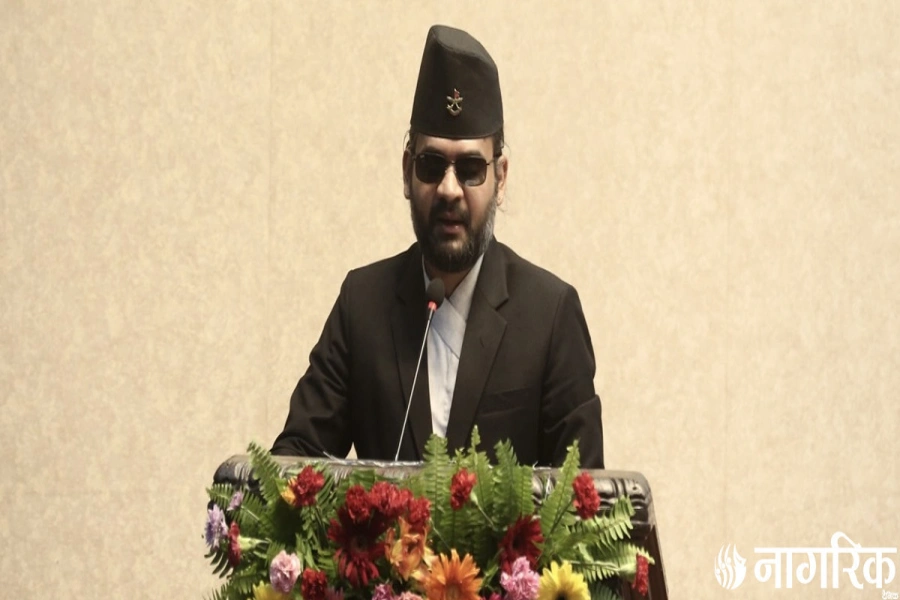
It's no surprise that most Nepalis believe their politicians and civil servants are among the most corrupt people in the country. This is according to a survey conducted by Nagarik Research Bureau (NRB) of Nagarik national daily, our sister publication, late last year. Of the 1,071 citizens from 32 districts asked to list what they believed were the five most corrupt professions, 84 percent picked politicians as the most corrupt; and 82 percent of them picked civil servants as the second most corrupt. Police force was chosen by 61 percent as the third most corrupt institution. These findings more or less correspond to the annual Corruption Perception Index (CPI) published by the Nepal chapter of Transparency International, the global anti-corruption watchdog. This does not necessarily mean that our politicians and bureaucrats are the most corrupt people in the country; after all, both the above-mentioned surveys only measure people's perception of corruption. Moreover, wherever such surveys are conducted in the world, the same two groups of people invariably top the list of the least-trusted people.But that does not absolve our politicians and civil servants of wrongdoing. True, even among them, there are a few incorruptible people, but the vast majority of them have been implicated in some form of corruption during their time in government. Perhaps if the country's anti-corruption watchdogs—the Commission for the Investigation of Abuse of Authority (CIAA) and the National Vigilance Center (NVC)—had been able to function effectively and independently people would not be so doubtful of government functionaries. But political appointments and selective justice meted out by these state anti-graft agencies makes people doubt their neutrality as well, which is why, according to those polled by Nagarik Research Bureau, these agencies are seen as the seventh most corrupt entities in the country. The neutrality and effectiveness of these anti-graft agencies, in turn, hinges on the commitment of political leadership to clean governance and accountability. But having leaders like KP Sharma Oli—who as prime minister has actively abetted black-marketing and institutionalized nepotism—does not inspire much confidence.
Again, politicians and bureaucrats are unpopular the world over. But they need not be this unpopular. Even Nepal has in the past has incorruptible government heads like BP Koirala, Manmohan Adhikari and, most recently, even Sushil Koirala. But just having one politician at the top with clean image is not enough. The political leadership should also have a vision and a commitment to push through good governance practices, even when they are unpopular. Prime Minister Oli, for instance, could greatly enhance public faith in his government with a single decision: by throwing out the parliamentary bill on the establishment of Manmohan Medical College, a bill which, if passed, could be a death blow to medical education in Nepal. This is why the crusade of Dr Govinda KC against the mighty medical mafia pushing this bill has such broad public support. Oli has always been known as a decisive leader and someone not afraid to make hard choices. But will he, for once, dare to do the right thing, and in the process give Nepalis a glimmer of hope that things in Nepal can change for the better?
Related story
Madan Rai, perverts and their perverted paradise