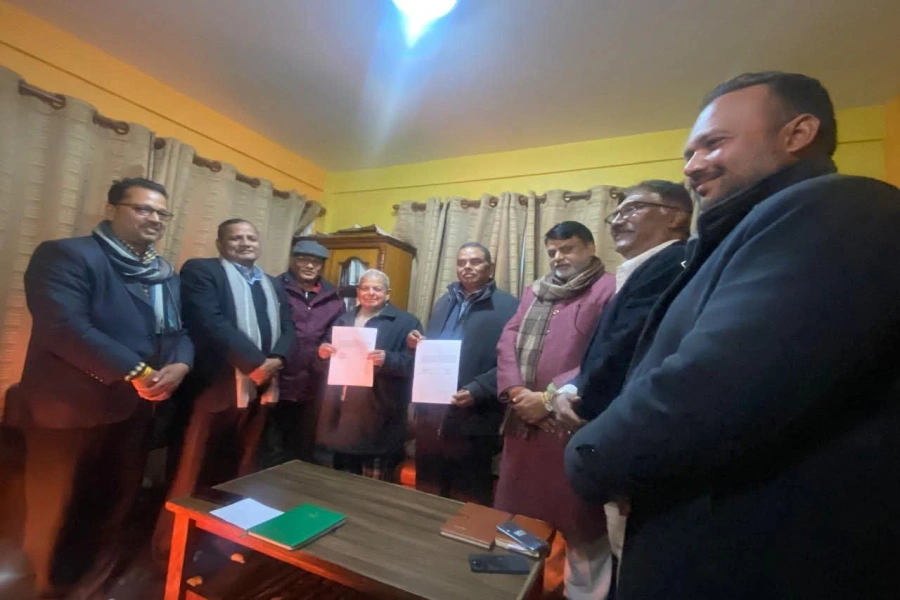
Women for Human Rights, Single Women Group (WHR), the only organization which leads the single women´s brigade, claimed that the government didn´t consult it before taking the decision. “We began receiving angry calls within 15 minutes of the announcement,” said Kunda Sharma, treasurer, WHR Kathmandu.
Single women comprise divorcees, separated wives, women with missing husbands and unmarried women above the age of 35. But 99 percent of single women in Nepal comprise widows. The WHR has been running for 14 years now and has 44,000 members with branches in 225 VDCs in 52 districts.
Lily Thapa, the founder of WHR and a single woman, asserts, “We are not commodities and we will not stand such treatment. This new policy violates our basic right to live with dignity and also goes against the Convention on the Elimination of All Forms of Discrimination against Women (CEDAW), to which the Nepali government has also agreed to.” The WHR has dubbed the incentive as a form of dowry.
Sumita Bhandari (name changed), 28, is a conflict victim who is yet to overcome the trauma of her husband´s death some seven years ago. “The government´s new provision has made life more difficult. When I talk to men in my neighborhood, people start passing innuendos, "she complained. Bhandari who has a 10-year old daughter moved to Kathmandu five years ago from Bardiya.
Single women Basanta Joshi, 40 and Jayanti KC, 25 have come from Nepalgunj to the capital expressed similar concerns. “There are many of us who are young and want to remarry but our main concerns are our children,” said KC, adding, “This one time provision is not enough to raise our children and provide them with proper education. Moreover, there is no guarantee that we will even get to use the money.”
Sixty-seven percent of single women have children and none of them want to remarry for Rs 50,000. “I haven´t been able to tell my son that his father is dead,” KC shared. Joshi, treasurer at Nepalgunj WHR branch added, “Once in a while political parties show up and conduct small workshops for single women that are of no use.”
According to WHR, the Rs 50,000 tag implies that single women would be empowered and secure only if they are married to a man. “We want to be independent,” says Maina Karki Rawat, the chairperson of the Jajarkot WHR branch. “It is sad that not a single woman politician has been doing anything in that regard.”
WHR has outlined six suggestions for the government to empower single women. “We are demanding that the government, for instance, introduce job replacement schemes for an immediate family member,” explained Thapa, founder of WHR. “This way the family will not be deprived of its income source even when the bread winner passes away.”
Another proposal is to provide a monthly allowance to widows instead of providing Rs 50,000 after marriage. “At the moment widows only above the age of 60 receive allowances but it is the young widows who are in need of money to support their children. They need money now and not when they are 60,” argues Thapa. “This would prevent women from working as sex workers and domestic helpers.” Other suggestions include discount cards, health provisions, scholarships for children and tax exemption. The WHR plans to file a lawsuit against the government if the bill to award Rs 50,000 for marrying single women is passed.
Related story
Export cash incentive scheme fails to deliver