Go to Singha Durbar, the chief executive office of the state, or visit the ministry of education or any other ministry or administrative offices in Kathmandu: Almost every government office is a house of a Rana ruler. Few citations. Singha Durbar, which encloses the ministries and offices of parliamentary parties belonged to Chandra Shumsher which he sold to the then Nepal Government for 20 million. The present office of Kathmandu Metropolitan at Baghdarbar is a palace of Bhimsen Thapa. Nepal Scout office at Lainchaur once belonged to Ranaudip Singh.
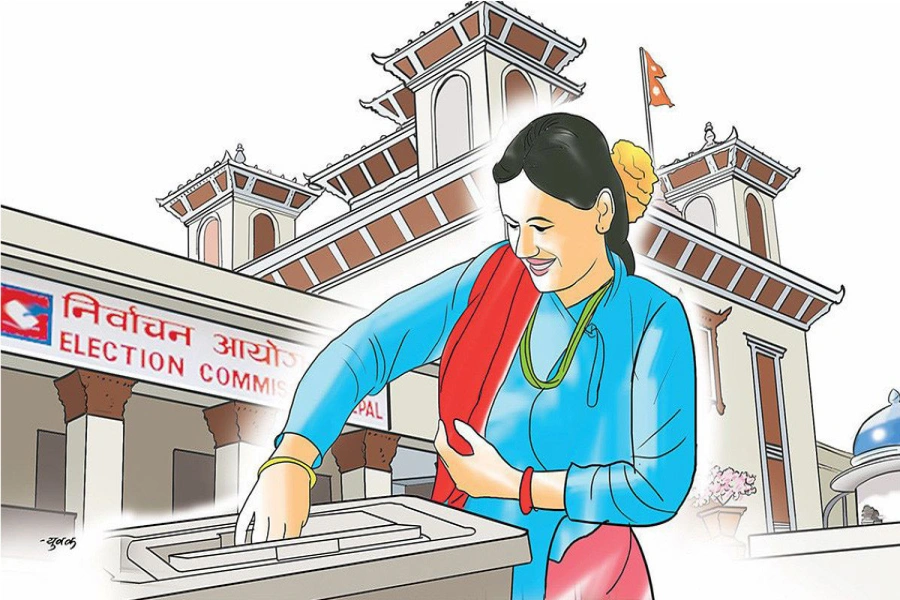
Nepal Rastra Bank complex of Thapathali was Jung Bahadur’s palace which, prior to him, belonged to his own maternal uncle Mathabar Singh Thapa. Jawalakhel Durbar of Juddha Shumsher houses the Staff College. Election Commission office was Bir Shumsher’s palace. Ministry of Transport at Babarmahal, Sital Niwas (now the president’s office), Keshar Mahal (now ministry of education), Harihar Bhawan of Pulchowk (now national library) were constructed by Chandra Shamsher. During the Rana regime, about 40 splendid palaces, which today house one or the other government offices, were built. Modern day Nepal, thus, owes much to the Ranas for the palaces and buildings where it now shelters its president, prime minister and other influential officials.
The significance of buildings for the state does not just lie in their usefulness as administrative offices. They carry with them much more than monetary value and architectural legacy. They serve as the history tellers for future generation. The palaces of the Ranas, Mallas and Shahs stand today as living witness of the time they lived. Also, erection of sumptuous building heralds a new age in history.
White House of America, erected sometimes between 1780 and 1790, symbolizes the end of British colonialism and beginning of American independence. Narayanhiti Palace has its genesis in Kot Massacre of 1846. It is the home that Bir Shamsher raised to place his son-in-law and King Prithvi Bir Bikram Shah. The modern day Narayanhiti is the outcome of Panchayat veteran king Mahendra. He is said to have demolished the old structure and erected the modern day edifice. Narayanhiti, thus, bears the legacy of Rana and Panchayat eras.
Modern day Nepal owes much to the Ranas for the palaces and buildings where it now shelters its president, prime minister and other influential officials.
Often phenomenal eras and happenings leave behind palaces, monuments and buildings. The Malla, Shah and Rana eras have elapsed leaving behind palaces for the people to look through. In the post-1950 era, no monumental edifices have been made. (Well, you can point out to a few to disagree; Royal Nepal Academy Hall, National Theater Jamal, City Hall, and so on.) Republic tower once became the talk of the town. Now, even the guards of the nascent republic may not be concerned whether and where it should be built. So, for 60 years after the end of Rana autocracy, our politicians and parliamentarians have been discussing the ideals the Ranas so emphatically opposed sitting under the roofs of their own palaces.
For me, the permanent dependence of the modern regimes on the remnants of Ranas for setting offices is an indicator of our unpreparedness for going federal. While the country is ominously set to fall apart into federal structures and independent states, there are hardly any unoccupied erstwhile Rana palaces and buildings to house offices of the federal units. And state does not seem to give due attention toward building infrastructures for that purpose. (Surely, the would-be federal units cannot afford to put their administrative offices under tents and shades, can they?) I wonder whether any of the lawmakers, who convene in “made by China” Birendra International Convention Centre (BICC) like absurd heroes, are giving a thought to this. Nationalizing the palatial buildings (just as early post-Rana regimes had nationalized some of the Rana palaces) constructed from illegally-acquired money in the post-1990 democracy period could be one alternative.
It is not for mere utilitarianism that the state should make big buildings and monuments. They add to the identity of the places they belong to. The Taj Mahal has remained legendary and will continue to be so for hundreds of years. The breathtaking Burj Khalifa of Dubai has redefined the city as the city of skyscrapers. America’s skyscrapers are world famous. I do not intend to be biased to Kathmandu; the housing companies and apartment entrepreneurs have erected skyscrapers which are eclipsing the old architectures and are gilding the valley with the envelope of gloss.
But these emerging skyscrapers will not act as a guide to history or serve any pedagogical objective for future generations. Just as there are Malla palaces as living witnesses of the Malla Era, Hanumandhoka Palace for the age of regency, Singha Durbar and other palaces for Rana age, and Narayanhaiti for Panchayat era, our posterity will seek some evidence in the form of buildings to represent the age of parliamentary democracy and federal democratic republic. With no such buildings so far, posterity will have to imagine the history of this era with nothing concrete and tangible to accompany that imagination. The issue begs a serious attention from stakeholders.
mbpoudyal@yahoo.com
Related story
Historian Purushottam Shamsher Rana passes away