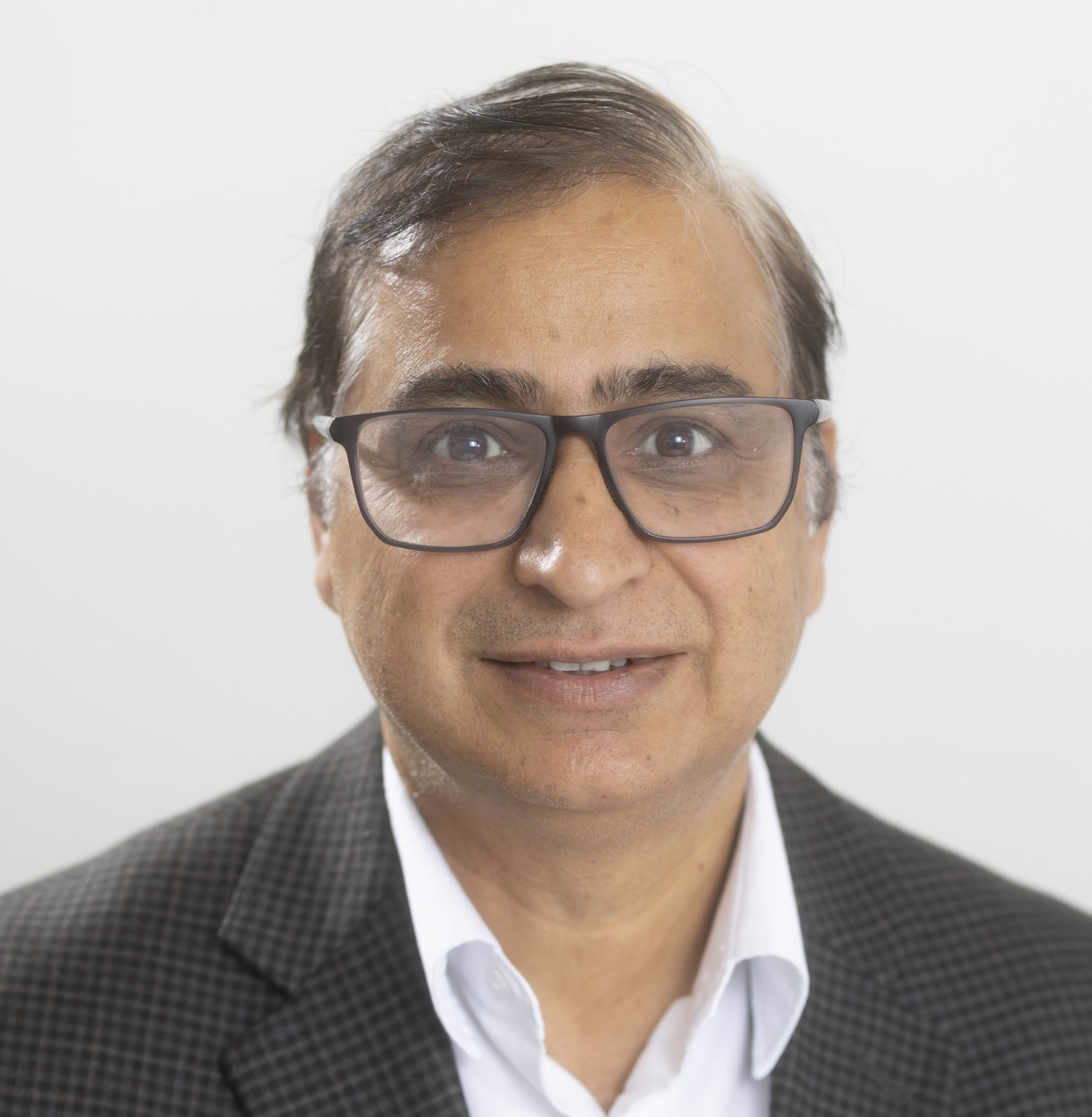
Pramila Bajracharya falls somewhere in between: She patiently listens to inane queries of visitors, tries to clear their doubts, and then smiles.[break]
Perhaps explaining a painting to viewers is a different profession. Artistes do art; if they worried too much about what their work did to the audience, they would probably never be able to complete a piece. When you say this to Pramila, she smiles some more. Her silence expresses her thoughts most eloquently: She does not want to engage in theorizing. Just as no two artistes are exactly alike, every viewer is different, and free to interpret the work of her choice in the light of her own experiences and understanding.
Born in the bustling Ga Bahal of Lalitpur – literally meaning “a city of arts’ – in the sedate society of the early 70s, she obtained her Bachelor’s degree in Fine Arts (BFA) from the Fine Arts Campus in Kathmandu.

Traveling from her home to the college, the artiste in her encountered life in its various forms, and noticed changes taking place around her from close quarters.
The generation of Nepalis born in the 1970s has gone through immense upheavals. The Referendum in 1980 ended the world of old certainties. The People’s Movement, and the Constitution of the Kingdom of Nepal in 1990, brought latent conflicts of a diverse society out in the open. The traditional concept of monarchy was burnt on the pyre of King Birendra in 2001, and the wildfire Maoist insurgency showed that changes in Nepali polity were long overdue. Karl Marx had ordained that revolution must take place, peacefully, if possible; but violently if necessary. The People’s Uprising in 2006 proved that whenever necessary, peaceful protests are imminently possible and more effective than violent insurgencies.
Pramila expresses the bewilderment of her generation through her works. Her landscapes appear like rocks withering in incessant storms. Portraits have incomprehension writ large over faces caught in the maelstrom of life. Even her nature and eternity speak of the transience of all creations. Her works are not for comprehension, but for arousing a feeling of compassion.
The shades of black, blue, yellow, and green dominate her works, with a touch of red here and there. But what perhaps sets them apart from her contemporaries’ creations is Pramila’s dexterity in varying the thickness of paint to make a point. In some places, her brush merely touches past, and then there are areas where she lays them real thick. She may have her own reasons behind the technique, but it makes a viewer linger longer around every piece of her paintings. Sometimes you wonder aloud: Meaning of the painting too may be multi-layered.
Her works have been exhibited widely in the galleries of Kathmandu. Her paintings have also been exhibited in India, Belgium, Sri Lanka, Holland, USA, South Korea, and even Bhutan. Her creations have found place both in public spaces and private collections here and abroad.
A founder member of the Kasthamandap Art Studio at Kopundole, Pramila seems to work in silence. Perhaps she talks to her older paintings, and is in constant conversation with whatever she is creating at a given moment. One feels like an intruder in her private studio, and the urge to tiptoe out of the workspace grips the moment she lapses into a meaningful silence and flashes the enigmatic smile of a committed artiste.
Related story
Pramila’s 'Moments of life' on virtual display