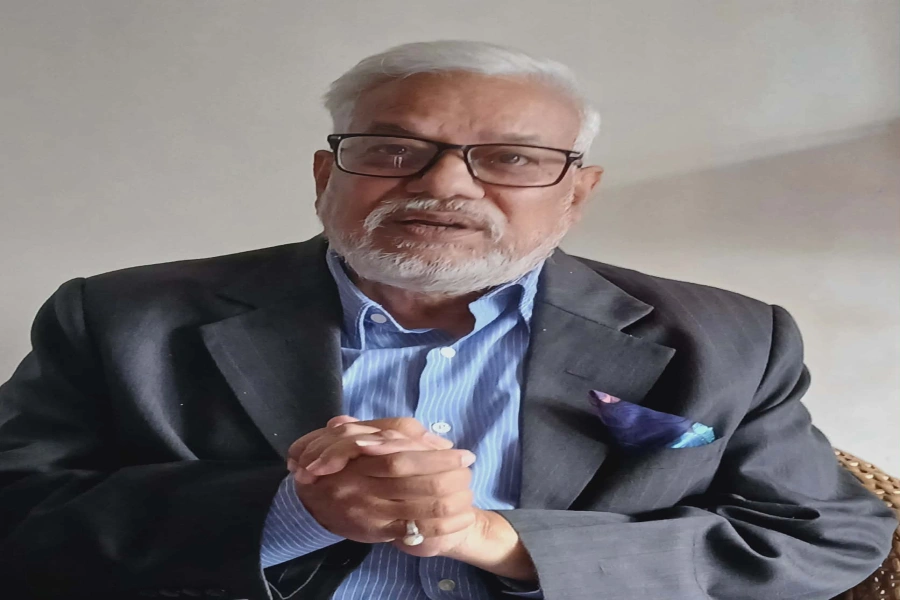
Prabhakar Ghimire, senior correspondent of Republica caught up with Chhiber after his meeting with Prime Minister and Finance Minister and senior government officials to discuss his assessment of the ongoing peace process and the support of UNDP in Nepal.
EXCERPTS
What is the purpose of your visit to Nepal, especially at this critical juncture?
The main purpose of my visit to Nepal is to assess how the political process is moving forward and what impact it would have on economic development of Nepal and also to assess the progress of UN’s projects and exchange views with stakeholders about the current and future UNDP programs and their relevance.
Nepal is heading toward a political showdown. How do you see the role of UNMIN? Do you support the extension of UNMIN?
The role of UNMIN is crucial in leading the current peace process to a success. The tenure of UNMIN will be determined by what Nepal wants. If Nepal finds that the role of UN is useful in the political process and peace building, then UN is ready to help Nepal. It is up to the Nepal government to decide whether to extend the tenure or not. As a member of UN, Nepal has rights to request for extension of UNMIN’s tenure. The Security Council will meet and discuss if Nepal requests for an extension.

How much is UNDP spending on Nepal’s development? What are the major areas? How has Nepal’s political crisis affected UNDP’s works?
UNDP has been involved in Nepal’s development efforts since 1963. UNDP has been assisting Nepal in crucial sectors such as sustainable livelihood, child mortality, maternal health, income generation, poverty, combating HIV/AIDS, malaria, energy, natural disaster management as well as peace building. The recently inaugurated micro-hydropower project in Lukla is one of the examples of our assistance in development project in Nepal. Currently, we are spending US$38 million in different development and peace-related projects in Nepal.
How has Nepal’s political crisis affected UNDP’s projects?
Some of our development programs in rural areas may have witnessed/experienced some problems. We can’t say the ongoing political uncertainty has affected all our works as we are extending supports to resolve the existing political situation and smooth functioning of peace process in Nepal. Some of the projects are related to constitution writing and peace. I think we can do more in the coming days as well. We are looking at how we can help Nepal in peace process such as constitution writing and strengthening democracy. We have dual dimension in our program – development and politics— which are interlinked. A lot of money in Nepal is going into unproductive sectors such as real estate due to uncertain political situation. As Nepal is sandwiched between the two very fast growing countries—India and China—if there is political stability, Nepal can easily achieve double-digit growth in the future.
How do you see Nepal’s progress in achieving the MDGs?
Overall, Nepal is doing very well toward achieving MDGs despite political uncertainty. The crucial sectors such as reducing child mortality, maternal health, poverty reduction, combating HIV/AIDS, malaria are achieving more-than-expected progress. The combination of different factors such as significant inflow of remittance, more international assistance and good arrangements in health and education, community-led schemes and well aware civil society have led to this success.
However, we have identified some difficulties in achieving the goal in some sectors such as hunger, reducing unemployment rate and environment sustainability, given the current trend.
The global financial crisis and soaring food prices have made more people insecure than before. United Nations World Food Program (UNWFP) on the other hand is not getting enough funds to continue even the regular programs of providing food supplies to food scarce districts and Bhutanese refugees. How do you view this? What is UN doing to manage the situation?
We have one of the largest humanitarian operations in Nepal. This year it is more difficult to raise resources for food to Nepal than last year. We had been successful to secure money from the UN Emergency Response Fund. It is too early to say how much additional fund we are providing for food supplies through UN World Food Program.
How is UNDP supporting the peace process in Nepal? What is your view on the lack of progress as expected regarding integration and rehabilitation of Maoist ex-combatants?
UNDP has been involved in rehabilitation of 4,000 ex-combatants of UCPN (Maoist). This is a process yet to be completed. We are also helping in constitution-writing process though constitution dialog projects through which lots of training has been provided. Those involved in the constitution-making process have also been provided opportunity for international experience. We have completed the first phase of rehabilitation of ex-combatants.
Rehabilitation is going on smoothly. I don’t think that the rehabilitation process has slowed down. Task of reintegration of ex-combatants is important and difficult as well. Some 700 out of 4,000 ex-combatants have enrolled in vocational trainings and remaining 3,300 are getting registered for training. As far as the 19,000 Maoist combatants cantoned in different camps are concerned, they should be integrated at the earliest as per the peace accord to resolve the existing uncertainty about their fate. UNDP is ready to assist if asked to assist combatants’ reintegration process once consensus is reached on where they would be integrated.
How are you assessing the ongoing donation drive by the Maoists?
I think Nepal has to deepen its democratic process. Political parties should follow democratic norms and give up violence. At this particular point, when tensions are high, political leadership have to show extreme restraint and caution to find solution by not reverting back the political process.
What was the outcome of your meeting with PM Madhav Kumar Nepal?
We had a discussion on ongoing peace process in Nepal. All sides should show restraint to find the solution to existing political crisis. Otherwise, if the ongoing process starts to reverse, it would be very difficult to go forward with the process, as we have seen in different countries. Our advice is that there should not be any room for violent activity in democracy and political leadership should show extreme restraint to avert untoward situation. Visionary leadership, dialog, consensus and compromises are necessary to overcome the deepening political crisis in Nepal. During my meeting with the PM, I also emphasised the need for smooth progress of peace process and implementation of Comprehensive Peace Agreement.
Despite some problems seen in this political transition, I am hopeful that existing peace process would be brought to a logical end through common understanding and consensus of responsible political parties. If the process breaks down, the country has to bear the heavy cost for years as we have seen in other countries.
Related story
16-day Campaign against VAW: 80 percent of GBV includes domesti...