The effects of global warming have been witnessed in China, in the shrinking of wetlands at the source of China’s two greatest rivers and has led to reduced water flows that could have an impact across Asia. The Wetlands on the Quinghai Tibet plateau have shrunk more than 10 percent in the past 40 years, with those at the Yangtze´s origin contracting an alarming 29 percent. Likewise, 17.5 percent of the small lakes at the Yangtze´s source have dried up whereas. Wetland plays a key role in containing water and adjusting the water volume of rivers (Wang Sugen, Chinese Academy of Science).
Wang Sugen has further said that the shrinking of the wetlands on the plateau is closely connected with global warming. On the one hand global warming-induced change in the region will have a negative impact on the world´s climatic health; on the other, Tibetan rivers are a life-line for Asia. Likewise, a Chinese study released earlier this year found that glaciers on the Tibetan plateau have been melting at an average rate of 131.4 square kilometers per year over the 30 years. The survey further suggested that even if global warming did not worsen, the ice fields would shrink by half by 2090. Scientists further claimed that a depletion of the water reserves stored in glaciers and wetlands on the plateau could have a severe impact on regional water supplies. Such research findings have been supported by numerous researches carried out by the scientific community.
Besides, massive glacial melting at an alarming rate is another problem faced at present, as suggested by the research carried out by scientists. For instance, China´s remote Xinjing region is home to nearly half of the nation´s glaciers that supply the rest of the country and other parts of Asia with water. However, they have shrunk by 20 percent and snow lines there have receded by about 60 meters (200 feet) since 1964.
This was stated by the Chinese Academy of Science in a report, accordingly to the official Xinhua news agency. Global warming is blamed for the rise in the average temperature of the glacier by 10 percent over the past two decades, according to the Academy. While other reports have emerged in China´s state-run press about the demise of Tibet´s glaciers, those in Xingjian had previously been given scant attention.
One of China´s top glaciologists, Yao Tangdong, warned last year of an "ecological catastrophe" in Tibet because of global warming. He said most glaciers in the region could melt away by 2100 if efficient measures were not taken. Likewise, a United Nations Paned of global scientists agreed in a landmark report this year that human activity was responsible for global warming largely due to the use of fossil fuels such as coal and oil.
Such adverse impact on glaciers is occurring not only in Asia; it has become a cause for global anxiety and tension. Because glacier melting is also occurring quickly in Greenland and Antarctica as well, this has been a contributing factor for rising of sea levels. Rising sea levels also threaten the existence of states and humanity. Scientists suggested that even though these glaciers contain only 1 percent of the water tied up in the great ice sheets of Antarctica and Greenland, they could account for 60 percent of an anticipated rise in the world´s sea level by the year 2100.
Researchers writing in the online journal Science Express estimate melting glaciers, which are located all over the globe including in the tropics, could add between 4 and 10 inches to world sea levels this century. While this may not sound like much, consider that some 100 million people live within 3.3 vertical feet of the sea level, said Mark Meier of the University of Colorado-Boulder, a lead author of the study. "If we had almost a foot(of sea-level rise) due to the small glaciers, add that to the amount due to the ice sheets, which could be appreciable by 2100, and add to that the ocean warming which will cause it to expand in volume, then we get a rise that we can´t ignore" Meier said.
UNDP has said that in China alone, 300 million farmers in the country´s western regions already face worsening water shortages from lower volumes flowing from the reduced glaciers. This message indicates the severity of the problem faced today by China and it is assumed that her neighbors also might be facing the same fate.
A study by Sung Lian Chaun of the China Metrological Organization has said that the recent extreme weather-flood is contributed by global warming. "It should be said that one of the reasons for weather extremes this year has been unusual atmospheric circulation bought about by global warming" Song told a news conference carried live on the central government Web site (www.gov.cn).
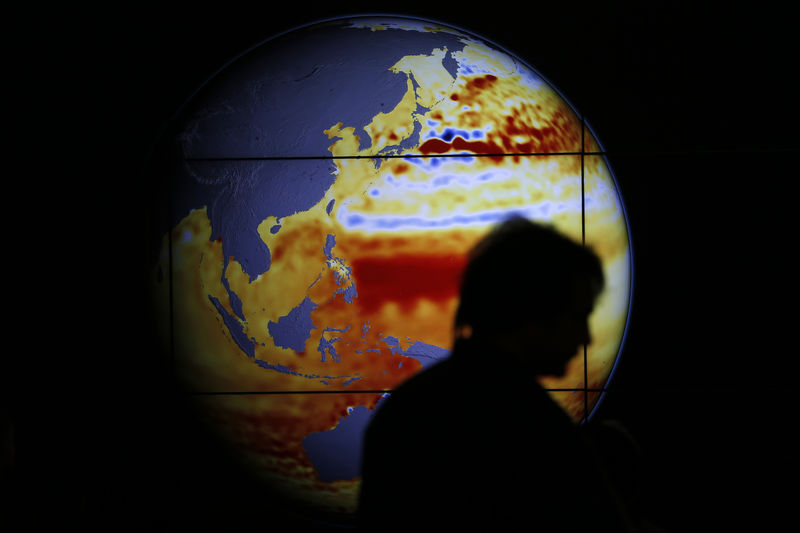
Some parts of China have had too much rain, and others too little this summer. About 7.5 million people are suffering from drought in a wide swathe of the country which includes Jiangxi and Hunan in the south and Heilongjiang and Jilin provinces in the northeast, Xinhua news agency said. If we look at the global level a similar picture has been predicted. An international global warming conference approved a report in the first week of April indicating dire threats to the earth and to mankind from increased hunger to the extinction of species, unless the world adapts to climate change and halts its progress. Particularly, in Asia severe flood and drought will hit the region even if attempts are made to check or control the worsening effects.
China has initiated various measures to combat the situation. For instance, China has given emphasis to clean energy and is striving to replace the energy generating scenario that has proved to be a contributing factor for green house gases, climate change and global warming. However, she has refused to take account of her contribution, as alleged by the West. Nonetheless, Beijing has started work on a 580 Yuan ($76.69 million) project to build 33 windmills to supply clean energy in time for the 2008 Olympic Games, State media said in July. The new power plants, which are on the outskirts of Beijing, have been producing an estimated 100 million kHz of electricity a year and help reduce the city´s reliance on polluting coal-fired generations, The China Daily said. "Beijing has never had any large windmills before, much less wind-power station," it quoted an official as saying. "Wind power could arouse people´s awareness of energy conservation and environment protection" the official added. The project, which the paper said was the 10th largest in the world, would also cut carbon dioxide emission by at least 10 million tons per year, it said. Meantime, the Chinese Olympic Committee wanted at least 20 percent of the Olympic venues to be powered by wind-generated electricity. The government was considering subsidies to encourage people to use wind power, which would cost 0.3 Yuan per kHz more than getting electricity from a coal-fired plant.
The report of the IPCC said that up to 30 percent of the earth´s species face an increased risk of vanishing if global temperatures rise two degrees Celsius above the average of the 1980´s and 1990´s. Areas that now suffer a shortage of rain will become even drier, adding to risks of hunger and disease. The world will face heightened threats of flooding, severe storms and the erosion of coast lines. Every region will be hit hard as a result of global warming. Parts of Asia are threatened with massive flooding and avalanches from melting Himalayan glaciers. Similar occurrence will take place in Europe as well.
The case of Nepal is not different. One the eve of the Live Earth last July, Peter Hilary and Jamling Tenzing issued a timely warning that global warming is rapidly changing the face of the world´s highest mountain and threatening the survival of billions of people who rely on glaciers for drinking water. The base camp where Sir Edmund and Tenzing Norgay began their ascent is 40 meters lower that it was in 1953. The glacier on which it stands, and those around it, are melting at such a rate that scientists believe the mountain, whose Nepalese name, Qomolangma, means Mother Goddess of the World, could be barren rock by 2050. This fact is further supported by recent research by the Meteorological Department, a GON institution responsible for this area. It reported in media that from 1975 to 2005 temperatures have risen by 1.8 Celsius in Nepal. The other threat to Nepal is the potential burst of 32 glacial lakes, which could be a great disaster from the Himalayas to the Tarai region on the Indo-Nepal border. One can assume the level of disaster if one considers the havoc caused by the outburst of one glacial lakes in 1988 in Solukhumbu district. Likewise, another study suggests that clean energy could save the world $180 billion a year in costs by 2030, while reducing emissions of carbon dioxide, the main gas blamed for global warming, according to a report published in Europe.
From the point of view of diversion of river water in TAR and the challenges pose by climate change and global warming, South Asia has to face a double-edged sword. The resolution of the first problem depends on the progress made during diplomatic and academic endeavors. The latter question needs be sorted out to reverse the impact of global warming by following the recommendation made by the scientific community. Doing nothing is not an option but reversing the trend of nature by undertaking the undoing of past mistakes in order to rectify the impact is a complex and formidable job. Therefore, it is high time to work globally in a coordinated and comprehensive manner in order to resolve this grave issue. National efforts alone in isolation are not the right answer to these serious global challenges.
trupprety@hotmail.com
(The writer is secretary at the Ministry of Law, Justice and Constituent Assembly Affairs.)
Related story
Why is Climate Finance a Focus Area for Nepal?

-1767250672.webp)