The task before the commission is difficult and yet crucial. It has to advise the CA on proper model of state restructuring that meets the needs and aspirations of people belonging to different ethnic groups living in mixed settlements in different parts of the country. Identity and capability are the two concepts that the commission has been asked to consider.
MULTIPLE IDENTITIES
It is important to be aware that we have multiple identities. A few years ago when I went for a visit to Gorkha Durbar, I was asked by the gate keeper to register my name. I wrote: Prakash Chandra and deliberately ignored my surname. But the gate wanted me to write my surname. I tried to convince him that my name is just Prakash Chandra and that I am a Nepali citizen and nothing more. He would not agree. It then struck me that even if I refuse my caste identity and think of myself as just a Nepali most people are not yet going to accept it, at least in this time period. I am sure that it will change, and it has to change in the future—the kind of future where people will be accepted for what they are and not for their caste.
All of us have multiple identities with multiple inter connections and linkages that cover a wide range of spheres from culture to region, language to dress, political ideology to regional affinity and indeed a whole set of issues that affect our life. The identity domain can take different values over time. What seems important and crucial in one age may seem irrelevant in some other. About 150 years ago people in the US belonging generally to the same culture and race were like two sides of a river determined never to compromise. The result was a destructive conflict where thousands of people died for their political and regional identity. Now it is all history and one is left wondering how it all happened
With mixed ethnic settlement all across the country, limiting political leadership to one ethnic group may invite tension instead of harmony.
The challenge before any nation is to evolve a consensus so that different identities mesh into a unified whole consistent with peace, harmony and development of society. When this is not possible and our identity domain starts being limited to a few, or even worse, just one variable, there is a danger of confining ourselves to individual silos, unable or unwilling to understand those in other silos. Often forces of instability and anarchy, sometimes in academic garb, deliberately promote this silo mentality to the detriment of peace and harmony.
SOCIAL CAPITAL
In Nepal identity politics is becoming a major force and there is a danger it will ignore or deliberately denigrate other common identities citizens of Nepal share. Facing this challenge means formulating policies and even new institutions to absorb new identities while strengthening national identity. In effect, we face the problem of finding harmony among different identities at different levels within our socio-political structure while also promoting and strengthening our national identity.
There are different ethnic identities in the country and people increasingly relate to one or the other. This has to be accepted. While seeking our own ethnic identity we should also recognize the ethnic identity of another fellow citizen and remain aware of our multiple identities. In this context putting almost 10 million citizens of the country (Bahun, Chhetris, Thakuris, Giri, etc) into the "others" category gives perhaps the unintentional message that the Khas community, comprising one third of the country´s population, does not have any cultural or ethnic identity.
This was dramatically illustrated when I visited a relay protest organized by the Khas group who were holding a protest of sorts in front of the CA building. As soon as I entered their tent one gentleman got up and said: "Welcome Mr Others". I was confused. Perhaps the gentleman garlanding me understood my confusion and said, "Lohani Ji, in the present constitution we, almost 10 million people, are categorized as "others", meaning that we have no cultural or ethnic identity. So your identity is simply "others". Is this what you intend to continue in the new constitution?
Do you think we will accept it the way it is now written in the present interim constitution?" I understood the situation and reassured him: Look, I realize your concerns but let us never forget that we are first and foremost citizens of Nepal. It is within the context of this national identity that we seek our cultural/ethnic identity. Our inter-cultural linkages are so strong that we will never allow ourselves to be limited to our separate silos. If there have been mistakes in the interim constitution we will collectively rectify it in the new document." With this declaration and indeed my own conviction I left.
Once outside I decided to find out how the Khas community was left without any identity. I asked one of the signatories of the interim constitution about the whole episode. His reply was revealing. He said: "Well, we were in the Election Commission and had agreed on the Dalit, Janajati, Madhesi classification scheme. But we were not clear how we should categorize Bahun, Chhetris, Thakuris, Sannaysis etc. Then a foreign advisor suggested that it would be best to categorize Bahun, Chhetris etc as "others". We accepted it without any analysis. Now we know that it was a mistake." It seems that we had delegated the task of decision on this crucial issue to our foreign advisors.
Nepal may be poor in physical capital but not in social capital. For example politicians in Nepal may have diametrically opposite views on the future constitution but when it comes to social interaction and social communication there remains a level of respect and warmth. It is this strength of Nepali social fabric that gives us hope that the silo mentality, the feeling of "us" vs. “them” –that some, even those who claim to be social scientists, are trying to encourage, will not be able to replace the sentiment of unity exemplified in the thinking "We the Nepali people". Nevertheless it is also important for policy makers to ask why the ethnic issue is emerging as such an important agenda.
CONSTRUCTIVE MANAGEMENT
In a very important sense, the resurgence of identity is a demand for self respect, social dignity and opportunity for substantive equality and participation in political decision making at all levels from the disadvantaged Janajatis, Dalits and Madhesis. In the past, the political system mostly favored the so called "creamy layer" of two or three ethnic communities. Those left behind now want to be full participants in national politics and state management.
This is a legitimate aspiration that must be accepted, respected and used as a basis for strengthening our common national identity. The new awareness of ethnic identity is in fact a demand for self respect, dignity and inclusion in the national political life, generally in line with the share of the population of a given ethnic group. This principle, generally accepted by all political parties, needs to be institutionalized through the constitution.
Clearly, when we accept that proportional representation in the national politics and state management is the basis of our constitution, the classification of ethnic groups assumes importance. This is where our categorization of over one-third of the Khas community population as "others" becomes an anomaly. Are we trying to establish that the community does not have an ethnic/cultural identity?
The other issue we have to consider is the notion of preferential political right at the province level, commonly known as federalism based on ethnicity. Based on my understanding ethnic federalism as understood in Nepal has two elements. First, the province will be named after the largest ethnic group in the proposed state. Second only member of the largest ethnic group will have the absolute right to lead the state at least for two terms. Both these privileges however will not be available to the Khas community. We need to think over these issues carefully keeping in mind the unity and interest of our people.
As there are mixed ethnic settlement all across the length and breadth of the country, limiting the right of political leadership in a province to one ethnic group may be a recipe for tension instead of harmony. Basically all ethnic groups need to avoid falling into the trap of what one social scientist labels "territorial rights or identity based recognition" as the sole concern of federalism irrespective of its impact on the theme "We the Nepali People".
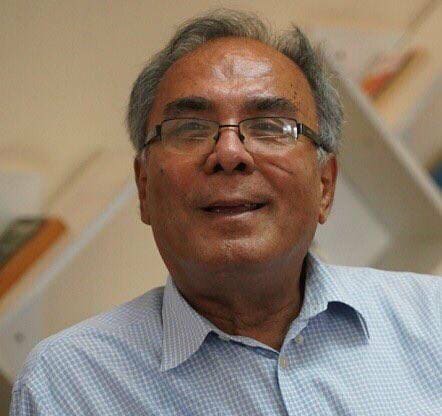
The writer is the co chairman of the Rastriya Janasakti Party
prakash_dr@hotmail.com
Related story
Now onward, people can make suggestions to bills tabled in parl...