February 18th, 1951, brought a surge of hope among Nepalis as King Tribhuvan on that day 65 years ago landed back in Kathmandu, ending his self-imposed exile in India. He had returned after an agreement with the Rana rulers in Kathmandu, according to which an interim government would replace the 104-year-old Rana oligarchy. The new government would be headed by the king himself, with an equal number of representatives from Nepali Congress and the ruling Rana family. The ultimate goal was to hold an election to a Constituent Assembly which would then write the first democratic constitution of Nepal. It wasn't meant to be. The liberal-minded King Tribhuvan soon died and was replaced by his eldest son, Mahendra. Unlike his father Mahendra had little faith in democratic policy, which, in his belief, was unsuited to 'Nepali soil'. He took over all executive powers in a 1960 coup and imposed a party-less Panchayat system, which would be in place for 30 years before it, too, was replaced by a system of constitutional monarchy after the first Jana Andolan in 1990. But the country would have to wait for another 18 years before the long-desired Constituent Assembly was, at long last, elected in 2008.Arguably the most significant development in the political history of Nepal took place on May 28th, 2008, when the sovereign Constituent Assembly near unanimously decided to scrap the 250-year-old institution of monarchy. We have had a second Constituent Assembly since, which, on September 20th, 2015 promulgated the constitution of the federal democratic republic of Nepal, a constitution that was written solely by people's chosen representatives. The country has indeed come a long-long way since the return of King Tribhuvan to Nepal. But Nepal continues to mark that day, Falgun 7th in Nepali calendar, as Rastriya Prajatantra Diwas ("National Democracy Day"). On its 66th anniversary, it is worth taking stock of the democratic journey of Nepal in the meantime. In historical context, there is no doubting the significance of the new constitution promulgated by the sovereign Constituent Assembly on September 20th. Even with its flaws, it marked the beginning of end of the country's long and torturous democratic journey.
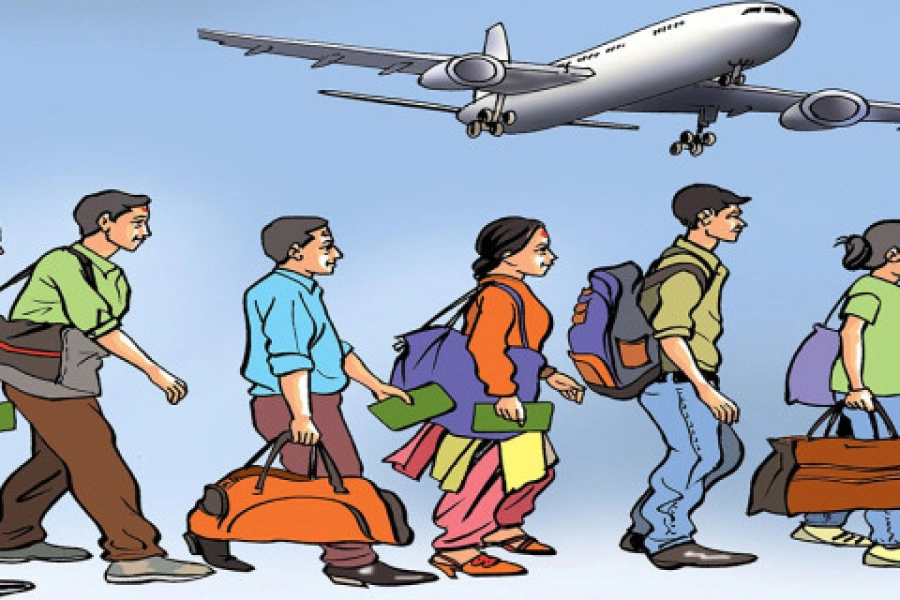
So this is also the perfect time to redefine our national priorities. Most of the past 70-odd years were spent in various struggles for democratic freedoms. But now that we finally have a constitution that cements these freedoms, the country must now look to quickly resolve the few remaining political problems and then embark on the path of sustained economic development. For, ultimately, the goal of all democracies should be the prosperity of their people. What kind of policies does Nepal need in the changed context? How does it benefit from the economic growth of its two giant neighbors? How do we develop our industries and create new jobs and thereby end our unsustainable reliance on remittance? These are the kinds of questions we should be asking now. As Nepal marked Falgun 7th this Friday, our prime minister was headed to India on a state visit, 65 years after King Tribhuwan returned from India. History seems to have completed a full circle. China is the next stop on Prime Minister KP Sharma's itinerary. What better opportunity to finally realize another of our old dreams: to make Nepal a vibrant transit hub between India and China?
Related story
Coronavirus: Are you suffering from 'Medium COVID'? Here are so...