There have been concerns and questions from different stakeholders regarding the proposed conference, whether this is a right approach, and the right time. This article tries to establish that this is a timely and responsible approach.
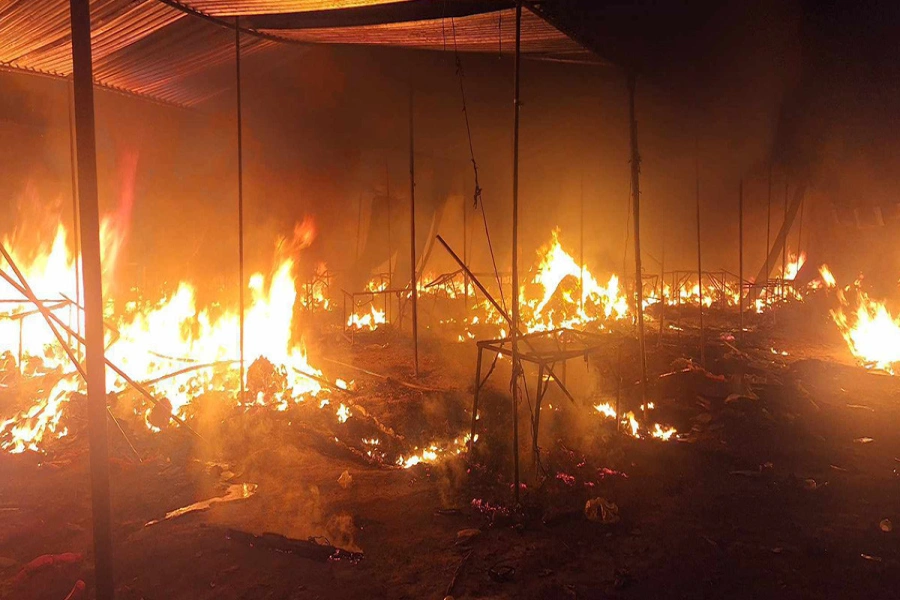
Over 8,600 people have been killed and about 21,000 injured. Over half a million private houses have been damaged, and more than 10,000 public buildings destroyed, including the government's central secretariat, and the Prime Minister's office. Many historical monuments under UNICEF heritage list have turned into rubble.One in every five Nepalis has been affected by the quake. Many cracks have been reported in the hills and mountains that were already fragile due to global warming and climate change. Infrastructures such as roads, school buildings, health posts, markets, and major hydropower construction sites have been severely hit. Asian Development Bank has revised Nepal's GDP growth for this year, down to 3.8 percent, from the original target of over five percent.
The country had just emerged from a decade-long conflict and was laying the foundation for stability and growth when the devastating earthquake struck. The country was on track for MDGs targets, poverty was falling rapidly, and the ambitious target of graduating from LDCs status by 2022 was set. Other than slow pace in constitution writing, Nepal was in a fairly stable condition. But the Great Quake and its repeated aftershocks have posed serious challenges. Rehabilitation and reconstruction require a huge amount of resources in terms of funding, technology, and knowledge support. For this, domestic resource and capacity are insufficient. The country needs large-scale international assistance.
As mentioned earlier, donor conference, in the aftermath of major disasters is an established international practice. For example, in Pakistan, Haiti, India (Gujarat), and Indonesia, donor conferences have been helpful in collecting funds to implement post-disaster reconstruction and new construction plans. In the wake of the enormous human and property losses, it has also become necessary for Nepal. The earlier estimation was that the loss caused by the quake could be around US$ 5 billion. However, as post-disaster assessment is underway, a much higher loss has been suggested.
How do we find resources to recoup this loss? Domestic revenue is estimated to go down by over Rs 40 billion this fiscal. Domestic borrowing has a ceiling; and sufficient liquidity should be left for private sector to rise from this emergency. Nepal is also not efficient in cutting public spending to mobilize additional revenue. The private sector, including the financial sector, itself has suffered badly. Foreign Direct Investment was inadequate even prior to the quake. Even now expectations are low.
Remittance, which contributes about 30 percent to GDP, is mostly used in consumption. Furthermore, earthquake could affect it as well, as many workers abroad are coming home to be with their families. Therefore, calling for an international high-level donor conference, presenting our needs there, and raising resources from this platform, is the most viable option for Nepal at this critical point.
A National Reconstruction Fund of US$ 2 billion has been established to initiate reconstruction and rehabilitation. The government has allocated US $200 million to this Fund. For the remaining amount, the government is relying on international development partners. Of course, we may have to collect much more than $2 billion.
The National Planning Commission is leading Post Disaster Needs Assessment (PDNA), and development partners are involved. The first draft of PDNA is expected to come by June 10; the final version will be out on June 15. Some believe it is too early to have a PDNA. However, a PDNA in about six weeks of disaster is international practice. Government officers and engineers have reached every disaster-hit household to collect primary data for PDNA. The PDNA exercise is being carried out under the principle of BBB: Build Back Better. It will be a credible document in the donor conference.
Is June 25 the right date for the conference? There is no standard right time. But sooner is better. For example, Pakistan in 2005 organized a donor conference in Islamabad within six weeks of earthquake. Given urgent challenges for reconstruction and rehab, waiting longer would mean the government is being insensitive to the situation. So Nepal has no option to moving swiftly.
Moreover, at present, there is an enormous amount of sympathy and solidarity for Nepal in international community. This will be the right time to appeal for international support before public memory starts fading and global attention is diverted. Loss of attention is loss of assistance as well.
The World Bank's Disaster Risk Framework suggests that it is good to call donor conference on a date that can also serve as a memorial or reminder of original incident. The proposed date, June 25, has been carefully chosen to coincide with exactly two months of the earthquake.
Additionally, it is the government's responsibility to build confidence in the market and revive the economy. Due to the earthquake and multiple aftershocks, people are nervous, and businesses are losing confidence. The economy is susceptible to reversal. The conference, which will bring together many high level delegates from around the world, will not only bring funding pledges, but also solidarity and support. This will help rebuild our confidence and put the economy back on track.
Tourism is Nepal's international identity. The earthquake has hit it the hardest. The conference will also help boost tourism and regain Nepal's lost identity.
Above all, Mid-July is Nepal's annual budget presentation time. Budget has been a document of hope and change. As we have just undergone the massive earthquake, the government must announce its reconstruction and rehabilitation plans through the budget. This will assure people that the government is behind them; it cares for them, it is accountable and caters to their needs. Calling a donor conference to collect required resources before the budget, therefore, is wise.
There are certain things we must do immediately to make this conference a success. First, it is better to create a special purpose vehicle (SPV), for example, a reconstruction authority, to carry out reconstruction and new construction. The existing machinery is enough for this challenging job. The current low rate of absorption of foreign aid also argues for a powerful authority.
Second, there should be a reconstruction policy. Without such a policy, it will be difficult to convince donors. Third, we need reconstruction legislation. Backing up SPV with legal authority and needed powers is important. An early announcement of those three instruments will demonstrate our preparedness and commitment for this challenging task.
The author is the Joint Secretary and Chief of International Economic Cooperation Division of the Ministry of Finance. Views are personal
Related story
Desperate search for missing girls as nearly 80 dead in Texas f...