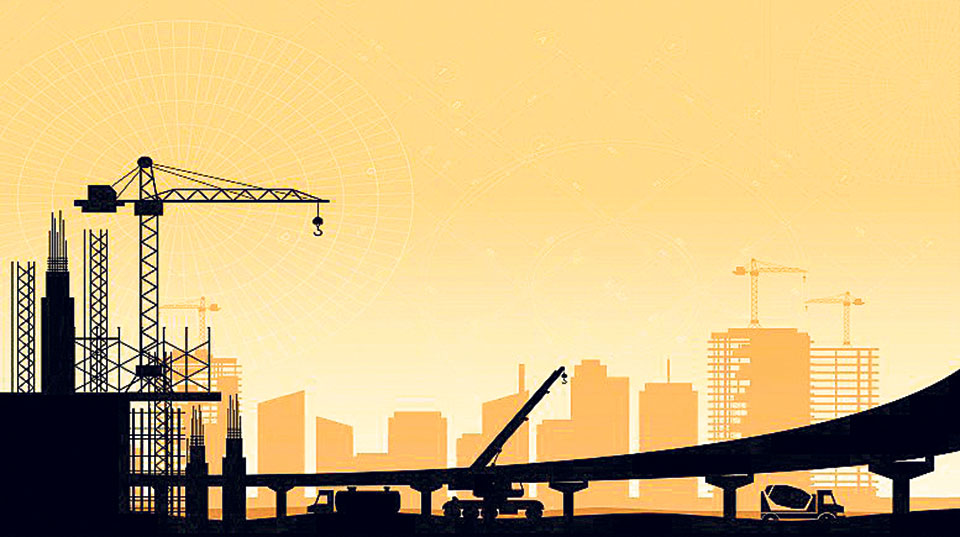
There is in principle nothing wrong with the idea of an autonomous 'Reconstruction Authority' that some politicians and a section of the intelligentsia have proposed. Such bodies were quite common in the immediate aftermath of the Second World War as both the former 'Allied' and 'Axis' powers were looking to rebuild. More relevant to Nepal, after the devastating 2001 earthquake in the Indian State of Gujarat, the state had set up the Gujarat State Disaster Management Authority (GSDMA). The agency was mandated to undertake rehabilitation and reconstruction works in earthquake-affected areas and to act as a nodal agency to plan and implement disaster preparedness and mitigation activities. It was headed by a chief executive picked from among Indian Administrative Service (IAS) officers. The agency is credited with a phase-wise reconstruction of the state (1,100,000 new homes, 13,000 new school classrooms) and making Gujarat resilient to future natural disasters. Hence, such an autonomous body can work. But making it tick won't be easy.In Gujarat, only three months after the earthquake, Narendra Modi was elected the state's chief minister. The hands-on Modi took keen interest in reconstruction from the start. The business-minded leader was also able to take big foreign donors into confidence that their money would be well spent. Of course, Modi as chief minister had his faults, perhaps his failure to rein in Hindu religious fanatics during the 2002 Godhra riots the most egregious of them all. But if he had one strength, it was his ability to single-handedly push ahead with big development and reconstruction projects. He made sure GSDMA was given the needed autonomy to function effectively. Only a leader of his clout could do this. It could not have been easy to keep away his political functionaries from trying to milk the new agency dry, an all-too-common fate of big state-controlled agencies in India.
The realities in Nepal could not be more different. To start with, no political leader in Nepal has the charisma (and the cunning) of Modi. Without such a strong political leader at the helm, the kind of reconstruction authority being planned in Nepal could become a political football, irrespective of who heads it. It will have to deal with more than a dozen line ministries, the private sector, NGOs and the NRN community. With such a broad ambit, there is bound to be endless political jockeying to pick its head. But even if we assume someone capable if found to lead it, even in that case spelling out its jurisdiction and mandate will be hard. Why exactly do we need such an agency? What is the guarantee that relief and reconstruction works, instead of gaining momentum, won't be stalled by an added layer of bureaucracy? The current proposals on table are all vague. To make such an agency viable, somebody will first have to put forward a clear plan. Otherwise, if we establish such a body without proper homework, it could start functioning as a parallel government in this period of political uncertainties. It is better to plan wise than repent in leisure.
Related story
Council of Ministers approves 16th Five Year Plan, aims to incr...