Where the PM is wrong

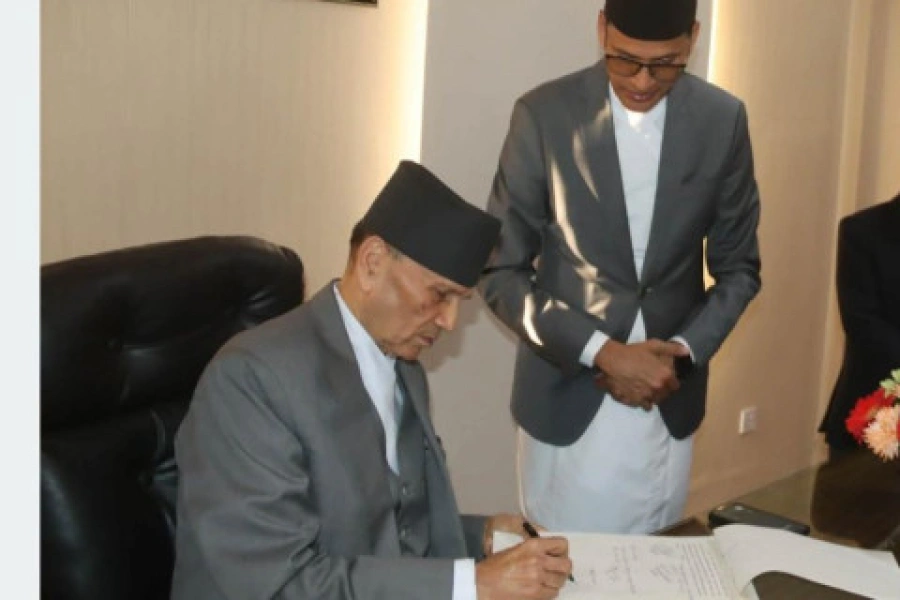
Prime Minister KP Sharma Oli has a lot on his plate. The Tarai has been tense for four months but final solution is still nowhere in sight. Already, 50 people, including police officials, have been killed in oft-violent protests. Anyone would have a hard time managing a fractious 15-party coalition, with each baying for a bite of the juicy government pie. The prime minister was clearly spooked by the recent withdrawal of support of CPN (Samyukta), with its three lawmakers, for his government. To prevent any more defections, he has in the past few days vastly expanded his Cabinet, now 40-strong, and broken up existing ministries in order to accommodate everyone. As a result there are now 28 ministries in the country. This flies in the face of the suggestion of the Administrative Reform Recommendation Committee that the number of ministries be reduced to 18 to ensure effective governance. The suggestion has been thrown into the dustbin due to, in Oli's parlance, the "necessities of time". Black-marketing of fuel and daily necessities is now common. Without reliable shelters, 20 earthquake victims have already frozen to death this winter.
The most disappointing part about the two and a half months of Oli's tenure as prime minister is his indifference to the suffering of common people. True, the challenges before him are herculean. It's not easy to accommodate the Madheshi parties who are adamant that their bottom-line is two Madhesh-only provinces spanning the entire Tarai belt. The Madheshi parties must be more flexible. But nor has Oli government done anything to take these parties into confidence and ease people's hardships. He has instead needlessly provoked the protesters with his loose tongue. It is shameful for the prime minister to imply that coalition compulsions have made him compromise with governance. Nor can there be any justification for leaving up to 600,000 people displaced by the calamitous earthquakes earlier this year to fend for themselves. His government's tardiness in building trade links with China, and reducing Nepal's overreliance on India, is also deplorable. China would take Nepal more seriously had Nepal been eager to do its bit, for instance by upgrading its major road links with Tibet on a war footing. Otherwise, the Chinese will think that Nepal wants to be close with it only when relations with India sour.People in earthquake-affected regions are dying for the want of basic clothes and medicines. The Indian blockade has added to their difficulty. But what is their own government doing to help them? Very little. The reason they have had to suffer so much of late is that the two biggest parties in the country could not see eye to eye on the establishment of the Reconstruction Authority, with billions of rupees worth of reconstruction contracts at stake. Cartels and syndicates continue to thrive; inflation, already in double digits, is threatening to go out of control. In fact, with the exception of the promulgation of new constitution, it is hard to think of one good thing that has happened since Oli assumed power on October 11