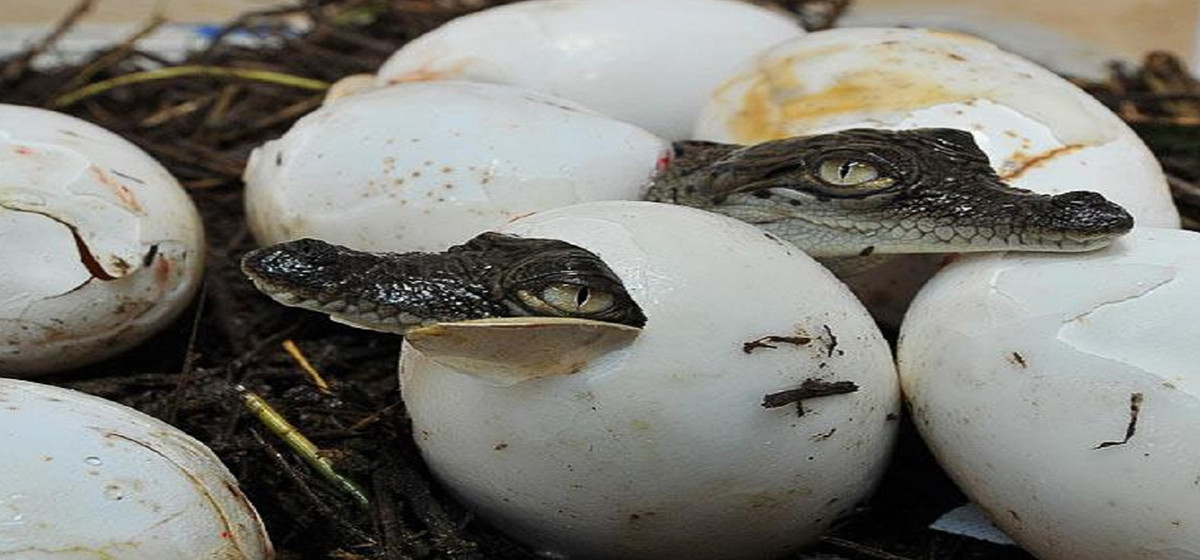
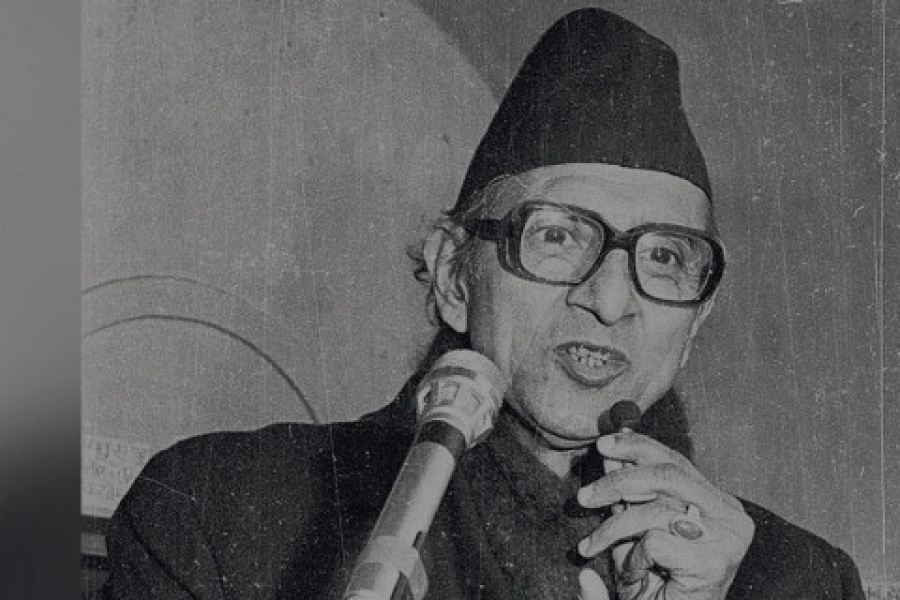
If ever there was a evidence of shedding crocodile tears and acting in profoundly self-serving manner, no better instance can be found than in the accolade late Ganeshman Singh is now receiving from Nepali Congress (NC) establishment.
The purpose of NC’s change-of-heart appears to be a desperate attempt by its failed leadership to get public sympathy by exploiting Ganeshman’s legacy of charismatic leadership of NC and his impeccable democratic credentials that provided crucial help in the country’s transition to democratic rule in 1990, without much bloodshed and unrest that usually accompany such transitions. [break]
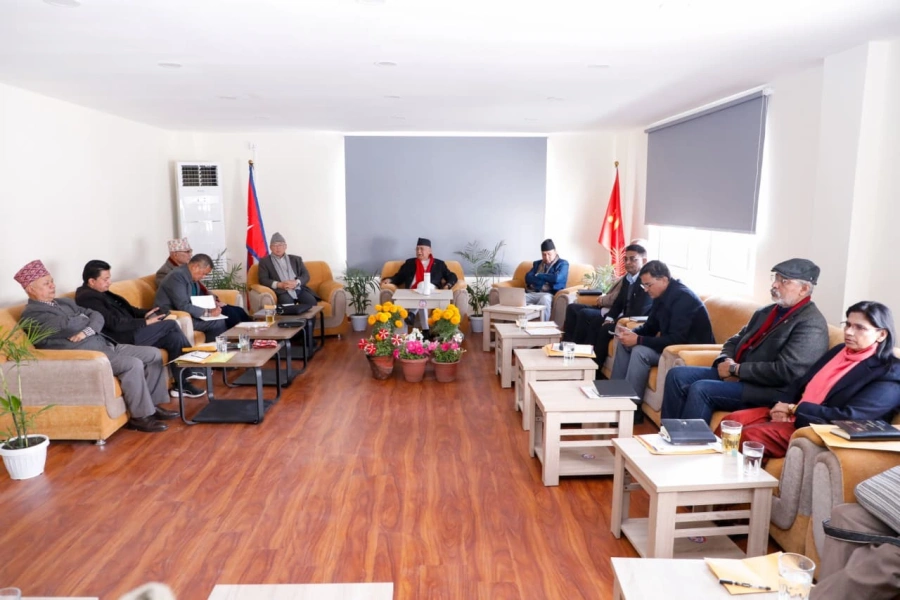
 The case in point is Ganeshman’s 97th birthday celebrations event on November 9 organized by NC. At the birthday gathering, NC President Shushil Koirala applauded Ganeshman’s contribution to the restoration of democracy, saying: “Leader Singh was a source of inspiration for those involved in the democratic movements, and he urged all the parties to follow the path of cooperation [shown by leader Singh].”
The praise and adulation bestowed upon Ganeshman in no way exaggerates the measure of his stewardship in the fight for restoration of democracy, especially after the death, in 1982, of the country’s revered and well-loved leader, Bishweshswar Prasad (BP) Koirala.
Ganeshman Singh (GM) was one of the four high-ranking NC leaders imprisoned by King Mahindra for eight years (1960-1968). These four were jailed for their refusal to accept the King’s rule under the Panchayat system; this defiance continued even after they were out of jail. BP relied heavily on Ganeshman’s ability to galvanize support for democracy among the elite Kathmandu population and Singh’s abiding faith in the eventual demise of absolute monarchy and its replacement by popular democracy.
However, the fight for democracy appeared to be losing steam after BP’s death in1982 and the failure of Satyagrah in 1985 which demoralized NC leaders, to the extent that they were prepared to accept limited democracy offered by the King.
However, Ganeshman was opposed to any sort of compromise with the King because, he argued, this would be going against the wishes of his political mentor BP. No other leader had the stature of Ganeshman to challenge his democratic instincts and the trust he had built with Kathmandu population and people all over the country as the true heir to BP.
Democracy did come some years later for which, after BP, no other leader contributed as much as Ganeshman. More importantly, Ganeshman did this as a matter of principle and not for personal gain or fame. He just wanted democracy to take roots and the country to prosper with it. His faith in democracy was strong and immutable!
It was Ganeshman’s personality and stature that convinced late King Birendra that he needed to back down at crucial moments during the fight for democracy early in 1990. After the Army had fired upon an unarmed crowd on April 6, 1990, it was unlikely that it would yield to crowd pressure. One commanding General later told me that the Army was prepared to kill as many people as needed to control the crowd and defend the Palace.
However, King Birendra turned out to be much wiser than he was reputed to be. He took into consideration Ganeshman’s resolve and his hold on Kathmandu’s population. He then surrendered and asked Ganeshman to become Prime Minister, but Ganeshman refused and advised the King to invite KP Bhattarai for the job instead.
DEMOCRACY ABORTED
Girija Prasad (GP) Koirala remained in the background during all these crucial moments of struggle for democracy and, KP once told me, GP’s instincts for democracy could not be trusted. However, when democracy did come and KP was made Prime Minister, GP wasn’t happy. He was displeased that he had not been invited by the King for the Prime Minister’s job, for which he thought he had an upper hand since he was BP’s brother!
Also, he didn’t like Ganeshman recommending KP and not him, which he considered demeaning. In retrospect, it appears both GM and KP had became his adversaries for leadership of NC. Girija Prasad spent most of his formative and productive years, both in and out of office, to subdue his chief opponents in GM and KP.
GP’s wrath at first was directed at KP, against whom he organized a battalion-size force of his loyalists, to ensure KP’s defeat in the election to be held within a year’s time, which was supposed to automatically disqualify KP’s continuation as the Prime Minister. And he succeeded at this when KP lost his parliamentary seat, thereby opening the door for GP.
His next target was GM, specifically since Girija Prasad couldn’t tolerate GM being labeled the Father of Democracy instead of BP. His understanding of the political change in Nepal was that this transition had been brought about by the sacrifices of Koirala family and that he was the legitimate heir to lead the country’s new politics. He perceived GM as an intruder in his family’s domain and that he could not be made to play second fiddle to GM!
And so he decided to exile GM to what we may call political wilderness. GM was cut-off from all of NC operations and was kept out of decision-making role, in political as well as governmental affairs. It amazes me how GP succeed in isolating such towering personalities when democracy was so new and vulnerable. One story is that he had bought all his supporters, something which was not expected of GM and KP. And this purchase of supporters by GP started the phase of goondacracy in Nepal, instead of democracy.
PARADISE LOST
However, imagine a different and not-so-improbable scenario—that GP would have been a different person, having at heart the interest of the country and devotion for public welfare. This would have been more consistent with his family’s legacy, especially his father’s—late Krishna Prasad Koirala—who risked everything by confronting then all-powerful Chandra Shumsher, to remind him of his obligation towards his people—as told to me by BP.
With this foresight, GP would have taken a back-seat in the troika of GM-KP-GP. Such an alliance would have given strength to democracy against the still-very-powerful monarchy and communist parties’ strong showing in the 1991 election. The unified front of NC’s senior leaders would have helped tame monarchy and stop communist inroads. NC had won a slim majority in 1991 election, but it would have won many more elections with increasing majority. No need for monarchy to be a menace for democracy and also for communist parties to gain popularity. Among other things, this would have meant that Maoist insurgency would have never occurred and become an overpowering political force.
What we confront today is that, as a country, we have moved in the wrong direction and there is no turning back. This means that we will remain in the current muddle for a long time. All these thanks to the doings of just one person, which doomed the fortunes of millions of people.
People tend to attribute Nepal’s predicament to the Shrapp of Sati [curse of a chaste lady]. However, this is more a folklore than actual history. The more believable curse comes from GP’s impatience and his indomitable lust for power. This I would consider nothing less than the victory of Devil over Divine!
By celebrating Ganeshman—and also KP—it is not clear if NC leadership is offering an apology or lying outright about its role in the subversion of democracy and, in the process, darkening of the country’s future.
sshah1983@hotmail.com
Related story
Chitwan National Park collects 259 crocodile eggs