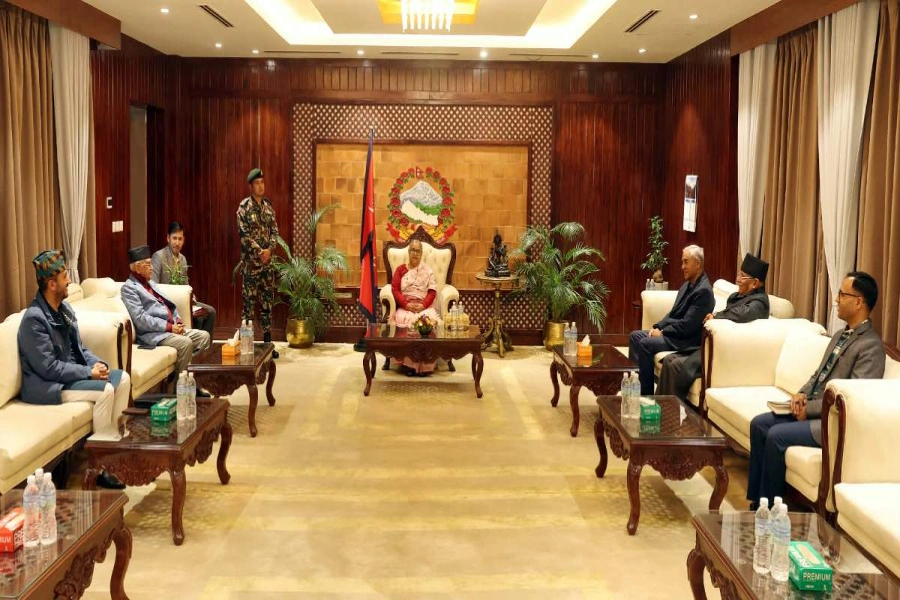
As we near the close of Dashain, the number of vehicles on Kathmandu roads is steadily climbing, while the temperature continues on its downward slide. There is a distinct chill in the air. Nepali politics has been in deep freeze for over four and a half months since the dissolution of the popularly elected Constituent Assembly and there seems to be no prospect of the political climate thawing anytime soon. During Dashain, meaningful political negotiations were few and far between, with top leaders confining themselves to reiterating the desperate need for consensus. But while they have all been harping on the mantra of consensus since the CA´s dissolution on May 27, none of them seems serious on meaningful give and take. On Thursday, Maoist Chairman Pushpa Kamal Dahal called on President Ram Baran Yadav and assured the President that neither of the two options (CA revival or new CA polls) had been closed and that he would keep trying to establish ´broad consensus´. But given the rigid Maoist stand on giving continuity to the Baburam Bhattarai government and the opposition demand that the PM first step down to create an atmosphere of trust, such consensus is nowhere in sight.
This merry-go-round must stop. Now that the country´s biggest festival is nearing its end, the focus must shift to seriously addressing the country´s pressing issues. But for this someone has to take the initiative. As things stand, it is hard to contemplate any breakthrough without the PM first putting in his papers. As we have long maintained, though new polls option is not without its problems, the alternative route will be longer and far more tortuous. There is apprehension in some quarters that if the caretaker government makes way, it could lead to another extended political vacuum. While this apprehension is not unjustified, the argument overlooks the crucial fact that the current government is already a caretaker one, and enjoys no more legitimacy than the caretaker government of Madav Kumar Nepal which remained in place seven months after Nepal tendered his resignation. The biggest difference between the Madhav Nepal caretaker government of 2009 and the current one under Bhattarai is that while the parliament certainly did fail to find a credible alternative to PM Nepal time and again, the legislature was still in place to check executive overreach, and it was only a matter of time before the MPs came to an agreement on Nepal´s replacement. But now the country is without a parliament and there is no legitimate way to replace the incumbent PM.
The absence of parliament heightens the prospects of a dictatorial executive and risks undoing the democratic achievements post-2006. The Supreme Court is running out of judges and the country´s top anti-graft body is without office bearers, which further increases the chances of executive excesses and buttresses the opposition´s suspicion that the true Maoist intent is to ´capture the state´ by rendering all its vital organs toothless. Alternatively, if the state of impasse is further prolonged, the President might be forced into an undemocratic move, which would be equally unfortunate. The current state of antagonism between the ruling and opposition forces is likely to come to a head when the government runs out of budget in just over a fortnight. We urge the parties to work out a compromise before the situation reaches a point where neither side can afford to back down without losing face. Negotiations must start in earnest to forestall this calamitous situation.
Related story
Fire the corrupt people