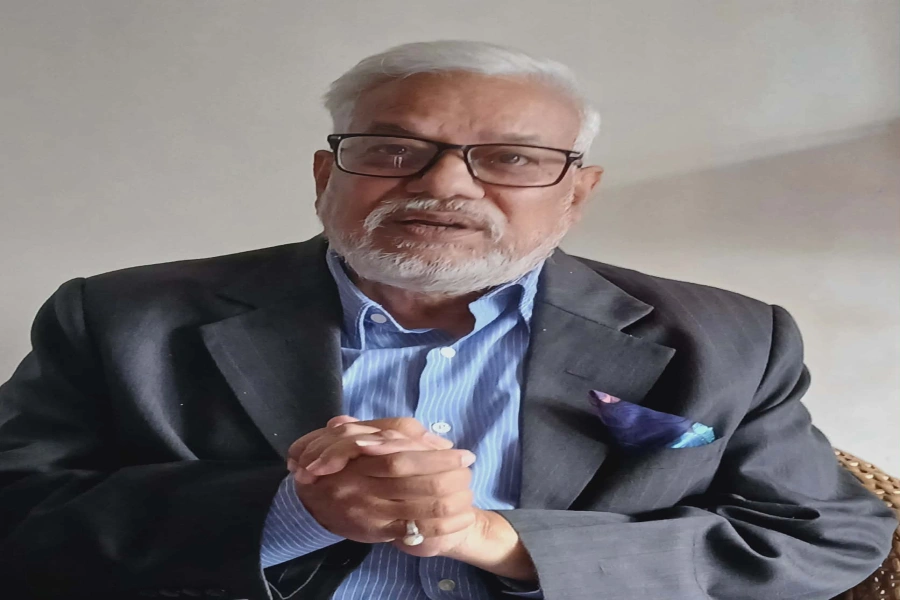
Min Bahadur Poudel Chhetri, President of Nepal Centre for Disaster Management, on the other hand, knew better. Having championed the importance of adopting risk management strategies in cases of such disasters, he reveals that his team feels frustrated by the aftermath of the big quake. They are well aware that Nepal wouldn't be suffering from such large scale damages had their proposed strategies been implemented.
Chhetri sat down with The Week's Priyanka Gurung to discuss the matter. Excerpts:
What were the plans arranged to help the country mitigate the impact of disasters?
Back in 2007, following two years of research and deliberation, we had drafted the 'National Strategy for Disaster Risk Management in Nepal.' Even though our country had a natural calamity relief act of 1982, the suggested policies needed an update. So we put forward that proposal eight years ago. In it, we had not only mentioned various strategies and plans to prevent natural as well as other calamities, we had even proposed how the government could manage the response, rehabilitation, and reconstruction stages. Our aim was to make sure that in time of any emergencies, our government had a solid and clear plan.
Then why wasn't the risk management strategies implemented?
Simply put, disaster risk management wasn't our government's priority. We presented the proposal and gave several presentations to various leaders and authority figures. Even though they verbally gave positive responses, nobody thought it was important enough to immediately pass the bill, draft an act, and start working on the plans. It was stalled for no reason. Finally last year, the proposal reached the constituent assembly. However, a month later the assembly dissolved. So we were back to square one.
Wasn't there anything that you and your team at the Nepal Centre for Disaster Management could do?
After the proposal was drafted, our role was to spread the word and we did that. We published articles, held meetings, hosted workshops, and participated in seminars. We also talked to the leaders and explained the importance of these disaster management strategies. Counting the Prime Minister himself, I believe we held such discussions with around 400 members of the constituent assembly. All we could do was put pressure on the authority to take an initiative and we did that to our best ability. Sadly, it wasn't enough.
Keeping earthquakes in mind, what sort of policies were suggested in the disaster risk management proposal?
To prevent extensive damages from an earthquake, a prerequisite is earthquake resistant infrastructures. We are talking about homes, offices, bridges, mobile towers, everything. Wider roads and several open spaces around different localities were also mentioned. Likewise, to secure the area from other dangers, we had highlighted the need to make sure that the telephone and TV cables went underground. We had also talked about the importance of regularly carrying out awareness and safety programs under the supervision of qualified experts.
Similarly, we had also cited several simple and cost effective methods to build earthquake proof buildings in the rural as well as urban areas. Our former president had also proposed the study of animal behavior to predict earthquakes. Snake farming was one idea. Scientists believe that snakes feel quakes 10-15 minutes before we do. So that was one method we were eager to try out. It's cheap and the farmers could even make a lot of profit by turning the venom into medicines. These are just two examples of the many ideas we had proposed.
In your opinion, what factors contributed in aggravating the effects of this recent earthquake?
Besides the government's bad judgment in dismissing the necessity of disaster risk management strategies, there are several other factors that have made worsened the effects of this earthquake. The public as well as the officials has been very careless about their own safety. The blatant disregard of building codes, corruption, and lack of supervision and monitoring led to the collapse of several structures. As far as the old heritage sites are concerned, unfortunately, they were not maintained on a regular basis. Even if there was some maintenance, they clearly didn't get as much care as they required.
There have also been some random factors. Like for instance, those misinformed earthquake safety programs. They may have had good intentions but it backfired. It's heartbreaking to read news of those who applied the duck, cover, and roll method during the earthquake instead of running outside and died as a consequence. The campaigners should have been clear about the circumstances where such methods would work. Grave errors like these could have been eliminated if the country had a plan to begin with.
Has any representative of the government approached you about dealing with the risks of flood and landslide come this monsoon?
No, nobody from the government has contacted us on the matter. They seem to have their hands full dealing with the consequences of the quake itself. But of course, they should be thinking about the future as well. Especially following the earthquakes, floods and landslides are posed to be brutal this year. Managing their risks will be a herculean task, and they can't be managed by a single organization or the government alone. Everybody needs to collaborate, assess the situation, make hazard maps, and act accordingly. There certainly isn't any time to spare.
Are you hopeful that the government will now take your proposal, the National Strategy for Disaster Risk Management in Nepal, seriously?
We can only hope. There are many lessons that we must learn from this earthquake. Perhaps the first and foremost is to understand the importance of disaster risk management. The rescue as well as the response would be running smoothly if Nepal had passed the bill by now. The scale of destruction too would have been smaller. Moving forward, I can only hope the concerned authorities will make this a priority. Then we can have an entire branch and skilled manpower with proper budget solely dedicated to dealing with a crisis like the one that we are going through. I genuinely hope they are ready to take initiative on the matter. It's long overdue.
Related story
Making a great first impression at an interview