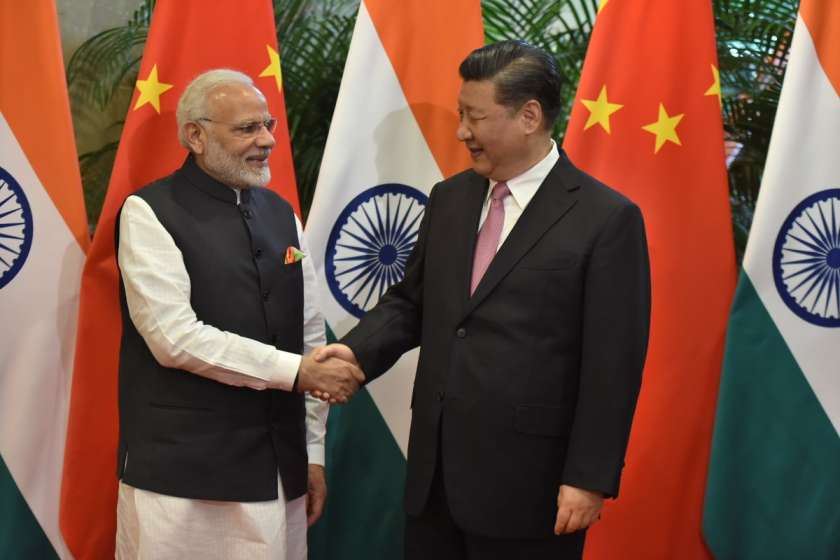
Beijing, Aug 31: Indian Prime Minister Narendra Modi’s visit to China this weekend comes at a time when both Delhi and Beijing are grappling with punishing tariffs from Washington. The BBC reported that since Wednesday, the United States has raised duties on Indian exports such as diamonds and shrimp to 50 percent, which President Donald Trump said was retaliation for India’s continued purchase of Russian oil. Analysts told the BBC the move threatens India’s export sector and its growth ambitions.
The BBC stated that Chinese President Xi Jinping is also under strain, with steep US tariffs adding pressure to an already slowing economy. Against this backdrop, the BBC explained, both leaders appear eager to re-calibrate ties that have long been marked by mistrust and disputes. Citing Chatham House analysts Chietigj Bajpaee and Yu Jie, the BBC quoted them as saying that “Modi’s China visit marks a potential turning point” and that the outcome matters well beyond Asia.
The BBC said India and China rank as the world’s fifth and second largest economies, with India projected to rise to third place by 2028. Quoting Beijing-based consultant Qian Liu, the BBC noted that attention should shift from only the US-China dynamic to also considering how China and India can cooperate. Yet, the broadcaster highlighted, challenges remain steep.
The BBC recalled the violent Galwan Valley clashes of 2020, the worst in decades, which stalled flights, investment, and even led India to ban over 200 Chinese apps including TikTok. Antoine Levesques of the International Institute for Strategic Studies told the BBC that sustained dialogue will be key if the two sides want to maintain broader Asian stability.
Japan hands over medical equipment for surgical eye camps to Hi...

Other contentious issues remain, the BBC added, including Tibet, the Dalai Lama, disputes over water projects, and China’s close partnership with Pakistan. The BBC quoted economist Priyanka Kishore as saying that while major Chinese investments such as a BYD factory in India are unlikely, some “soft wins” may emerge, such as relaxed visa rules or resumption of direct flights.
According to the BBC, Kishore also described the partnership as an “uncomfortable alliance.” She told the outlet that India’s ties with the US are now complicated, pushing Delhi toward Beijing in pursuit of a multipolar balance. The BBC noted that Modi will attend the Shanghai Cooperation Organisation summit, which also includes Russia, Pakistan, and Iran. Once downplayed by India, the SCO is being seen in a new light as relations with Washington sour.
The BBC reported that Beijing values the optics of Global South solidarity at a time when Trump is threatening further tariffs on BRICS members. Russian officials, the BBC added, have suggested trilateral talks with India and China could soon resume. Analysts quoted by the BBC argued that combining China’s manufacturing strength, India’s service sector, and Russia’s resources could reduce dependence on the US.
The BBC stated that Modi has also been strengthening ties with Japan and ASEAN. Kishore told the BBC that greater India-China cooperation could benefit Asian supply chains and bolster regional manufacturing goals. According to the BBC, India still relies heavily on Chinese raw materials, but closer cooperation could help it expand electronics manufacturing.
Experts interviewed by the BBC concluded that one meeting will not erase years of mistrust, but Modi’s visit may ease tensions and signal to Washington that Delhi has alternatives.
-1770648553.webp)