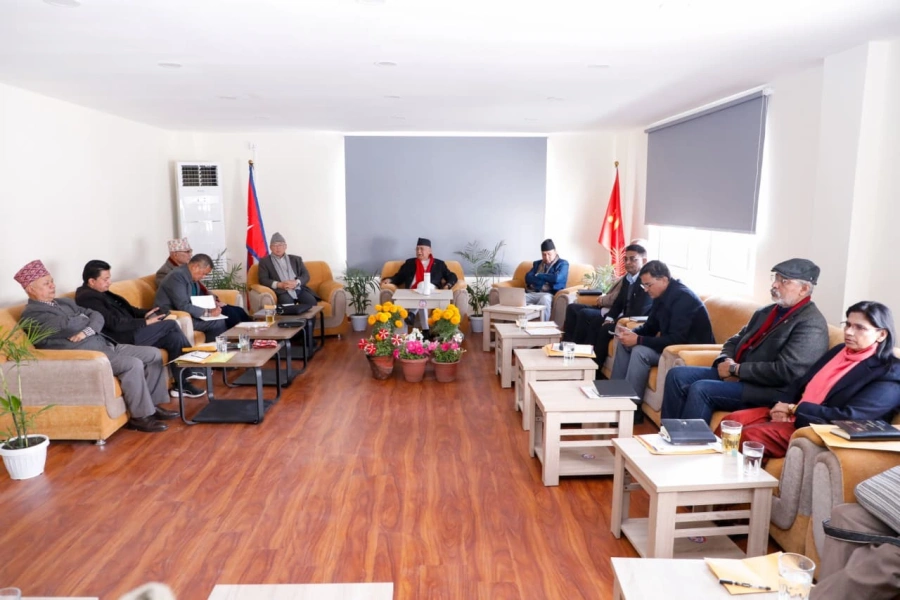
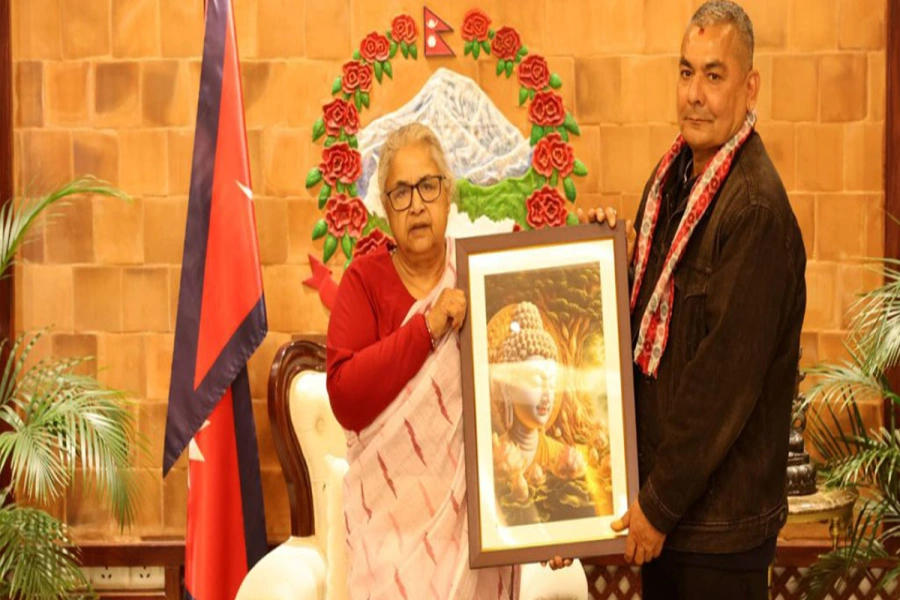
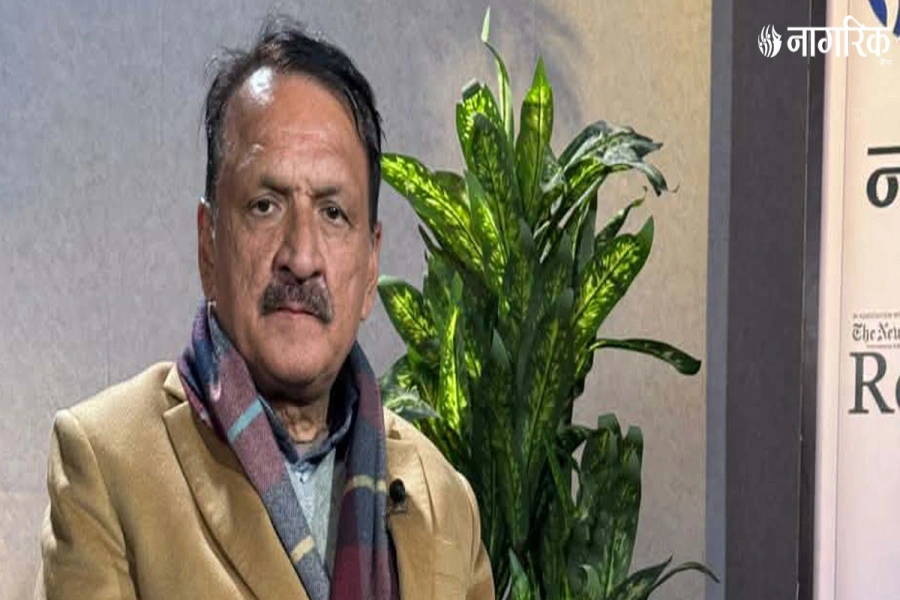
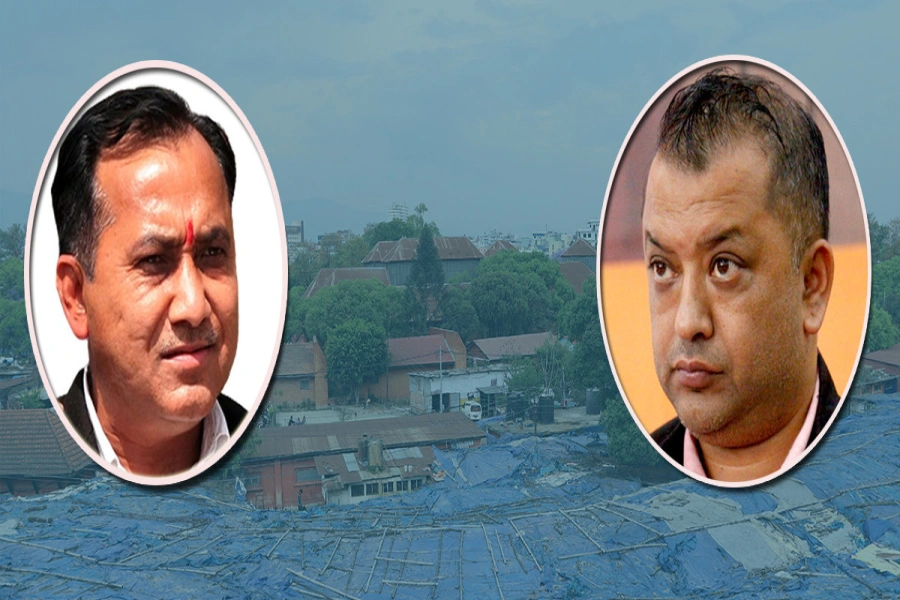
The year 2015 of the Common Era will go down as one of the most challenging in the 250-year history of unified Nepal. At the start of the year, the political polarization that was seen in the wake of the second Constituent Assembly election in November, 2013, had reached its apogee. On one side of the divide were Nepali Congress and CPN-UML, the two parties which had together secured near two-thirds majority in the 601-member CA and were in a governing coalition under Sushil Koirala. At the other end were the Maoists and the Madhesh-based parties, which had only grudgingly accepted the humiliating results of the second CA elections and were spoiling for a fight. If their voices were not reflected in the new constitution that was being drafted, the Maoist and Madheshi parties threatened, they would walk out of the assembly. In the five years of the constitution-making exercise, national politics, it seemed, had not progressed by an inch.Then, the unthinkable happened. Even as the parties were bitterly quarrelling over the contents of the new constitution, the country was shaken to its core by the April 25th earthquake and subsequent aftershocks. Nine thousand lives were lost; 600,000 people were rendered homeless; the country's development trajectory was set back by decades in a few moments of nature's madness. For a people disappointed by the seemingly interminable transition and constant bickering between political parties, the earthquake could not have come at a more inappropriate time. But it was from the debris of this earthquake that new hope would spring. After the earthquake, Maoist Chairman Pushpa Kamal Dahal apparently had a change of heart. He seemed to have realized that in the new reality, business as usual just wouldn't do, that whatever differences he and his party had with the two ruling parties were not more important than rebuilding Nepal. It was in this backdrop that Congress, UML, UCPN (Maoist) and MJF (Loktantrik) on June 9th signed the historic 16-point agreement.
According to the agreement, the country would be divided into eight federal provinces, with their borders to be settled by a future Federal Commission. The importance of this agreement cannot be overemphasized. For the first time since the 2008 CA elections, all three major political parties were on the same page on the new constitution. As important, the 16-point agreement had the support of the biggest Madheshi party to emerge from the second CA elections. Altogether, over 85 percent of the lawmakers in the CA now had a common vision on the new constitution, a remarkable achievement for such a diverse polity. A lot of credit must go to Nepali Congress President and then Prime Minister Sushil Koirala for his ability to stitch together such an improbable coalition. UML Chairman KP Sharma Oli, Maoist Chairman Dahal and MJF (Loktantrik) Chairman Bijaya Gachchadar also deserved credit for their ability, in the wake of the devastating earthquake, to set aside personal differences and to for once think about the country's broader interests.
But some forces, the remaining 15 percent CA members, were still unhappy. They objected to the 16-point deal as it would mean that federalism would effectively be put on hold. They demanded that federal boundaries also be settled on the spot. When the Supreme Court subsequently also ruled that the new constitution could not be promulgated by deferring federal demarcations, the hands of the four signatories to the 16-point agreement were tied. But they decided to take the court order in right spirit and came up with a six-state federal model with clear-cut demarcations. But no sooner was this proposal made public, there was a wave of protests right around the country. A seventh state, a Karnali province, was then added to the six-state model. The Madheshis and the Tharu communities then felt that while the voices of protesters up in the hills were being accommodated, their voices were still being conveniently ignored. They had a point. If people of Karnali were given a new province after their protests, why was a similar demand of the Tharus being ignored?
Amid all this confusion, a new constitution was promulgated on September 20th, with 85 percent of the lawmakers voting in its favor. The Madheshi parties that had already been agitating in the Tarai intensified their protests. They adopted a policy of blocking major border points with India, especially Raxaul-Birgunj link through which 70 percent of India's trade with Nepal is conducted. In this, they were supported by the Indian establishment, as its suggestion that Madheshis be accommodated in the new charter was seemingly ignored. The resulting economic blockade on Nepal is still in place, three months later. But as we look forward to 2016, there are plenty of reasons for optimism.
The new constitution is not perfect. But at least we now have something to build upon. Amendments can be made to address the concerns of those who feel left out. As we write this, there seems to be a realization among both the protesting parties as well as the government that it's in no one's interest to further prolong the agony of Nepalis through border blockade; that only extremist forces are benefitting from. This realization, we hope, will set the tone for more meaningful discussions. Another positive for Nepal is that thanks to the blockade, the long-delayed project of trade diversification away from India is finally happening. (It is not in the interest of Nepal to depend so heavily on India.) China will rightly play a greater role in the days ahead. In 2016 Nepal must search for new trade partners farther afield, beyond India and China.
As we welcome 2016, we hope India has realized the limits of hardball diplomacy. Given the depth of the age-old ties between the two countries, even a small effort of India could go a long way towards dousing anti-India flames and restoring the warmth and goodwill Nepali people have traditionally had for people across the southern border. We also hope that now that the Reconstruction Authority has finally materialized, the government would waste no time in helping earthquake victims rebuild their battered lives. A country blessed by nature, Nepal has a lot going for it, including the generosity of its people. Nepalis have selflessly helped earthquake victims as well as complete strangers looking for a ride home on a cold night. And we have a constitution. We would like to believe that there is nothing that cannot be sorted out among the people-loving people of Nepal, as they have time and again proven after 2006. With this message of hope we would like to wish all our valued readers a peaceful and prosperous 2016.
Related story
Drying Springs, Abandoned Farms: Nepal’s Land-Use Crisis