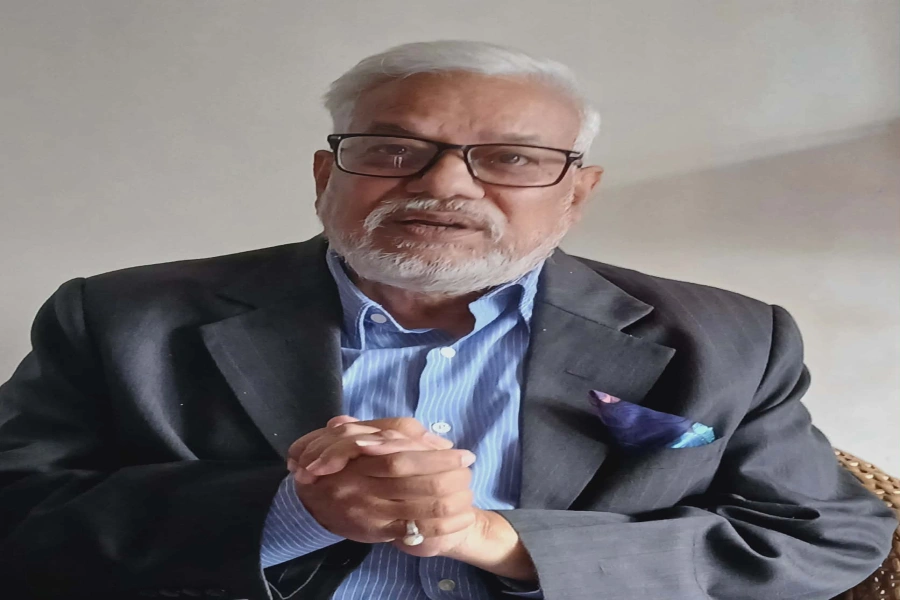
Raju Nepal, Chief Operating Officer at Citizens Bank, will be launching his self- published photo book, Nepal: Each Place A Holy Place.[break]
The coffee-table photo book took almost three years of traveling, dedication and sacrifice before it was transformed from an idea into a concrete reality. Quite heavy in weight and priced at almost Rs 4,000, the book definitely requires deep pockets.
But in an interview with Republica’s Pramila Rai, Nepal, 44, discusses the book, why the price is worth it and his coming projects.
How did this idea generate?
I’ve been visiting temples ever since my childhood. This habit is deeply ingrained in me. Every year, I make it a point to take my family to all the major temples during Dashain. I started out by taking pictures of the temples I visited. In this age of technology, it’s become common to own a camera, whether it’s a simple point-and-shoot or a DSLR. I enjoy hiking and visiting temples. So everywhere I visited, I would take pictures and post some of them on Facebook. It was the response from my friends and well-wishers that inspired this idea in me. Hence, I started clicking with the sole purpose of turning it into a photo book.

Do tell us something about the book?
Nepal: Each Place A Holy Place is a coffee table photo book. From choosing the photos, to the design, the layout and the name, everything has been done with a lot of consideration and hard work. The book features temples from 61 districts fromthe eastern to the western parts of the country. There are 511 photos of 108 religious sites of Nepal. This book is not only for religious people but also for those who are seeking information and knowledge about the beautiful temples we have in our country. Nepalis abroad can refer to this book to get acquainted with Nepal.
How did you manage to travel all over the country while continuing with your demanding banking career and giving time to your family?
I traveled every weekend, and if I had to visit temples in a far-off place, I took days off my annual leave. Also, I don’t exercise and I don’t watch television. That amounts to a minimum of three hours of spare time in a day. I used that period of time to write down information about the temples, research and work on the book. And since I would do this work at home where my family could see me, they had no problem at all.
How do you consider your efforts will pay off considering that the price of the book is pretty steep?
I assure you that this book is worth every Rupee. I’m sure people will appreciate learning about various temples and religious sites of places that they might not be able to visit. The information is available in both Nepali and English which makes it convenient for everyone to read. And this book isn’t a novel that a reader will read and forget. There’s a lasting quality to the content that ensures that it’s a keepsake. The response has been good so far and I’m confident that it’ll only get better in the coming days. Someone told me that this book will be the Dashain gift for his parents while someone else said that this kind of effort should actually have been made by the Tourism Board.
What’s next for you?
I’ll be publishing two novels within the coming six months. One will be in Nepali titled “Manjari.” It’s based on true events. It tells the story of a young girl’s journey to womanhood. The other book will be about bankers, their lives and their lifestyles: not just the glamour but the dark sides in a banker’s life. I haven’t fixed on a title yet. I also have plans for publishing a guidebook, in two volumes. It’ll be about the various places in the country. Details like how to get there, when to travel, what to carry, what not to carry, will be found there.
Related story