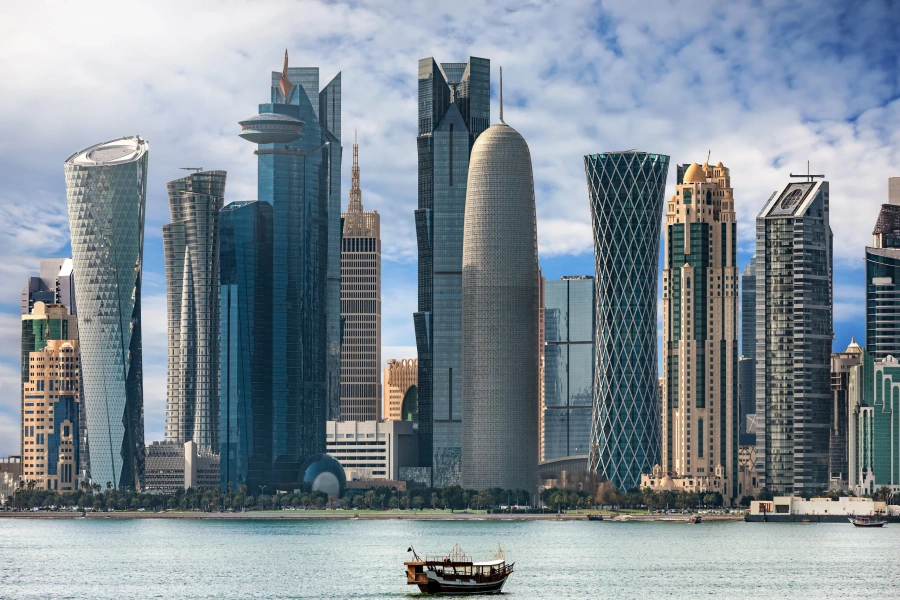
We have been reminded that we are the citizens of the Third World ad nauseam. The term "Third World" was coined to describe the countries that were not aligned to the central forces—the East (the Communist bloc) and the West (NATO)—during the Second World War. As the powerful led the discourse of defining "development", the Third World started being known as the union of developing countries further divided into least developed countries and moderately developed countries.The image that most of us envision when we hear the word developed is tall skyscrapers, wide roads to ride our fuel-intensive cars, and a life where we are buying products from big brands. These images, we have been told, are from "developed" countries. Capitalist, economically strong countries have been used as yardstick to judge whether other countries are on par.
But is the development we are learning about and aiming for really development? If development is prosperity, are the so-called developed countries really developed? Is the meaning of prosperity restricted to economic bottom line of few corporate giants?
The development that we measure in terms of economic growth is costing us dear. According to the new Living Planet Report published by the WWF, in the last 40 years, more than half the mammals have become extinct largely due to our total focus on economic growth.
Climate issues have been commonly communicated as a favor to the planet; we forget that the planet has given us everything.
Rising sea level is of concern to island countries like Maldives, which are on the verge of sinking if anthropogenic harms to environment are not promptly stopped. We need not go far, the thinning of snow in our Himalayas has been attributed to build up of glacial lakes in the mountainous regions of Nepal. Such unstable lakes put downstream villages at great risk.
The story of most people in the "developed" or First world countries is different. The ecological footprint of a person measures the demand of earth's resources by a human being. If we take an average person from a developed country, for instance the US, according to the Living Planet Report, his footprint equals to 7 global hectares. But the available biocapacity on earth is only 1.7 global hectares. Hence US citizens are taking away much more than what was allocated to them. Environmentally, it is a huge debtor.
Whereas Nepal's ecological footprint is 0.6, according to forestrynepal.org, which means Nepal is making available the other 1.1 global hectares for other countries. Hence in this regard "least developed" Nepal and Bangladesh, and several countries in Africa are creditors of the unused bicapacity to developed countries.
The melting of mountains, risk of GLOF, extinction of mammals and other species, frequent environmental catastrophes and epidemics are among the deadly consequences of pressure on earth's resources. Ironically, most vulnerable to these repercussions of the anthropogenic emissions of developed countries are the citizens of the so-called "Third World".
Development should lift up people from low rungs of the society. In fact, the conventional capitalistic mode of production has widened the gap between those at the top and those at the bottom, with a clear difference emerging between the top 1 percent and the rest 99 percent.
In the United States, the Economic Policy Institute (EPI) calculated that from 1983 to 2010, 74 percent wealth increase was pocketed by the richest 5 percent. The policies in these capitalist economies echo the voices of corporations, smothering scope of equitable distribution of wealth. Most of these economies have been focused on securing the interests of a few wealthy people by weakening trade unions so that the bargaining power of laborers is reduced, keeping wage rates fixed when prices of goods have rocketed, and through other extractive policies.
Although colloquially the word "developed" has been used to refer to countries with higher economic growth, Amartya Sen and several other economists argue that economic growth is only one marker of development. If economic development is used to promote social equity and environmental conservation, only then should we reconsider a nation developed. We will be inviting environmental and social disaster by exerting pressure on our limited environmental resources and creating few wealthy people while billions are left to life of misery.
The countries of "Third World" should, thus, be looking to ensure that while they grow economically they also take care of their environment and factor in social equity.
The author is a student at NALSAR University of Law, Hyderabad
Related story
Let’s act responsibly