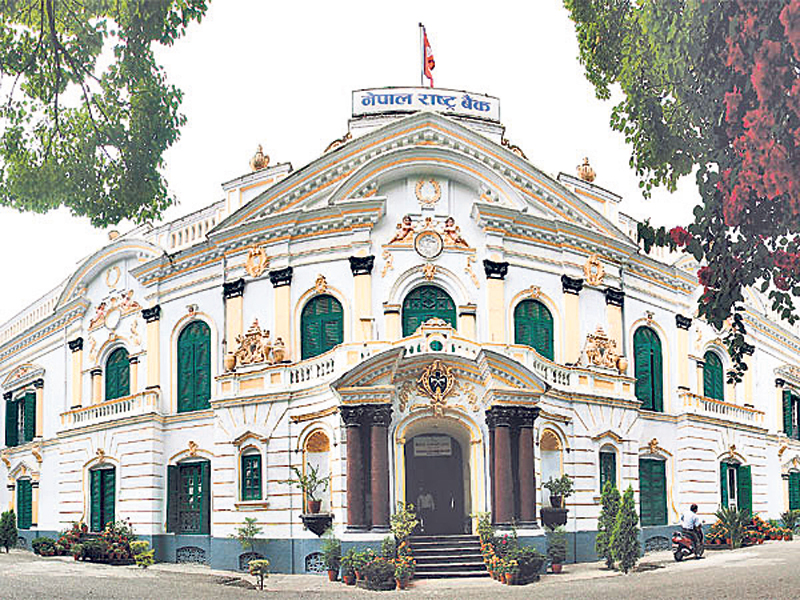
The latest Nepal Rastra Bank (NRB) report on the country's macroeconomic situation makes for a grim reading. The 'Current Macroeconomic and Financial Situation of Nepal', based on data from three months till mid-October, notes, right at the start, how the already weak economy has "further deteriorated owing to unofficial economic blockade imposed by India." The blockade on import of essential commodities like medicines, food grains and petroleum products has made public life "miserable", says the report, and stalled vital development projects due to shortage of fuel and raw materials. Tourism has been badly hit, with hotel occupancy dropping to under 30 percent. The much-awaited National Reconstruction Authority (NRA) is in limbo and reconstruction works yet to start in earnest. In this context, against the six percent target, even the World Bank's revised 3.7 percent projected growth now looks ambitious. In fact, if the Indian blockade continues for another couple of months, the country might, warns the central bank, witness negative growth, for the first time in 32 years.In other words, Nepal is headed towards a full-blown economic crisis. Businesses have stopped hiring since they have been forced to work under-capacity due to the acute fuel shortage. If things don't improve in the next few weeks, there could be massive layoffs as businesses further downsize to stay afloat. Inflation—already a troubling 8.3 percent in the past three months, compared to 7.5 percent for the same period last year—could get out of hand as it becomes difficult to procure even essential goods. Government's revenue mobilization, sys the NRB report, dropped by 10.2 percent compared to the same period last year. In due course, it may run out of money to pay for vital services like hospitals and education. So timely political settlement of the Madheshi crisis is important—before it becomes impossible for the two sides to come to a meeting point over possible amendments in the new constitution. There are no historical parallels of the current crisis. But Zimbabwe's case is instructive.
Between 2000—when Western countries started imposing economic sanctions on Zimbabwe for President Robert Mugabe's brutal suppression of dissent and forced land-seizures from the Whites—and 2007, the Zimbabwean economy contracted by 40 percent. Inflation at 66,000 percent literally went through the roof. The national currency, the Zimbabwe Dollar, became worthless overnight. There was no fuel or medicines available in the market. It was a nightmare for ordinary folks who, unlike the handful of globe-trotting rich, didn't have the means to leave the country for the safe havens of nearby Botswana or South Africa. Although things began to improve after Mugabe agreed to accommodate democratic forces in 2009, life's still a misery for most people in the southern African republic. Zimbabwe is an extreme example and it's perhaps inappropriate to compare its case with Nepal's. But it does help put things into perspective: of how bad things can get if a country's macroeconomic fundamentals go awry. We could not have a political settlement of the Madhesh crisis soon enough.
Related story
5 home remedies to stop hair fall