“Ma thik timema ayen. Yauta seto rumalma chhawota hand grenade malai tyes manchhele diyo ra tyo gaihalyo. Ani maile tyahi bakathma Basanta Shumsherlai pani phone gareko thiye lina aunu bhanera. Uni baseka thiye Park Streetma, afno chhoriko sath. Maile unlai 6 bajetira tyahi ilakama aunuhola bhaneko thiye, uni tyehi bela tuplukka aipugey. Aba ma tyo hand grenade liyera unbhiraheko chhu. Tyehi bakatma paan-cigaretteko dukanma radiole prasaran gareko suney - Gandhiko mrityu bhayo. Ma hand grenade liyera parkhiraheko chhu, yautale diyera gaisakyo ra arkole lina lagiraheko thiyo. Malai katro thulo andhyaro mahasus bhairaheko thiyo. Gandhisita malai katro thulo lagab raheko thiyo bhanne anubhav maile tyes bakhat garey. Malaita sabaithok bhatabhunga bhaye jasto lagyo.
–From the book Atmabritanta by Bishweshwar Prasad Koirala [break]
Bishweshwar Prasad (BP) Koirala has tried to convey a lot of messages through his writings. One of the most well-read writers of Nepali literature, his main message would always be about how, rather than trying to run after acquiring big names, people should focus on becoming good persons.
This paragraph shows the perplexity and clash of ideas that’s going on a person’s mind. Koirala had heard the news of Gandhi’s assassination on the radio. On one side, there’s a person with ammunition in his hand and on the other side there’s a person like Gandhi who died giving his life to his nation and people. The lines show the event and feelings he had at that moment.

Koirala faced many such internal conflicts in his political journey but it was such situations that led him to make important decisions. There was a constant conflict between violence and non-violence but he chose the path of the latter.
Koirala was unwell, so the account he gave was recorded and was put into a form of a book by Ganesh Raj Sharma. There are lots of books that have influenced me but this one is my favorite among those. This book was published in 1998 and I bought it on the very first day. I liked it so much that I bought many copies later to distribute to my friends.
The main thing that drew me to this book is that it’s a blend of history, politics and literature. The book also gives us an inspiration to have faith in democracy and nationality.
Koirala was the first democratically elected prime minister in Nepal´s history and he’s been presented as a great leader who represented revolution. He’s someone who stood by his ethics and protected the country when it was in trouble. He returned to the country to accept his case of life sentence and went to jail but he had no regrets and didn’t feel that his self-respect was marred but felt proud that he had dedicated his life to his country.
Most of his life was spent largely in prison or exile and his health was gradually deteriorating. But he never gave up. This is a true story of a rebel and I have a special relation with this book because in my career in politics and as a journalist, I was imprisoned eight times in my life. I read the book in jail as well when I got the opportunity to read many other political and literary books.
I lived for a while in Benares in, India under the guidance of Koirala where I got to know him up close and was greatly influenced by him. What we can learn from this book and his life is that, for a politician, nation and its people should mean everything, which is the main theme of the book as well. If politicians work for the good of the citizens and the country, then nothing powerful can obstruct his work, and for that, this book stands as an example. Even those who didn’t support Koirala’s views have found to be influenced by this book. For every social worker and politician, this book is like finding light in darkness.
About Birahi
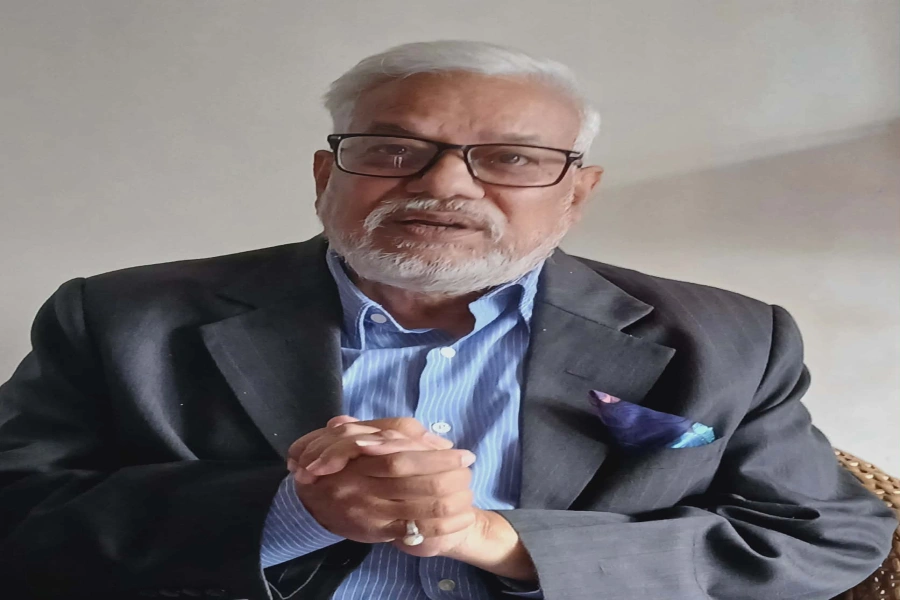
Birahi has been actively associated with Nepali journalism for the past 30 years. He’s currently a freelance writer. Initially, he was involved in political movements and he believed that through writings he would be able to contribute something to journalism.
“Through my writings I wanted to bring about a positive political and social change in the country. Through my experience I’ve learnt that my beliefs were right,” says Birahi.
He believes that writing is a powerful means to express oneself and it’s not only a medium to inform. It has a responsibility as its effects can be really huge.
“Writings should never be biased. Be it though poems, articles or any form of literature or just anything, writing in a way contributes to building the society and helps in bringing changes.”
He’s the founder, coordinator and General Secretary of Editors’ Society of Nepal. He was President of the Federation of Nepali Journalists from 1995 to 1998 and Chairman of Nepal Press Council from 2000 to 2004. He’s currently the chief advisor at Terai Television (TTV).
The recipient of Gorkha Dakshin Bahu Class II in 1995 and GP Koirala National Journalism Award in 2011, Birahi has contributed a lot to journalism. He was the editor and publisher of the weekly “Saptahik Vimarsha,” and “Bimochan” which was published as a monthly until 2004.
 As told to Nistha Rayamajhi
Atmakatha
by Mahatma Gandhi
This autobiography shows that if you walk on the path of truth then you can achieve a lot in life. Gandhi’s life is an example of how we should follow the path of truth.
He believed that the things that we plan of doing should be done and we should have the faith of completing that work.
He showed the path of truth and nonviolence and has influenced many.
Even Albert Einstein mentioned that people in the future will have a hard time believing that a true leader like Gandhi was born in this world. I believe that if politicians and others can follow his ways, we can form a perfect society.
Naye Manushyaki Khoj
by Osho
Osho was someone who believed in nonviolence. He was born in a traditional country like India but he stood for his beliefs and brought about ideas and revolution
 against standard traditional beliefs. His blunt criticism of socialism and many other issues made him controversial. The main message of this book is that we need reformed people.
 To bring about changes, there are wars and many ill things happening. But unless people themselves change for better, all will just go in vain.
Every person should free himself from traditional thoughts, ideas and should be brave enough to start something new. Unless a person changes his thoughts, no change can be meaningful.
A person shouldn’t be confined, otherwise he’ll never progress. The book also says that with changes in politics, we need to change the misdemeanors of our culture as well.
 Mother (Ama)
 by Maxim Gorky
This book by the Russian writer Gorky talks about how we can bring about revolution.
I read this book when I was 14 and a student.
It was books like this that inspired me to join the political movement.
Even now, this book is one of my favorite. The book shows the situation of a person who lives in a traditional society and is suffocating and looks for a change.
It gives us a message of change and shows how if there’s support between the older and new generation, change is really possible.
Yudhha Aur Shanti
(War and Peace)
by Leo Tolstoy
This is a Hindi translation of the novel “War and Peace” which is popular all over the world. This book talks about the destruction that a war can bring about. War
 cannot be beneficial to anyone and peace is the only solution. Tolstoy has presented his ideas in a very influential way which makes this book an essential reading.
Related story
Truth and universe