

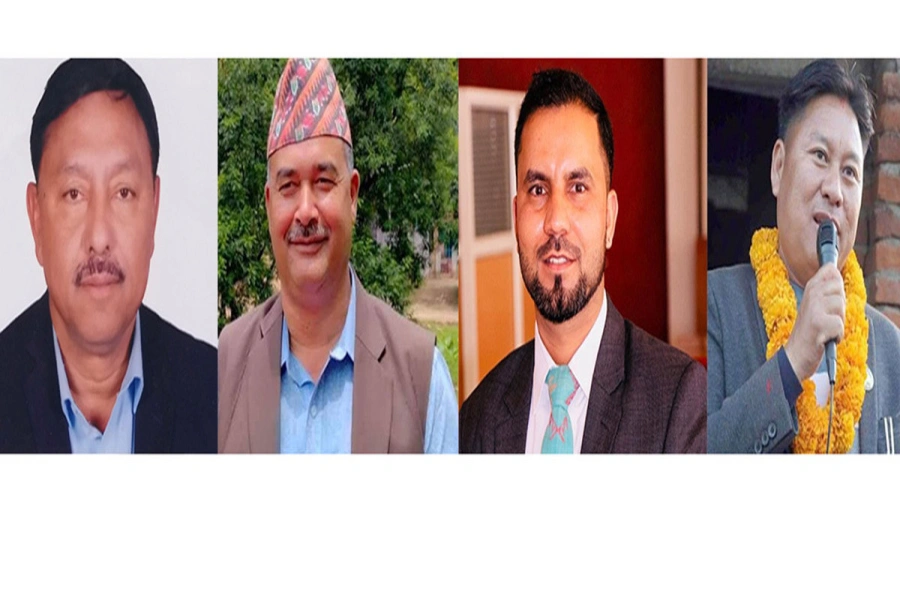
DANG, Feb 7: The electoral battle in Dang-3 has taken shape as a four-way contest between the Nepali Congress (NC), CPN-UML, Nepali Communist Party (NCP) and the Rastriya Swatantra Party (RSP), with seasoned leaders and ambitious challengers vying for victory.
NC's Deepak Giri, a familiar face in parliamentary politics, is seeking his third win after contesting six elections. Giri began his federal parliamentary journey in 2051 BS. Though he lost to UML’s Shankar Pokhrel that year and was denied a ticket in 2056 BS, he returned in 2064 BS as a Constituent Assembly candidate, only to be defeated again by Sushma Sharma of the then CPN (Maoist Centre).
Determined to reverse his fortunes, Giri contested the 2070 BS Constituent Assembly election and broke his losing streak by defeating UML’s Uttar Kumar Oli, entering the federal parliament for the first time. In 2074 BS, he attempted to secure a second HoR victory but was defeated by UML’s Hira Chandra KC. However, in 2079 BS, Giri made a strong comeback, defeating UML’s Komal Oli to reclaim his seat in Parliament.
RSP seeks explanation from General Secretary Dhakal

Now back in the race from Dang-3, Giri is aiming to extend his winning streak. A two-term lawmaker and former minister, he is banking on his long political experience and the development projects implemented during his tenure. Confident in the NC’s strong base in western Dang, Giri is working to consolidate traditional supporters while reaching out to new and undecided voters.
Challenging him is Dhan Bahadur Maski of the NCP, who resigned from his Provincial Assembly position before completing his term to contest the federal seat. Elected to the Lumbini Provincial Assembly in 2079 BS, Maski had also served as Minister for Finance in the provincial government.
Maski is campaigning on his development record, highlighting infrastructure projects undertaken during his tenure as finance minister. He is seeking to retain his 2079 BS voter base while expanding support among neutral voters. However, critics argue that his resignation before completing his term amounts to disregarding the voters’ mandate.
From the UML, Ghanashyam Pandey has entered the fray with equal determination. A former mayor of Tulsipur Sub-Metropolitan City elected in 2074 BS, Pandey is now aiming for a seat in the federal parliament. UML, which emerged as the second-largest force in Dang-3 in 2079 BS, is focused on protecting its existing vote bank while capitalizing on possible divisions among rival parties.
The UML believes that the NC–Maoist Centre alliance in the previous election inflated the vote share of a single bloc, and that a split in those votes this time could tilt the balance in its favor.
Meanwhile, the RSP, which stood third in the previous election, is pushing hard for a breakthrough victory. Kamal Subedi, who also contested last time, is once again representing the party in Dang-3. The RSP is striving to increase its vote share and attract voters disillusioned with what it calls the “traditional parties.”
With all four forces actively mobilizing supporters, the electoral atmosphere in Dang-3 has grown increasingly competitive. As traditional parties scramble to retain their base and newer forces attempt to expand theirs, the contest remains wide open.
There are 150,720 registered voters in the constituency.


_20230226123652.jpg)


