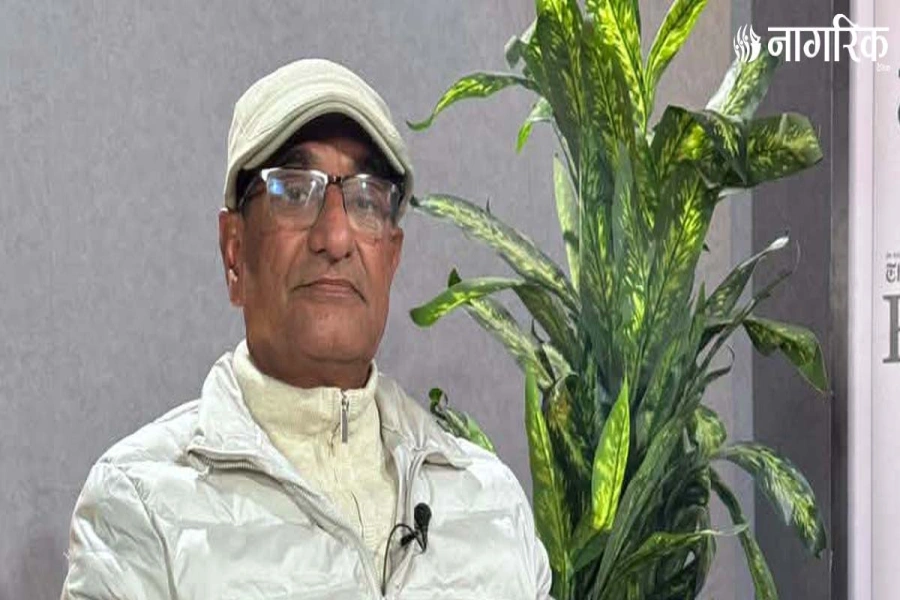
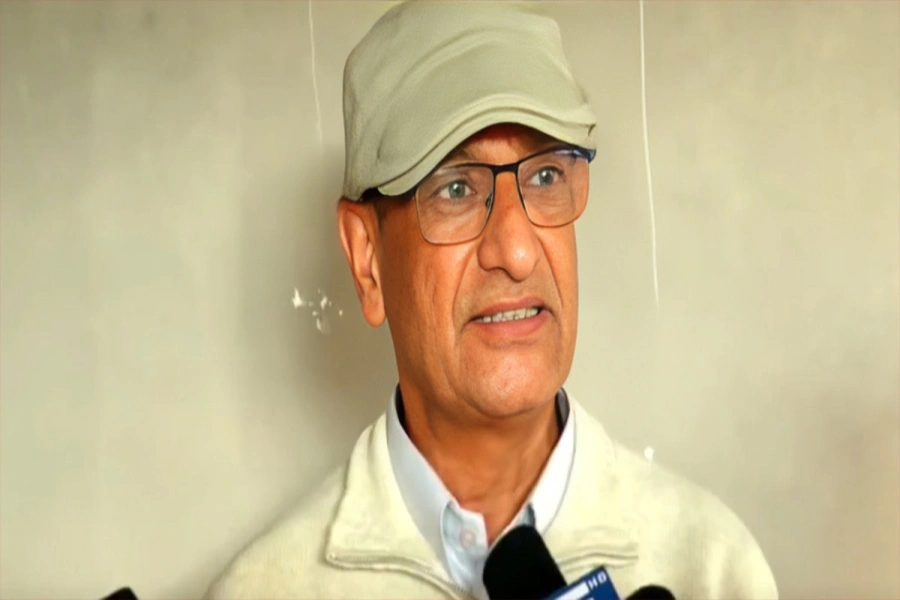
Even at 78, Dr Hemang Dixit is busy facilitating medical education, and what's more he still finds time to pen novels. As Mani Dixit, his literary journey can be traced back to more than five decades now. All this time invested in writing seems to have fueled his love for books so much so that today he has even taken to Facebook and Twitter to interact with fans and discuss books along with his work.
Related story
Nepalis’ spirit after the earthquakes was Nepal’s most beautifu...

Priyanka Gurung caught up with the active veteran writer for a chat.
I have always had writing aspirations. During my school days in Shimal, back in the 1950s, I remember sitting down to write my first book, The adventures of Chandra and Damaru. I must have been 15 or 16 back then. I had full intentions to publish it too so I gave the story away to be typed.But then the typist made so many mistakes. I didn't want to go through the process again so the book remained under lock and key for a decade or so. It was only in 1960 that I got around to finally publishing it. So yes, I have always had writing aspirations.
Financially speaking, there was the question of how practical the profession would be. Even though my father gave me the freedom to choose my own career path, being a doctor himself I knew it was his wish for me to continue the family tradition. Now, it's difficult for me to choose between the two. I'm a little bit of both.
Do you remember what triggered your love for literature? What are your inspirations?
Strangely enough, I believe it began from the Marvel and Superman comics. They had the classics illustrated back then. I particularly liked those. I just like weaving stories. I do enjoy picking certain aspects of what's happening around me and in the society and build up from there. Back in the 70s, I was reading about Ian Fleming, the legend who created James Bond. He revealed that everything he wrote had happened somewhere. His plots were, to an extent, based on actual happenings and I found that very interesting. I thought, if he could do that why couldn't I? So I usually tap into those events that I believe can make a good start to a book and then just see where it goes from there.
You have worked on a variety of genres from fiction and technical medical books to children tales and even limericks. Has writing always come naturally to you?
I have had a reviewer once label me an "amateur writer." Some doubt my ability because I'm not a full time writer or because perhaps I haven't suffered as artists are stereotypically expected to have. Regardless, I have continued writing over the years. I worked on the technical medical books because I thought our medical students needed them. With the stories too I really enjoyed building on certain aspects of our society or history. I like working on different genres simultaneously. It even helps me when I suffer from writer's block because then I have the luxury to leave one work alone and switch to something else.
Different people have different ways of going about their writing but I believe there is always room for improvement. In fact, the latest book I bought, which I have yet to read but am looking forward to, is How to Write a Novel by Paul Gunashekar. I have my opinions but it's interesting to see other people's stance on matters concerned with writing.
Over the years, what are the changes you have witnessed in our country's literary scene?
The English readership has improved but I'm afraid it is still a little limited. I guess it will take time for our country to develop a reading culture. For example, in Kolkata every other person is in the middle of reading a book or two but that isn't the case with our Nepali audience, and that will take time.
Sometimes it feels like the younger generation is not interested in the social, slightly political stories that writers like me have to offer to the English readers. Not so long ago, my publisher was talking about a love story that had successful sales and that makes me think perhaps a market research would be a good idea. It would help to get a real feel of our literary scene and then push forward from there.
Do you frequently take suggestions and advice from your publishers and editors?
Jeffrey Archer once said, "It's the editor who really makes the writer." However, when I started my literary journey, the practice of editing was yet to catch up in our part of the world. Even today I actually trust the opinions of close friends. I usually pass the manuscript around as I'm writing to get their feedback. I have even prepared a questionnaire. I got this idea during my medical student days. In England, around the book trade centers, they would actually hand out manuscripts and your job for a pound was to read it and give an opinion on whether it would sell or not. Then, perhaps, suggest a title as well.
As far as publishing is concerned, I never really saw the point to print my own books because that would mean I would have to distribute it myself. This limits your readership. Now publishers won't take books unless they are commercially viable so you have to take their perspectives into account as well. At the moment I'm working on a book about my grandfather. Now he may be my main interest but I have to think about the market factor too. So I have decided to incorporate researches on the Rana regime of that period.