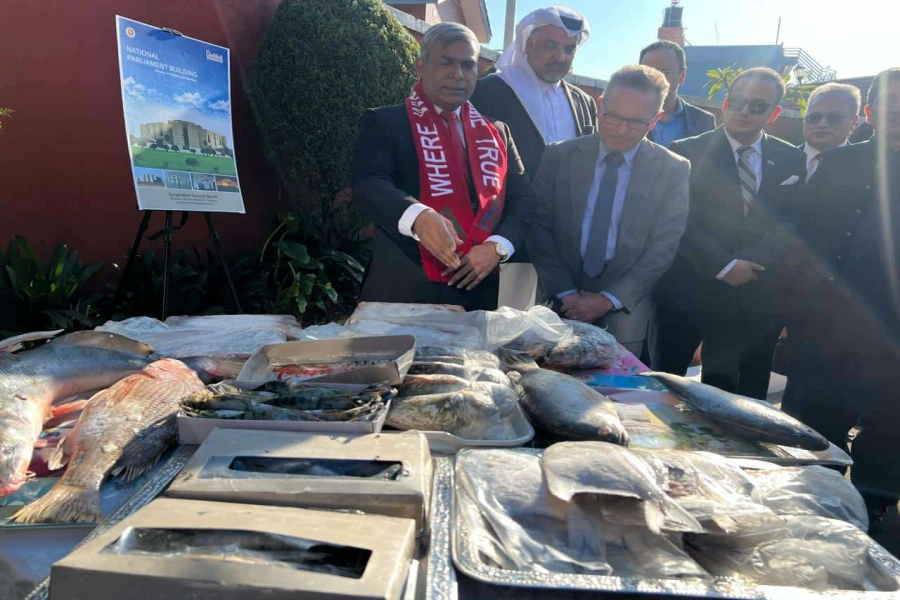
KATHMANDU, Nov 29: The Embassy of Bangladesh in Kathmandu hosted the Bangladesh Fish Festival 2025 on Friday, showcasing an extensive array of Bangladeshi freshwater and marine fish to a distinguished audience.
Ambassadors, diplomats, senior Nepali government officials, business leaders, academics, civil society members, hotel executives, and media representatives attended the event, which featured Acting Foreign Secretary Krishna Prasad Dhakal as the Guest of Honour.
In his address, Dhakal praised the festival as an innovative initiative that strengthens cultural ties while fostering economic, trade and people-to-people relations between Nepal and Bangladesh. He highlighted the growing momentum in bilateral cooperation—spanning trade, transit, energy, investment, and emerging prospects in fisheries, aquaculture, and food security.
UNESCO mission wants Valley heritage in danger list

Welcoming participants, Bangladeshi Ambassador Md Shafiqur Rahman emphasised the country’s deep-rooted riverine heritage, noting that fish is central to Bangladesh’s culture, livelihood, and national identity. He linked this tradition to Bangladesh’s unique geography, enriched by thousands of rivers that support a wide variety of freshwater and marine species.
Ambassador Rahman also underscored the global reputation of Bangladeshi fish and cuisine for their taste, freshness, and delicacy. He noted that the festival serves not only as a cultural celebration but also as an avenue to enhance regional cooperation and expand business partnerships in fisheries and seafood processing.
Expressing delight in hosting the showcase “in the heart of the Himalayas,” Rahman invoked the phrase Maach-Daal-Vaat as a symbol of Bangladesh–Nepal friendship—blending Bangladesh’s saying “মাছে ভাতে বাঙালি” with Nepal’s iconic daal-bhaat. He described the festival as a testament to the shared vibrancy and diversity of both nations’ cultures.
The event highlighted the diversity of Bangladesh’s fisheries sector and sought to explore market opportunities in Nepal, where demand for high-quality marine products continues to rise. The festival also promoted Bangladesh’s growing expertise in sustainable aquaculture and modern seafood processing—areas in which it has emerged as a global leader.
Guests enjoyed an expansive selection of iconic Bangladeshi dishes prepared by visiting chefs. The main attractions—boneless smoked hilsa and mustard hilsa—were complemented by katla curry, grilled lobster, red snapper, and live counters serving fried silver pomfret and shrimp tempura. The menu also featured curries made from long-whiskered and helicopter catfish, whole grilled koral, and rich tiger prawn curry, highlighting the breadth of Bangladesh’s culinary and fisheries heritage.
Ahead of the festival, the Embassy organised a display of freshwater and marine fish on November 24, attended by Nepali hospitality-sector buyers and fish importers. This was the first time the Embassy staged such an extensive showcase of Bangladeshi fish varieties in Nepal.