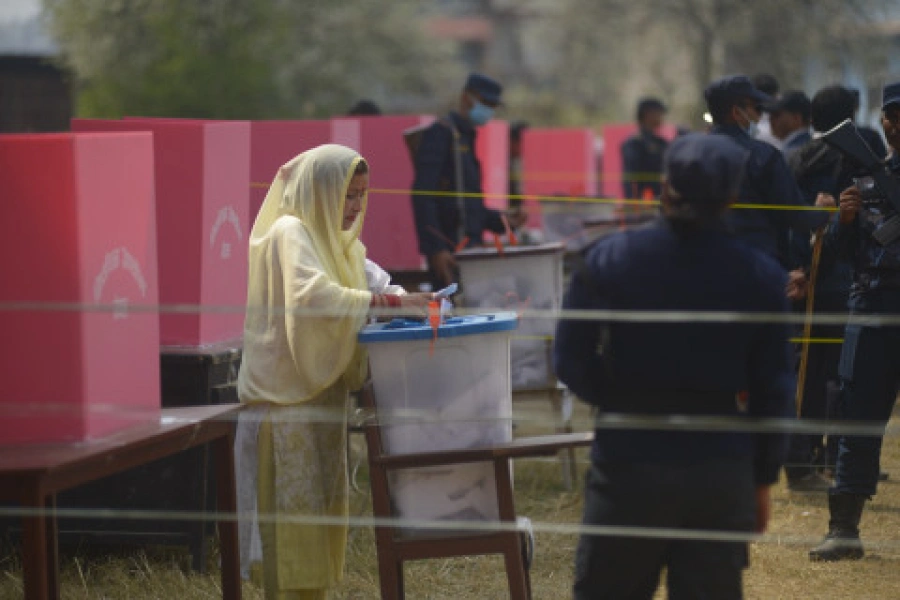
Nepal stands at an important moment in its national journey. The recent results of the election and the rise of a new generation of leadership have created both optimism and expectations for a different style of governance—one that is more transparent, accountable, and efficient.
While domestic politics is undergoing renewal, the global environment is becoming increasingly complex, with wars in different regions, growing geopolitical competition among major powers, economic imbalance, issues like climate change, and the rise of technologies like artificial intelligence (AI), which are reshaping the international order.
Nepal—a country between two giant superpowers, a country which relies heavily on migration and remittances, global trade, development partnerships, and regional stability—cannot remain untouched by these global shifts. In fact, they are deeply consequential.
As a new government prepares to take office with a strong mandate, Nepal faces a crucial question: How should it navigate a turbulent international environment while safeguarding its sovereignty and advancing its national interests?
The answer lies not in abandoning Nepal’s long-standing diplomatic principles but in reapproaching them with strategic clarity and confidence.
A world moving towards fragmentation
The international system today is entering a period of visible fragmentation and uncertainty. The earlier optimism that globalization would deepen economic integration and political cooperation has gradually given way to a far more contested and uncertain world. Strategic rivalries among major powers, growing distrust in UN and international institutions, and the resurgence of regional conflicts are reshaping global politics in profound ways.
The war in Europe has already altered the continent’s security architecture and revived debates about military alliances and deterrence. The ongoing war in the Middle East has added another layer of volatility to the global landscape. Beyond its humanitarian consequences, the conflict carries wider implications for global energy markets, trade routes, and political stability across the region. Disruptions in trade corridors and uncertainty in oil markets have demonstrated how regional wars can quickly produce global economic ripple effects.
In such a world, small and medium-sized states face a delicate challenge. They must preserve their autonomy while engaging effectively with global powers, development partners, and neighbours. The diplomatic space available to them often depends on their ability to maintain credibility, neutrality, and strategic balance.
Nepal’s strategic geography: Opportunity and responsibility
As Napoleon Bonaparte said, “To know a country’s foreign policy is to know its geography.” Nepal’s foreign policy has always been shaped by its geography. Situated between two major powers, Nepal has always pursued a balanced and pragmatic approach to diplomacy.
For decades, the principles of non-alignment, sovereign equality, the UN Charter, and peaceful coexistence have guided Nepal’s international engagement. These principles have helped the country maintain friendly relations with neighbours and diverse partners while preserving its independence.
However, with the increasing global shift of interest from the Atlantic to the Pacific, geopolitical competition for influence in Asia has been growing. As major powers expand their engagement in the region, smaller states often find themselves in a difficult position.
Moments

In such a context, Nepal’s strategic location should not be viewed merely as a constraint but as a geopolitical asset to be leveraged. Geography, when matched with proper and cautious planning, can be transformed into opportunity, enabling Nepal to position itself as a connector, a facilitator, and a stable partner in the wider region. This can be done by developing Nepal as a transit and connectivity hub between South and East Asia, strengthening cross-border infrastructure, and promoting trade corridors that link markets across the region. Harnessing its vast hydropower potential to serve regional energy demands, facilitating tourism and cultural exchanges, and positioning itself as a neutral venue for dialogue and cooperation are equally important pathways through which Nepal can convert its geographical location into leverage.
Nepal must remain committed to balanced engagement with all partners while ensuring that its decisions are guided primarily by national interest.
The hidden global impacts
Although Nepal appears distant from the ongoing global conflicts, the effects of global instability are already visible.
We are already facing economic burdens. Conflicts in energy-producing regions have already triggered a rise in fuel prices, which in turn affects Nepal’s import costs and domestic inflation. Disruptions in international trade routes can raise the price of essential goods.
Another visible effect will be seen in labour migration. Millions of Nepalis work abroad, particularly in the Middle East, and remittances play a crucial role in Nepal’s economy. One concern is the safety of Nepali workers, and another is the stability of remittance flows. Protecting the rights and welfare of Nepali citizens abroad must therefore remain a central pillar of Nepal’s foreign policy.
As major powers increase their economic engagement across Asia, Nepal has the chance to attract resources that support its development. However, such partnerships must be carefully managed to ensure transparency, sustainability, and long-term national benefit.
Also, climate change remains one of the most serious threats to Nepal. The country’s fragile mountain ecosystems are highly vulnerable to various impacts of climate change, such as glacial melting, floods, and erratic weather patterns. While contributing an almost negligible amount to climate change, Nepal has been facing its adverse effects so profoundly. International cooperation on climate finance and adaptation, and advocacy in climate justice, will therefore be essential.
The promise of generational change
The rise of a younger generation of political leaders offers an opportunity to rethink how Nepal engages in the international arena.
A new leadership often brings fresh perspectives, innovative ideas, and technological awareness. These qualities are very much valuable in a world where digital transformation, artificial intelligence, and green technology are reshaping economies and societies.
However, generational change must be accompanied by institutional maturity. Foreign policy cannot and should not shift dramatically with every political transition. Stability, continuity, and strategic patience are essential for maintaining international credibility.
The challenge for Nepal’s new leadership is therefore to combine new energy with long-term strategic thinking.
Reaffirming balanced relations with neighbours
Nepal’s relations with its immediate neighbours have always been the cornerstone of its diplomacy.
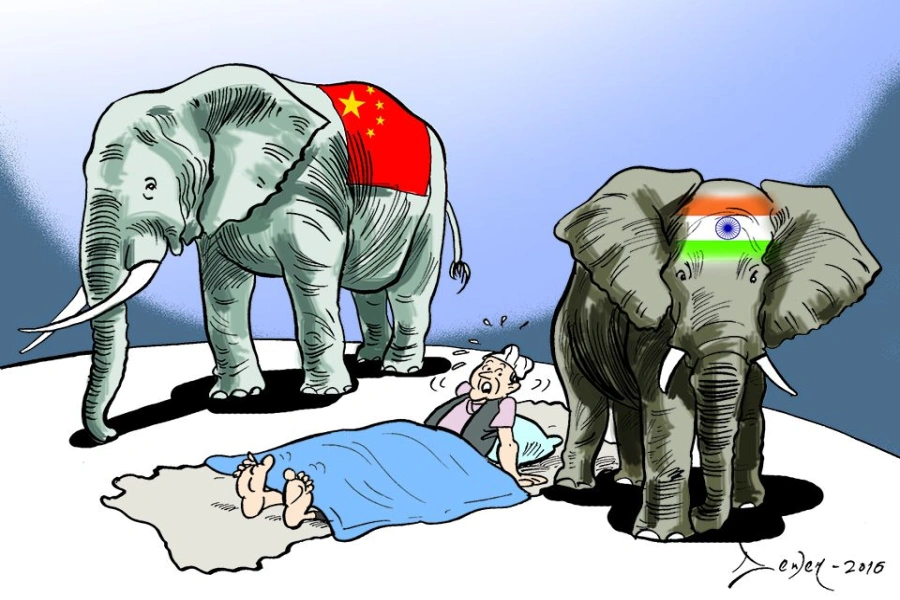
The historical, religious, cultural, and economic ties with India and increasing economic engagements with China have always supported Nepal in many ways. Being a landlocked country between these two giant powers, maintaining strong and neutral relations with both while gaining economic advantage requires careful balanced diplomacy—one which welcomes cooperation from both sides without allowing itself to be drawn into geopolitical rivalries.
This balanced approach with the neighbours reflects the confidence of a sovereign non-aligned nation pursuing its own interests.
Economic diplomacy in the center stage
While traditional diplomacy was largely political, modern diplomacy has evolved to reflect the changing priorities of the world. In today’s interconnected world, where economic strength determines a country’s standing as much as its political influence, economic diplomacy has emerged as a central instrument of foreign policy.
In a developing country like Nepal, economic diplomacy is not only an option; it is a necessity. As Nepal strives for economic transformation, graduation from the least developed country (LDC) status in a few months, and integration into the global economy, economic diplomacy serves as a bridge between foreign policy and development priorities.
Nepal should be able to utilize its resources—like hydropower, natural beauty, and its young population—to create significant opportunities for investment and growth. Diplomatic missions abroad should play a strong role in promoting trade, attracting investment, and developing technological partnerships, while creating an environment inside the country to do so.
Economic diplomacy should be given the highest priority in today’s world.
Multilateralism still matters
Despite growing arguments about the decreasing performance and role of the UN and other international organizations, multilateral diplomacy still remains a very important platform for countries like Nepal.
International organizations provide a platform for smaller states to raise their voices on their concerns, build coalitions, and influence global debates. Nepal has long contributed to multilateralism, including a major role in United Nations peacekeeping operations.
Continued engagement in global forums will allow Nepal to advocate for issues that matter deeply to us—particularly climate change, the rights of migrant workers, and sustainable development, among others.
Diplomatic capacity building
As Nepal’s international engagement is expanding, the country must also invest in its diplomatic institutions.
Professional diplomacy requires knowledge and expertise in areas ranging from international law and trade negotiations to climate diplomacy and technological advancements. Investing in strengthening the capacity of diplomatic missions and diplomatic officials is a must.
Effective diplomacy also requires good coordination among different government agencies and collaboration with the private sector.
Foreign policy is not only the responsibility of the foreign ministry, but it must also reflect a whole-of-government approach.
A moment that demands vision
In a world of growing uncertainty, Nepal must remain careful, steady, and insightful. Our foreign policy should have a clear vision with thoughtful ambition. By strengthening balanced diplomacy, protecting our citizens abroad, not taking sides in global rivalries, and prioritizing economic engagement, Nepal can go forward with confidence even in this global turbulence.
This new political moment is not just about change at home; it is an opportunity to redefine where Nepal stands in the world—with dignity, with purpose, and with full confidence.
(The author is a Joint Secretary at the Ministry of Foreign Affairs. Views expressed are personal.)