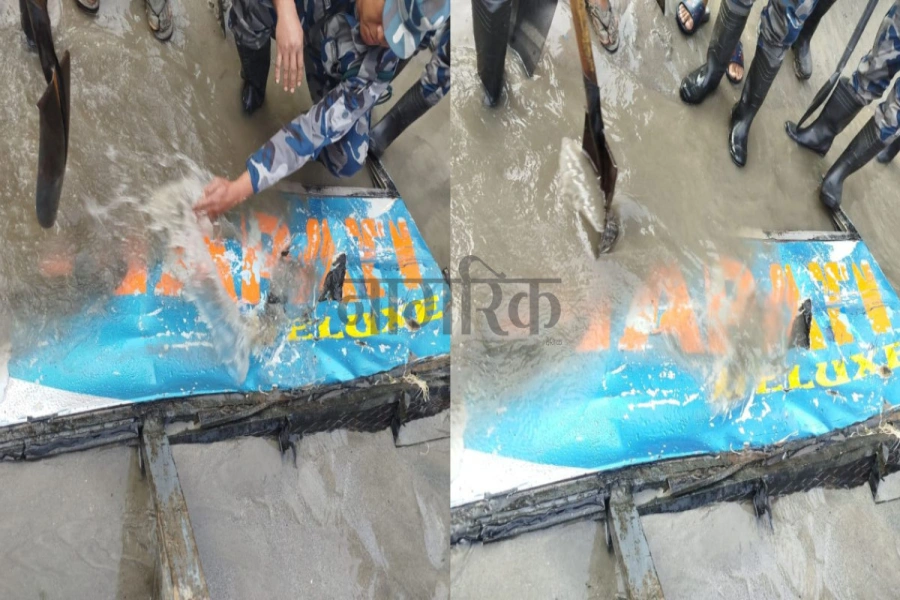
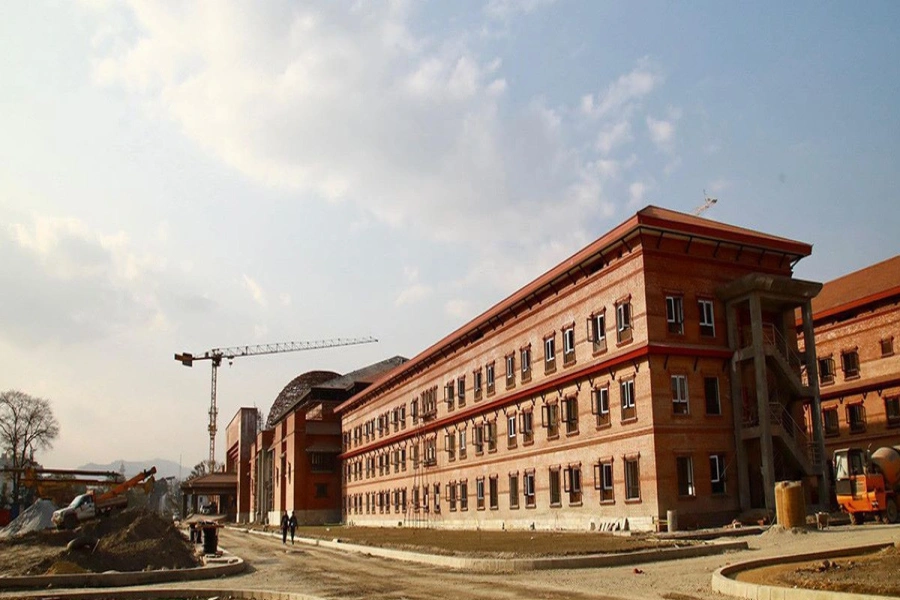
The earthquake hasn't discriminated in terms of age, gender, ethnic groups, language, financial capability and region. It has affected those living both in and outside the country. After the first earthquake, I ran out of my room and started calling my wife and daughter who were on the first floor. We all ran to the ground outside where our neighbors had already gathered. We waited, made some calls to near and dear ones, and surfed internet looking for answers about what had just happened.When we were all still experiencing constant movement below us, my daughter, who is living in Australia, called to tell me that Dharahara is gone. I cannot express how I felt after that. It was our pride, our identity, a public property that belonged to all of us and was dear to our heart. Many people lost their house, their family, their livestock and their pets. But what we all lost was our national heritage.
The first earthquake didn't affect me as much as the second one. I was already getting back to my normal routine except for sleeping in the vehicle. I was going to work and like every other Nepali, was getting updated with what was happening in affected areas. However, after the second big one on May 12, I haven't been able to think straight, I am scared all the time, I try to avoid news, I come home way earlier, and all I feel like doing is lying down with my eyes closed. I make sure the doors of my room and bathroom are unlocked; I don't want to talk to anyone. I feel irritated all the time. I cannot fully concentrate on anything and I have stopped socializing because no matter whom I meet, they are always talking about earthquake and damages.
But people were still forecasting or spreading rumor about big earthquakes. It also seems like the earth is continuously shaking and I should always be ready to run. After few nights of sleeping in the vehicle, my family and I were sleeping in our respective bedrooms. But after the second earthquake, neither have I been able to go upstairs, nor do I allow my family members to do so. We are all staying on the ground floor and sleeping in living room. I don't know how long this will continue.
Not knowing what was happening to me, I talked to some of my friends about how they are coping up with aftermath. They all had similar stories. The second earthquake has left people devastated. The physical loss and pain is limited to certain areas, whereas, psychological loss has spread throughout Nepal, and abroad.
Not only office employees, but people from all professions have fled the capital to protect themselves and their family. Why wouldn't they? The love for life is same for all. The daily wage-workers such as drivers, barbers, builders, are crying over their own loss and barely have time to think about building back this nation.
We, the residents of Kathmandu, had experienced empty streets and closed shops only during Dashain. But having to ride vehicle through empty street on a regular office day, when there had to be heavy traffic, and would have taken me at least 35 minutes to reach my office, is scary. Where are all the people? Now I can drive from my home to office in 15 minutes. Thousands have left the town to be with their family.
On the other hand, there are also people who are living in tents for free meal, free medics and so on. People don't want to go to their jobs and aren't hoping for the disaster to end. They are busy playing cards in their tents, waiting for the next earthquake to come.
I am mostly worried about the children who have lost their homes and their schools. There are approximately one million students who won't be able to return to schools because their schools do not exist. With their education violently interrupted, they sit with their parents all day, look at rubble of their house, listen to what their parents say, wait for relief, and if they are old enough, think of how their life will get back to normal.
It's good thing that many organizations and schools are establishing temporary classes for children. It is important that we do whatever possible to offer children the psychological support as well as a safe environment to help them get over their trauma. So, now what's done is done. But what we are doing right now is taking us backward and creating a space in our mind that is filled with fears. It's time for us to slowly get back our normal life. We should start doing what we did before the earthquake—going to work, socializing, talking about what to do next instead of what happened, and looking forward to the next day.
Influential people should start disseminating positive information. Artists and writers can get to start a creative club to help rehabilitation. Media can cover positive activities taking place all around our country to help us get over the crisis. Big business houses should announce vacancy so that people are encouraged to work and motivate other small business houses too.
The aid work will go on because there are large national and international organizations involved. But that isn't enough. Getting back to our regular lifestyle is what we absolutely need. Let's get back to work and normalize the situation.
rajunepal@rajunepal.com
Related story
Possibility of work-from-home in Nepal