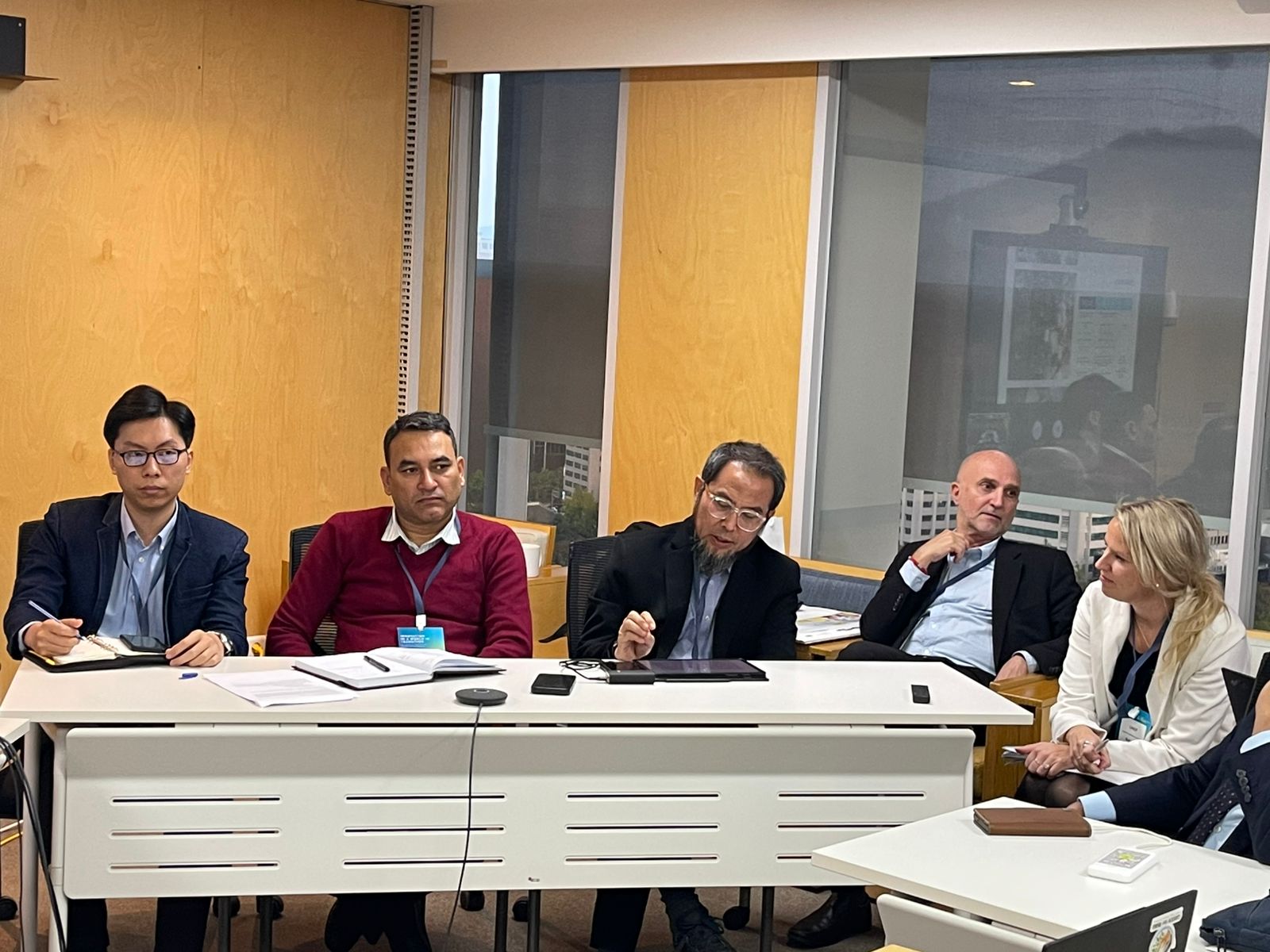
KATHMANDU, Oct 28: Senior forestry officials from Indonesia, Viet Nam and Nepal, along with private-sector partners and climate finance experts convened in Seoul this week to advance efforts toward scaling up high-integrity forest carbon transactions across the Asia-Pacific region.
The high-level roundtable held at the Global Green Growth Institute (GGGI) as part of Global Green Growth Week was co-organized by UN-REDD. The discussion aimed to help countries transition from REDD+ readiness to results-based finance and Article 6 implementation under the Paris Agreement, according to a statement issued by the UN Environment Program.
“Countries in the Asia-Pacific are demonstrating that protecting forests and building credible carbon markets are two sides of the same coin,” said Gabriel Labbate, Head of UNEP’s Climate Mitigation Unit and Global Team Leader of UN-REDD. “They are moving from readiness to results—building systems that not only store carbon, but also sustain livelihoods, restore ecosystems, and build trust in the markets that finance them.”
Counting Carbon, Missing the Forest: A Caution for Nepal

Across Indonesia, Viet Nam, and Nepal, over 230 million tonnes of CO₂ equivalent (tCO₂e) in potential mitigation results are being prepared for verification or issuance, reflecting a strong pipeline of forest-based climate outcomes linked to community resilience and green investment.
Indonesia leads regional efforts with a jurisdictional REDD+ pipeline of up to 200 MtCO₂e per year between 2022 and 2026 currently under assessment, supported by national and provincial programmes in East Kalimantan, Jambi, and several verified projects.
Viet Nam is advancing validation for approximately 25 million tCO₂e in emission reductions across 11 provinces, combining jurisdictional ART-TREES readiness with FCPF and emerging private-sector initiatives.
Nepal, meanwhile, is preparing to issue or verify around 20 million tCO₂e under its subnational ART-TREES and FCPF programmes. This marks a significant step in Nepal’s transition from donor-funded REDD+ payments to market-linked carbon finance. The country is also in discussions for a larger jurisdictional programme that could cover approximately 3 million hectares of forest.
Participants discussed practical, country-led strategies to accelerate verified issuance and define national positions ahead of COP30. They also explored how the proposed Tropical Forest Forever Facility (TFFF)—an endowment-style, non-offset mechanism providing per-hectare payments for standing forests—could complement domestic efforts to attract long-term, high-integrity investment into forest landscapes.









-1781762832.webp)