Kathmandu, June 29: Farmers across Nepal celebrate Ashar 15 of the Nepali calendar (today) as National Rice Plantation Day, with people eating dahi-chiura (yogurt and beaten rice) after working in the paddy fields.
Farmers, exhausted from their labor, eat dahi chiura to regain energy. It is believed that the combination of curd and beaten rice helps cool the body and replenish strength. This day has become a traditional occasion for consuming this special dish, not only for farmers but also for people engaged in various professions. Even those not involved in agriculture partake in this culinary tradition, marking Ashar 15 as a festival in its own right.
In Nepali culture, curd holds a sacred and symbolic value. Before undertaking auspicious activities—like traveling abroad or stepping out for important work—it is customary to receive a red tika made from a mix of curd and rice grains. Consuming curd before setting out is considered a good omen, a belief still prevalent today.
Yogurt worth over Rs 1.5 billion sold from formal sectors alone...

Scientifically, too, curd is recognized for its health benefits. Legend has it that Guru Gorakhnath offered curd to King Prithvi Narayan Shah—the unifier of Nepal—and prophesied his future as a brave and powerful ruler. In Ayurveda, drinking buttermilk (a product derived from curd) after meals is believed to promote good digestion and eliminate the need for medical treatment. This idea is summed up in the saying, “Bhojanante pibet takram vaidyasya kim prayojanam”—meaning, “If you drink buttermilk after meals, what need is there for a doctor?”
Dahi chiura is also considered medicinal in treating diarrhoea and digestive issues. Its widespread use has therefore deeply embedded it in Nepali cultural practices. Over time, Ashar 15 has evolved into a national celebration of agricultural identity and heritage.
The Beginning of National Paddy Day
On December 14, 2004 (29 Mangsir 2061 BS), a ministerial decision designated Ashar 15 as National Paddy Day, first celebrated in 2005 (Ashar 15, 2062 BS). Given that Nepal is an agrarian country where a large portion of the population depends on farming, this day honours the essential role of rice cultivation.
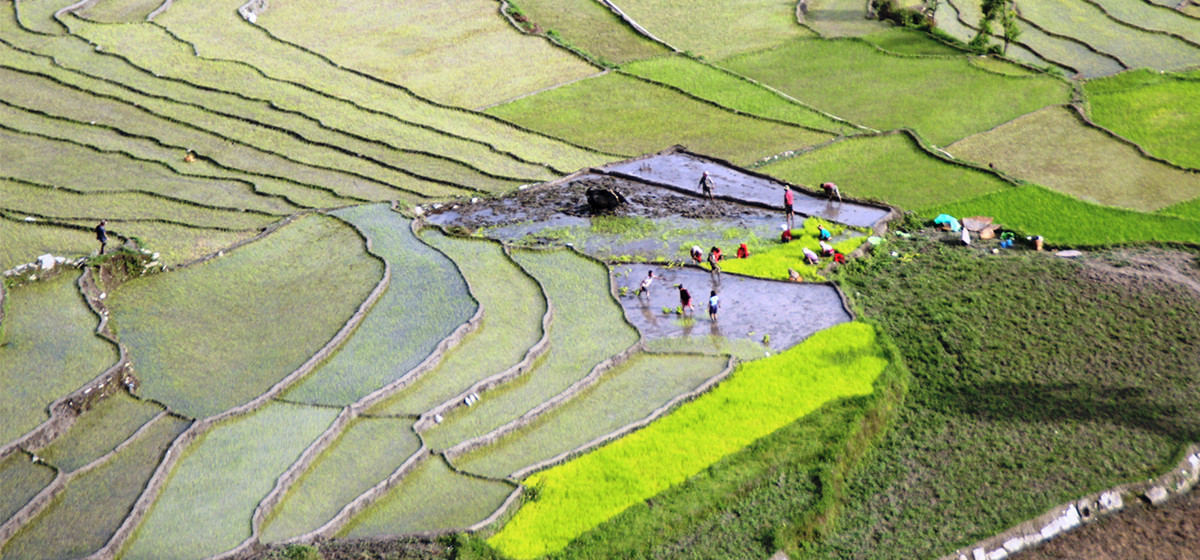
During this season, farmers are busy working the fields to secure food for the year. On this day, they sing folk songs and perform Asare bhaka (seasonal duets) while transplanting paddy in muddy fields. Songs like “Chhupu chhupu hiloma, dhan ropera chhodoula, banai kulo lagai, pani aayera godaula” fill the air, adding joy to their hard labor.
The scene is festive—young men and women splash mud at each other, laugh, and sing while working in the fields. Many believe that one must step into the mud at least once during the month of Ashar.
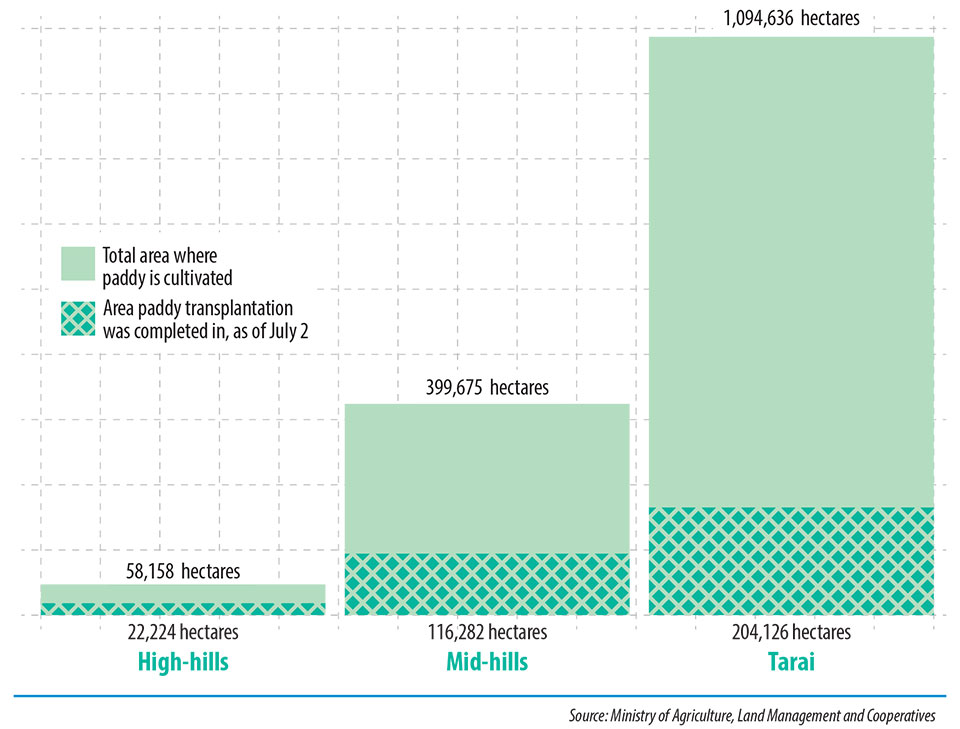
However, this year, rice plantation activities have been hampered by insufficient rainfall across many regions up to mid-Ashar. Farmers have also complained about a lack of chemical fertilizers in some places. The Ministry of Agriculture and Livestock Development, however, has asserted that there is adequate fertilizer stock.