As a country, Nepal is blessed with many attributes that are necessary for good living and civilized life. Nature has bestowed us with bountiful resources and unparallel natural beauty; abundance of wildlife and a varied climate; ancient culture and diverse life-style; and a hard-working, immensely hospitable people. For all these reasons, thousands of foreign visitors flock to the country each year in search of natural beauty, to experience peace and quiet, and enjoy the country’s rich culture.
The sad truth, however, is that nature’s bounty and country’s cultural attractions are out of sync with the realities of life average people must endure. Looking at the necessities for even a basic living we, as a nation, have descended to the lowest point of material well-being.
The case in point is the newly released World Development Report (2012), World Bank’s annual survey of economic and social conditions around the world. The Bank’s report shows Nepal falling into the category of world’s poorest countries, nearly all of them African. However, the most significant aspect of Nepal’s situation isn’t its worldwide comparison but its position vis-à-vis its Asian compatriots. This gives the country a new identity as Asia’s poorest country, paralleling Haiti’s distinction in the Western Hemisphere.
Key economic data are summarized in the table for Asian countries, excluding a few irrelevant ones. Aside from being ranked as Asia’s poorest county—both in terms of income per capita and growth rate—the most significant point that comes through these data is the relative size of investment rate. For Nepal, this is marked at 29 percent of GDP—not the highest but very respectable, looking at similar data for other countries.
Before we can understand its significance, we need to know what investment is, which is very dissimilar to what is commonly believed. Investment comprises spending for building factories, purchase of equipment, starting a business, construction of a new house; improvement of farm, and similar other items used for production.

Also, government spending for infrastructure—roads, bridges, irrigation, water supply, power-grid, health and education services—are investments because they help build the economy’s productive capacity. Overall, investment is an essential input into the growth process, and, therefore, good growth must accompany high and rising levels of investment, both in private and public sectors.
Now the real message of data presented in the table, which shows an alarming mismatch between GDP growth and investment rates for Nepal. The country is investing 29 percent of its GDP, which is high by world comparison and, indeed, a rate of 30 percent is quite rare and reserved for countries which are truly hard driven to obtain very high rates of growth. For most countries, normal investment rates are between 20 and 30 percent which, wisely used, is large enough to produce 7-8 percent growth. This pattern is observed in many countries in the table—Bangladesh, Cambodia, Laos and Sri Lanka, for example.
The impression one gets from high investment-low growth scenario presented for Nepal concerns the efficiency with which capital is being used to generate growth. This can be explained in terms of what economists call the incremental capital-output ratio or ICOR—the ratio of investment rate to growth rate. There is no firm agreement on what the efficient size of ICOR is—how much new capital is needed to increase GDP by one percentage point. However, based on evidence from a cross-section of countries, its average size appears to be 4, meaning that 4 percentage points of GDP equivalent investment is needed to increase GDP by one percentage point. We can verify from the table that this relationship generally holds, except for Nepal, where the ICOR is roughly 8, or almost twice the average for most Asian countries.
The other message—somewhat more technical—is the data on savings rate, which actually measures domestic contribution to fund investment spending. Again, Nepal is singular in the mismatch between savings and investment, called the “savings gap.” This gap must be filled-in by foreign savings, to make the planned investment possible. You can see from the table that high savings countries are generally the most successful ones, not necessarily those which are high investors or the ones whose high investment needs are met from foreign sources, as is the case in Nepal.
The saving gap of above-20 percent for Nepal is the largest for any country in Asia. Malaysia also has a large size gap but this is in the opposite direction—domestic savings exceeding domestic investment by a whopping 22 percent margin. Generally, high saving countries are the most successful ones while low saving countries lag behind.
The high investment-high savings gap together explains Nepal’s economic predicament—persistence of low growth and spreading poverty. I will try to simplify the logic.
In a mixed economy like Nepal, investment comes from two sources—private and public, the latter comprising central government and public enterprises. The data separating private and public components of investment are unclear and unreliable. However, we can look at this separation from the funding side—how these two types of investments get financed. Looking at the government’s funding sources, part of its investment is financed out of own resources which is basically revenue collection less current spending. This difference during recent years has been about Rs 50 billion which, technically, is the amount available to government for capital spending.
The other government funding source comprises foreign aid, which includes grants as well as loans. The total amount of foreign aid received during the last year was Rs 108 billion, close to the Rs 110 billion target. I assume all this aid money goes to fund capital spending in the public sector, comprising government and government agencies.
Revenue saving together with foreign aid amounts to Rs 160 billion per year, which makes up about14 percent of GDP and it is available to government to finance public sector investments. Of about 29 percent of GDP equivalent in total investment, private sector investment then will be the residual 15 percent of GDP.
Now the concluding part of the above discourse, which is part conjecture, part a flight of imagination, but most of it based on sound logic. We can safely assume that private part of investment funding gets utilized in an efficient manner, for the simple reason that private investment is driven by profit motive and also that some degree of control is exercised by funding agencies, such as banks, on the use of funds, although we can expect some loss of efficiency because of bureaucratic red-tape and bribes paid to government officials and politicians.
The point then is that if private capital gets used efficiently, then 15 percent of GDP equivalent in private investment is sufficient to produce 3 to 4 percent economic growth, the rate actually realized for Nepal, over the past decade and for longer period.
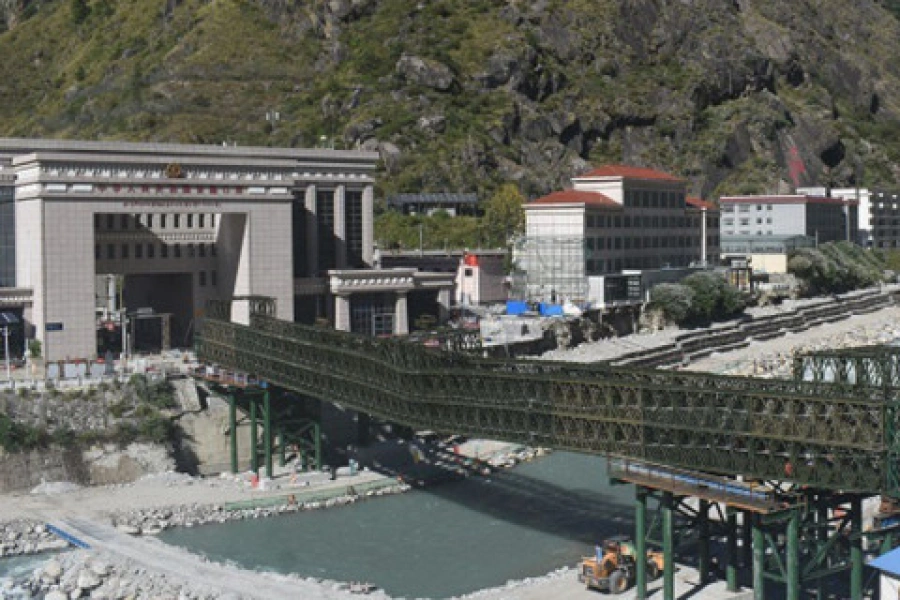
This leaves out the government part of investment, most of it financed through foreign aid. There are credible reasons to believe that government investment in general and foreign-funding of such investment in particular hasn’t helped Nepal. In fact, Nepal wouldn’t have been a poorer country without foreign aid and also if government wouldn’t have been in the business of pursuing a development agenda.
All of these add up to one of the largest failures of government-funded investment effort anywhere, and especially of foreign aid backing of such effort. Nepal’s experience shows that they do not help growth or alleviate poverty. On the contrary, the effect can be just the opposite, if it creates a dependency syndrome and encourages corruption. Both of these effects are quite evident in Nepal.
sshah1983@hotmail.com
Related story
Head held high