KATHMANDU, Dec 31: A constitution through people's elected representatives was a 70-year-old political agenda in Nepal. Many people sacrificed their lives for the great cause. Political parties struggled for the same for decades and the whole country busied itself in the task since 2008.
But as the country accomplished the historic mission and the people got a new constitution through democratic procedures in the Constituent Assembly (CA), the historic achievement couldn't be celebrated across the country.
While an overwhelming majority of lawmakers in the 601-seat CA endorsed the new charter, a group in the same House protested. As people celebrated in most parts of the country, agitating parties protested against it in Tarai-Madhes.
People's celebrations couldn't last because the country faced a serious crisis in the form of an economic embargo by India, which was displeased with the new constitution.
The year 2015 was thus historically successful but also highly turbulent. The second CA delivered a constitution to the people who had been disappointed by the dissolution of first CA without a constitution even after repeated extensions of its tenure.
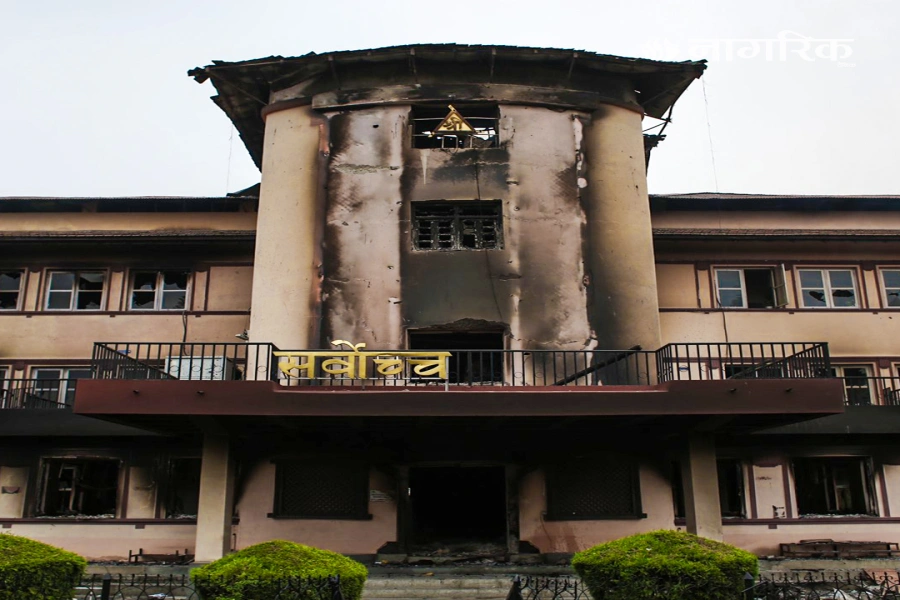
At the start of 2015, the CA building and the meeting hall turned into a veritable battleground as large number of lawmakers from UCPN (Maoist) and United Democratic Madhesi Front (UDMF) staged strong protest against the federal proposal of ruling parties.
The protests of opposition lawmakers turned violent even inside the CA. As tensions rose, CA Chairman Subas Nembang mobilized hundreds of marshals inside the CA building, and vicinity was encircled by security forces.
Tight security arrangements added fuel to the fire and made opposition lawmakers more aggressive.
UCPN (Maoist) and United Democratic Madhesi Front (UDMF) lawmakers resorted to vandalism when the CA meeting got underway on January 19. They hurled shoes at CA Chairman Nembang, broke chairs and tables and threw microphones targeting top leaders of the ruling parties.
The standoff between the NC-UML-led coalition and the UCPN (Maoist)-UDMF alliance prolonged for months.
The changes in the political scenario happened only after the massive earthquake of April 25 and aftershocks devastated the country, killing 9,000 people and battering the national economy.
In the face of the devastation, leaders of major parties vowed to stand together from parliament rostrum to produce new constitution and to concentrate all their energies in rebuilding the country.
However, the gap with the Madhesi parties still couldn't be bridged. While the Big Three expressed their readiness to compromise on their respective stances, Madhesi parties didn't budge. They further intensified the agitation accusing the major parties of not federating the country as per their demands. They went on to the extent of blockading the country, in collusion with Indian government.
UCPN (Maoist) and MPRF-D in, Congress out
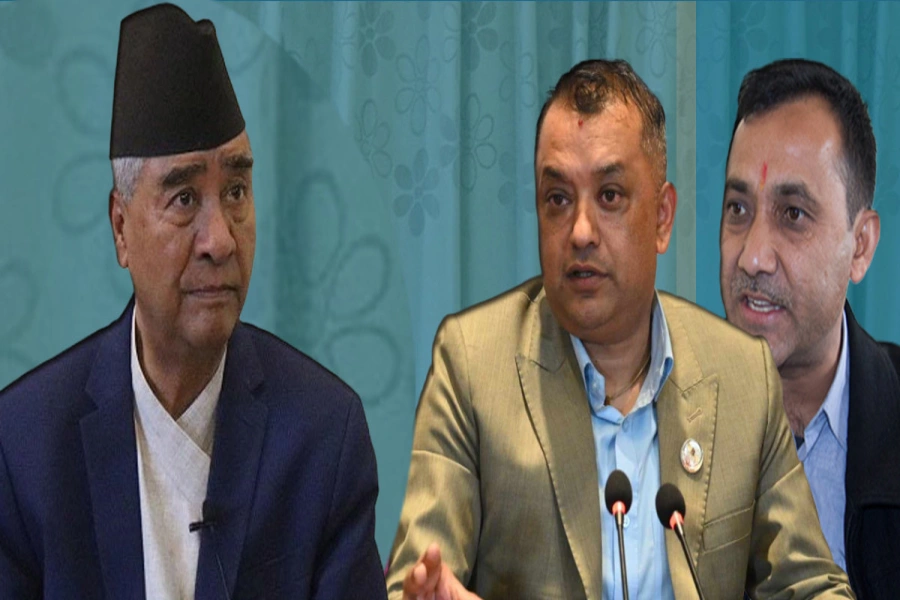
The unity among the Big Three to promulgate new constitution however didn't last. As the major parties were negotiating power-sharing immediately after promulgation of new constitution in September, the largest party, Nepali Congress (NC), parted company with CPN-UML and UCPN (Maoist). The exit of the largest party from the coalition over differences on power-sharing over top posts such as president, vice-president, prime minister, speaker and deputy speaker was a cause for concern as it would badly hamper the implementation of the new constitution.
Bhattarai's exit from CA, UCPN (Maoist)
Each and every provision included in the new constitution was settled by the CA committee headed by UCPN (Maoist) leader Baburam Bhattarai. He was given key role in the historic mandate of finalizing the major features of the new constitution. The CA full House repeatedly extended his committee's tenure to allow him to complete the job. Bhattarai toiled tirelessly.
But, unfortunately, as the CA entered its final leg of constitution making, Bhattarai turned into a dissident. To the surprise of many, he not only quit his party but also the post of lawmaker to join the protest against the new constitution.
Uncompromising UDMF
Though major party leaders and many others describe the new constitution as progressive, representatives from various walks of life have expressed their strong reservations over some of its provisions. People from the dalit community, women representatives and rights activists from various marginalized communities have found some constitutional provisions problematic. However, leaders from the agitating Madhes-based parties have not only expressed their reservations but also resorted to extreme measures against the new constitution.
Protests the year round
In the beginning, the UDMF leaders protested the proposal to promulgate new constitution by fixing the number of [eight] provinces while demarcating them later. Then, the major parties became ready to set boundaries. They changed the boundaries and the number of provinces from six to seven after public feedback on the first draft of the constitution. Madhesi leaders accuse major political parties of repeatedly betraying them while major parties criticize the agitating leaders of not showing flexibility as new constitution is as a document of compromise among political forces.
What went wrong?
Why did the country witness protests even when the constitution was endorsed by over 85 percent lawmakers and even as it was a dream come true for the people after a struggle of 70 years?
Political analyst Nilamber Acharya, who headed the erstwhile Constitutional Committee of the CA, described the reaction as natural after promulgation of a new constitution. Asked why the situation couldn't be taken into control, Acharya said that it was due to lack of leadership that fully owned the new constitution, properly explained it and convinced people about the new product.
"In such a political transition, there should be either a single political leadership or a group of leaders whom people trust," he said. Acharya said that people don't protest strongly even if there are some faults in the constitution if they have political leaders they can rely on.
Related story
Conor McGregor announces retirement from MMA after turbulent 12...