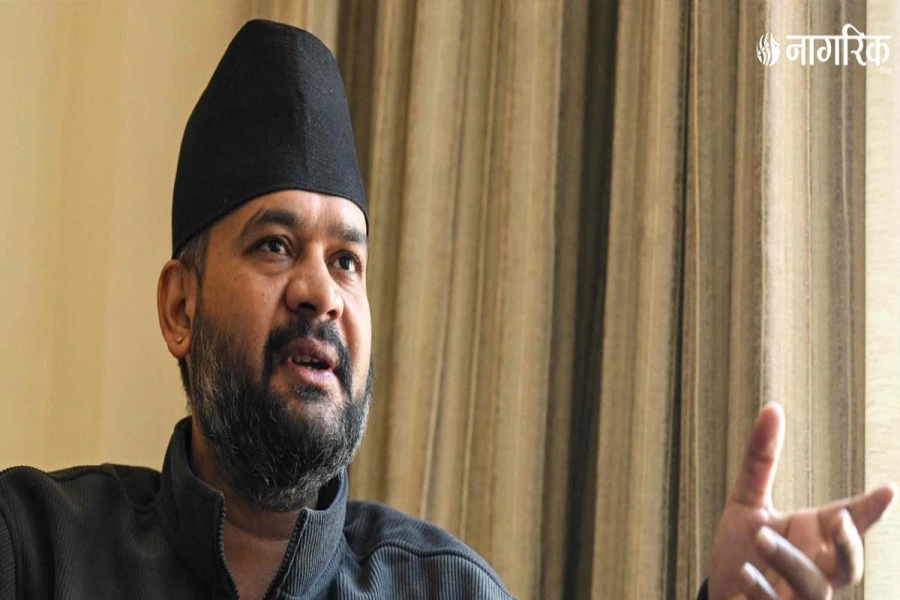
The news of a member of the (rather awkwardly named) Commission of Investigation on Enforced Disappeared Persons (CIEDP)—one of two transitional justice bodies—personally writing to United Nations Secretary General Ban Ki-Moon, lamenting the lack of cooperation and assistance from the global body in investigating conflict-era cases, is deeply troubling. The rambling email to this effect that was sent by Bishnu Pathak, CIEDP member and spokesperson, on February 6th, talks about how the commission is suffering from lack of manpower and the right set of tools. Pathak questions the commitment of the international community. For years members of the international community advocated for the formation of the two transitional justice bodies, the email says, but now that they are in place, why is the international community now "reluctant to provide technical, programs and financial supports to the CIEDP"?As a government employee, Pathak is bound by its rules and regulations. Whenever a government office has to communicate with international institutions or other countries, it must follow a set protocol. There is no provision for the kind of individual communication that Pathak wanted to have with the UN chief. For one such ad hoc communications do not reflect well on the country's image abroad. Even if Pathak felt the need to communicate with the international community why didn't he first push such correspondence through the commission? Pathak must be made to answer for his reckless behavior. But it is also hard to dispute his claims regarding lack of progress in investigating conflict-era cases, a full year after the formation of the two transitional justice bodies. What is the point of having them if they are not empowered with timely regulations to carry out their duties? Why has the cabinet been sitting on the relevant bill for so long? It's not hard to guess.
Top leaders of the various Maoist parties, mainly UCPN (Maoist) under Pushpa Kamal Dahal that is now in the government, remain suspicious of the two transitional justice bodies as they believe that their only purpose is to hound them. If the two bodies are empowered with requisite laws, they fear, they could find themselves in a court of law facing a murder charge or being labeled an accomplice in an enforced disappearance. But this kind of time-buying is not a viable long-term strategy; it's inhumane, too. Thousands of families of those killed or those made to forcibly disappear during the Maoist war have now waited for justice for nearly a decade since the guns fell silent in 2006. Lest we forget, both the Truth and Conciliation Commission as well as the disappearance commission were supposed to be formed within six months of the signing of the Comprehensive Peace Agreement in November, 2006. They weren't formed for nine years. The longer these desperate families are denied a sense of closure and the longer the political establishment dilly-dallies, the more we are likely to see desperate measures like Pathak's mistimed petition to the UN. This incident should be a reminder for the political class not to delay things any more. If not, with old wounds left to fester, there will be a real risk of the country's relapse into conflict.
Related story
Falling in Love