


The government has unveiled an ambitious three-year infrastructure strategy, promising projects worth nearly Rs 1.15 trillion in roads, urban development, drinking water, and sports facilities. Under the plan, around Rs 500 billion will be invested in physical infrastructure and another Rs 650 billion in urban infrastructure over the next three years.
Although the budget for road and urban infrastructure in the upcoming fiscal year stands at Rs 286.48 billion, the government says the new framework will go beyond annual budgeting and allow projects to be implemented over multiple years. According to officials, project design, procurement, and contract management have often consumed up to 21 months, leaving little time for actual construction.
The new plan includes upgrading district roads, constructing 3,000 local bridges, modernizing nearly 300 urban centers, expanding drinking water access, investing in sports infrastructure, and developing strategic highway corridors linking key trade and tourism routes. More than Rs 600 billion is expected to go into strategic road corridors alone. Billions more have been allocated for road maintenance, local connectivity, landslide mitigation, and urban development. The government has also pledged to improve road safety through underpasses, overpasses, and flyovers, while aiming to increase access to safe drinking water to 65 percent of the population within three years.
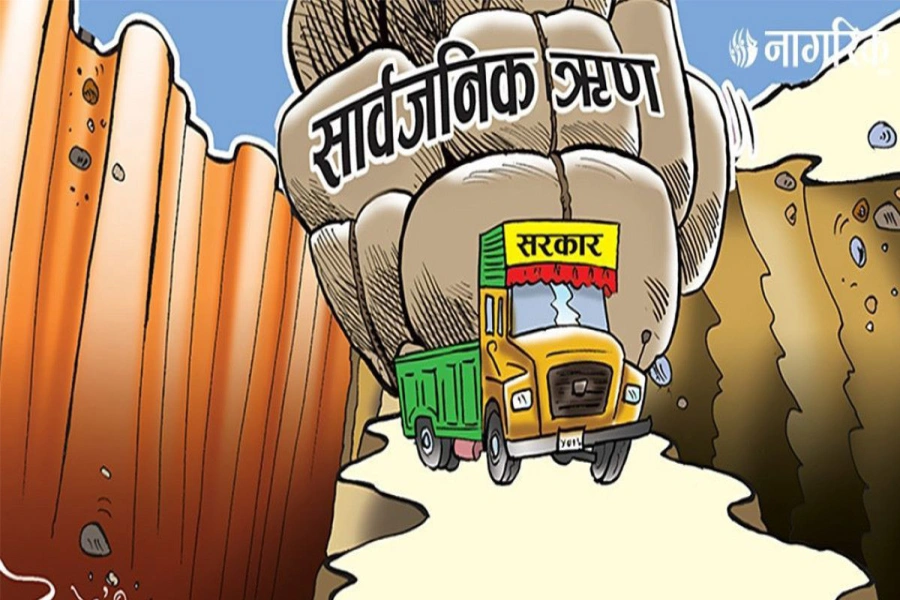
Public debt hits Rs 2.8 trillion mark
Nepal’s infrastructure problem is not merely a lack of money—it is a lack of execution. Every year, governments announce large budgets and ambitious projects, only to struggle with procurement disputes, land acquisition problems, environmental clearances, contractor failures, and bureaucratic delays. The result is familiar: roads remain unfinished, bridges miss deadlines, costs escalate, and public confidence declines.
The shift to a multi-year framework is therefore a sensible step. Large infrastructure projects rarely fit within a single fiscal cycle. Annual budgeting usually leads to fragmented spending and short-term focus. A three-year window could bring more certainty to planners, contractors, and local governments. Yet the strategy will succeed only if institutional weaknesses are addressed. Procurement reform cannot remain a slogan. Tender evaluation must be faster, transparent, and insulated from political influence. Government agencies must improve project preparation before contracts are awarded. Too often, projects begin without complete designs, proper cost estimates, or land acquisition plans—that is where delays usually start.
The government must also strengthen project monitoring. Ministries should issue frequent progress reports and present details to the public. Provincial and local governments should not only be informed of decisions but actively involved and treated as partners. Past examples of projects being held up due to poor coordination between different levels of government are numerous.
Capital expenditure is another area of difficulty. On several occasions, Nepal has failed to spend the allocated development budget within the stipulated time. It is of little use to have an extensive list of projects if the capacity to implement them is weak. Because of this, the government should prioritize completing existing projects rather than starting a large number of new ones. Finishing half-built infrastructure often delivers greater economic returns than scattering resources across dozens of fresh commitments.
The next three years will test whether Nepal can move from planning to delivery. The targets are achievable, but only if decisions are made quickly, contracts are managed professionally, and political interference is kept to a minimum. Delays, duplication, and waste have already cost the country too much. If authorities maintain the pace of work, hold each other accountable, and ensure that no single rupee is wasted, the Rs 1.15 trillion plan has the potential to be groundbreaking for Nepal’s infrastructure development—rather than another missed opportunity.







-1782125987.webp)
-1200x560-1782120651.webp)


