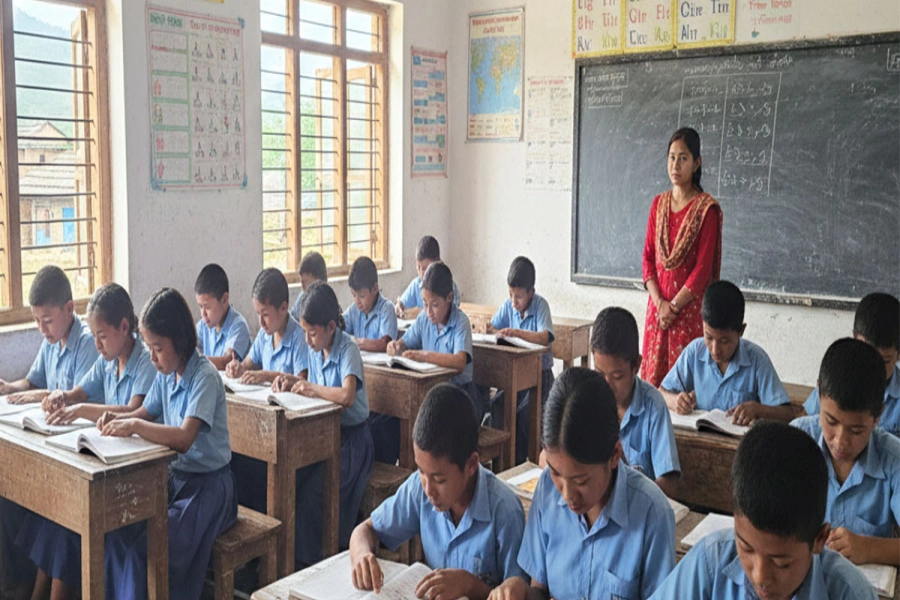
There is just a month and a half to go before the start of the School Leaving Certificate (SLC) examinations on March 31st. This would be a momentous occasion in the history of education in Nepal for starting from this year the Office of the Controller of Examinations (OCE) will rank students on the basis of grades to replace the old marking system. The grade system is expected to remove anomalies of the marking system, most significant of which was the misleading designation of students into 'pass' and 'fail' categories. Since SLC exams are seen as the 'iron gate' that is crucial for their future academic success, students would be under a lot of pressure to do well. Every year four or five students who fail the exams commit suicide. The social stigma of failing is still immense. The grade system will help remove this stigma since under it there will be no clear 'pass' and 'fail' categories. The grade system will also make it easier for Nepali students to apply to colleges and universities abroad as most of them also follow the grade system.Another welcome change for SLC students this year is that in the last day of their exams they will be able to check, with the help of individual memos from OCE, if vital information such as their name, symbol number, date of birth and the subjects they are appearing in are correct. This will spare them of the hassles (and heartaches) when they can't locate their symbol numbers in the final results owing to such technical errors. But not everything is hunky-dory with this year's SLC exams. For example most students of Jajarkot and Bajhang districts in western Nepal are ill prepared, only 45 days ahead of the exams, not even half their academic courses have been completed. There is an acute shortage of trained teachers in these districts. At Badimalika Primary School in Bajura, another district in western Nepal, office clerks without any expertise in teaching are conducting regular classes. There are many such schools in Far-Western and Mid-Western development regions. The four-month-long blockade has also played havoc with school calendars. Unavailability of course-books on time is yet another hindrance to overcome for students from these districts.
The boosters of the grade system say that one of its benefits will be more similarities in the mark-sheets between students of private schools in urban hubs like Kathmandu and Pokhara and the students of poorly-funded and under-staffed public and community school that 80 percent of school-going students in Nepal attend. But without drastic reforms in how public schools are funded and operated, and in the vast bureaucracy that oversees our education system, such changes will only be cosmetic. It's no good having good grades if they can't help you land decent jobs in today's competitive knowledge economy; it is also painful for your poor academic skills to be shamefully exposed in later academic life. True, it's hard to arrange teachers for hundreds of thousands of students overnight. It should be far easier to ensure that they get their course-books on time. But even after the US $ 2,635-million School Sector Reform Plan (SSRP) has nearly run its course even the basic requirements of quality education remain unmet in most of Nepal.
Related story
Vitamin 'A' and de-worming tablets being administered to childr...