



KATHMANDU, March 30: Nearly seven months after the federal parliament building in New Baneshwar was reduced to rubble during the Gen-Z protests on September 8 and 9, its fate remains in limbo. Once the heart of Nepal’s legislative process, the structure now stands as a charred reminder of unrest—with no clear roadmap for what comes next.
Until recently, the building—originally constructed as the International Convention Centre—buzzed with parliamentary debates, lawmaking, and political negotiation. Today, silence has replaced those voices. Fire and vandalism during the protests have left it unusable, raising pressing questions about whether it will be rebuilt, restored, or simply abandoned.
Before the unrest, the building regularly hosted federal parliament sessions. Following the 2008 Constituent Assembly elections, the Parliament Secretariat had leased the premises from May 27, 2008.
According to Dipendra Bikram Singh, senior program coordinator at the Special Structure Operation and Management Development Committee under the Ministry of Urban Development (MoUD), the building was never meant to be a parliament. “It was designed for large-scale conferences. But after the formation of the 601-member Constituent Assembly, it was handed over to the Parliament Secretariat through an agreement,” he said.
That agreement, however, collapsed in the aftermath of the protests. Singh said the Secretariat unilaterally terminated the deal after the building was destroyed.
Former MPs yet to return their 'insignia'

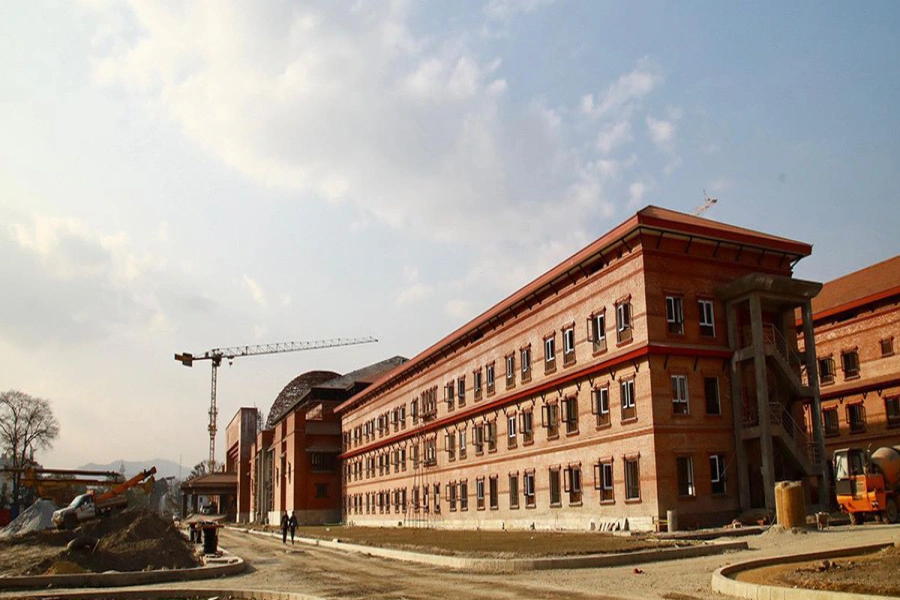
Built with Chinese government assistance, construction began in 1989, and the structure was handed over to Nepal in 1993 at a cost of around Rs 1.15 billion. It was envisioned as a venue for international events.
“At the time, Nepal lacked the infrastructure to host major conferences. King Birendra had hoped to host a SAARC summit, and during his visit to China, he requested support. That is how this building came into being,” Singh explained.
Over the years, the Parliament Secretariat paid rent—initially Rs 56 million annually, later revised every three years to nearly Rs 160 million. That amount was deposited into the committee’s fund, which manages the building under the MoUD.
But now, the financial and legal questions are as murky as the physical state of the structure. The committee says the agreement required the building to be returned in its original condition—something that did not happen. “The contract clearly required restoration, but the contract was cancelled unilaterally,” Singh said, adding that, after the damage, both parties, being government bodies, are constrained in their actions.
The Parliament Secretariat, however, defends its decision. Spokesperson and Joint Secretary Eakram Giri said the move was unavoidable. “The building was fully functional before, with no major issues. But once it became unusable, we had no option but to terminate the agreement effective September 9,” he said, adding that the annual rent, including taxes, had reached around Rs 180 million.
Parliamentary proceedings have since shifted to a new building in Singha Durbar, where newly elected lawmakers have already taken their oath.
“This building once had everything—modern facilities, multiple halls, and the capacity to host historic decisions,” Giri said. “Now, it survives only in memory.”
What happens now?
The MoUD has formed a study team led by an architect to assess the damage and determine the building’s future. The team is currently evaluating structural integrity and estimating reconstruction costs.
“Once the report is submitted, a decision will be made,” Singh said.
Yet, even as the assessment continues, uncertainty persists. The unilateral termination of the agreement has complicated coordination between agencies, and no clear plan has emerged.
With no decision on restoration, reuse, or alternative purpose, the future of the New Baneshwar-based parliament building hangs in the balance—highlighting not just a damaged structure but also a gap in coordination and accountability among state institutions.






-1781882999.webp)


