The time for young leaders to step out of the shadows of their mentors is now. The inclusion of young minds in the decision making will affect the direction our country will take. The effect might not be positive in every sphere but some of the decisions will serve very well for our nation riddled with problems.[break]
“Leadership in our country can be compared to a stagnant pond with the same old people in the driver’s seat. Ideally, it should be like a river where there is a constant flow. And so it should be a constant flow of new leaders who take little for themselves but give much in return. Youth leadership is important because they have the capability of achieving many things. If the leaders help and support the youth and place their belief in them then they are capable of giving a lot back to their country. Only under the leadership of the youth can our nation be steered towards peace and development. We are hoping that the leaders realize the importance of this,” says Pradip Pariyar, President of Association of Youth Organizations Nepal (AYON).
Many young people will agree with this as they have understood that for Nepal to head towards a new beginning, we need new people with enthusiasm to drive their ideas forward. With a country full of young people looking for guidance, perhaps the one who should lead us should be someone amongst us.
Samyak Moktan, 22, remarks on the importance of youth leadership. A student of Bachelors in Liberal Arts and Science at White House Graduate School of Management, she says, “A leader represents and leads the group.
He or she should be as similar to the group he or she represents because that is the only way to know and address the needs of that group. It is a big necessity in a country like ours with a huge youth population. A leader paves the untrodden path and helps to emphasize the boiling issues of the mass of youth who are in need of an identity and a voice.”
Julian James, cinematographer and co-owner of Earthy Nepal, also shares his opinion. He stresses on the importance of youth leadership as a means of utilizing fresh ideas, and the power of the youth to bring about change.
“If given the opportunity to lead the country then the traditional methods that are in use now can be replaced by the new and fresh methods and ideas of the youth. Older people have not understood the potential of the youth. Nowadays, many young people have come back to their country and they have brought with them new ideas. With youth leadership perhaps more young people will understand that there are also opportunities within the country and they can do something right here,” he points out.
The youth should get the much awaited opportunity to not only put their ideas on the table but also see them come alive to help in the path of development.
Samni Senehang, 16, a grade 12 student of Little Angels’ College echoes the sentiment of many. “I believe the youth just need the opportunity to become leaders and do something for their country. They have more ideas, than our current leaders, regarding what needs to be done for the development of the country. If given such opportunities young boys and girls will feel more responsible towards the country and their involvement with negative things will grow lesser.”
“It is high time that we open the doors for the youth so that they can storm in and build their dreams,” says social entrepreneur Rafael Poudel (Saathi Rafael) who, having worked with organizations such as Youth Initiative and Change Fusion Nepal has now moved on to starting his own enterprise – Saathi ko Ghar. Saathi ko Ghar, is an effort to provide young people a friendly accommodation in Kathmandu while building a network of young minds with thoughtful ideas.
The world is evolving rapidly but we Nepalis are missing out on a lot. New innovations have come up and there are changes in every field but we are still stuck with the same traditional practices which can’t be overthrown because they are deeply rooted.
“We can either deconstruct the traditional mindsets and rebuild on it, which takes time, or we can bring in fresh minds with new thoughts and practices and provide them with a platform,” Poudel continues.
Youth leadership is all about giving fresh, young minds with innovative ideas, a platform where they can become leaders and decision-makers, states Poudel who believes that youth leadership will not only help us move forward in this competitive world but also put pressure on the traditional ways and induce changes.
“Nepal is facing a big economic crunch,” Poudel goes on, “ Youth leadership should come up in every level but we specially need to have young people in the field of entrepreneurship where young people bring in ideas to provide other people with opportunities.”
Poudel seems to be optimistic about youth leadership in Nepal and says, “Lately, people have been conscious about including the youth in every field but I think they are still not in decision-making positions.
It is not enough to just have the youth participate, there needs to be a wave of leadership transformation from the old and experienced to the young.” However, he admits that youth leadership hasn’t fostered as much as it should have.
It has become a bit fancy perhaps where the youth are getting into volunteering and activism just for the credit. “Once there is enough moral pressure, youth leadership should come up more. With the out of the box ideas from the youth and proper guidance we can create a big impact,” Poudel is positive.
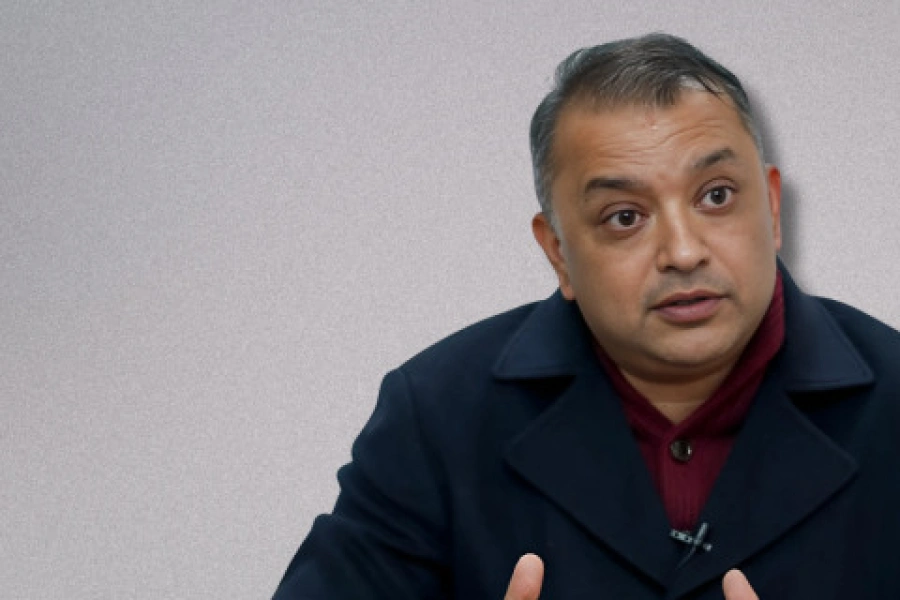
Central Committee member of Nepali Congress and youth political leader Gagan Thapa says, “When talking about youth Leadership in a political level, if we look at the history of democracy, we can see that a lot of politicians have contributed to the society a lot while they were young.”
But Thapa believes that after a certain age, people stop becoming good leaders. Rather, they go after their own personal benefits. He sees this theory applicable to himself as well.
“I think I have 10 to 15 years as a capable leader. I believe that as a politician, there is a certain limit to how much you can deliver to the society. The attitude of bringing change, of making the society a better place is lost once you reach a certain age,” he opines.
“I may remain a responsible citizen after that, but as a leader, I think I will become irrelevant after I am 50 years old. I hope to be irrelevant and to see more competent and capable leaders of the next generation,” he adds. Thapa finds it unfortunate that during the age when one can deliver the most, the youth are forced to be back-benchers. “The opportunity to lead is only provided at the time when one’s zeal is no longer there,” Thapa says.
Although the constituency of the youth is the most in our demographics, there is very less leadership – not only in politics but in other fields as well.
Thapa holds the opinion that had there been an environment where the old generation groomed the young, gave them opportunities and invested in the youth, then the youth could have remained rested. But since transformation of leadership to the youth isn’t a natural phenomenon, the youth have to come out and create their own environment to lead.
Related story
Great Leadership: A Road Less Traveled