The US has also asked the non-Maoist parties to assure the Maoists that they will not be exculded from national politics.
The US urged the UCPN (Maoist), "whose role is central to the peace process", to let the integration and rehabilitation of their ex-fighters move forward so that the process is completed "as early as possible."
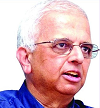
"Until they cut their links with their former insurgent military forces, their committment to peace and democracy will be questioned and others will not feel confident enough to make the necessary compromises on critical issues of constitution drafting and power sharing," US Ambassador to Nepal Scott H.
DeLisi said addressing a function at the Central Department of Political Science at Tribhuvan University on Thursday. DeLisi said the Maoists do not need a military force to pursue their political agenda and they cannot "credibly engage in a democratic political dialogue" until they continue to have one.
““Now is the time to close the Maoist combatants and move the country forward,” the US ambassador further said.
Sharing the US interests in Nepal with the professors and students of political science in Kirtipur, the US envoy also emphasized that all issues relating to the peace process should be resolved before UNMIN leaves Nepal after 58 days. He also encouraged the political parties to agree on modality of integration and rehabilitation of over 19,000 ex-Maoist fighters.

The US envoy also emphasized that it would be better if all the issues relating to the peace process are resolved before UNMIN leaves Nepal. "The peace process will not collapse after UNMIN leaves as the international community will continue to offer its support. But now is the opportunity to resolve these issues once and for all while UNMIN is still here," he said.
The US call for parties to focus with urgency on the peace process have come at a time when parties’ commitment to complete the peace process by January 15, 2011 is under question as parties continue to struggle amidst a deep political stalemate to find out an agreed modality on concluding the peace process.
Saying that the Maoists may be finally getting more serious about the peace process, he urged other parties to respond with a similar spirit.
Reading out eight-page remarks that outlined his country´s interests in Nepal, the envoy also expressed US willingness to help fund the secretariat´s work, set up feild offices and support vocational training for ex-Maoist combatants to be rehabilitated in society, if parties want so.
The ambassador opined that lack of trust among parties has complicated their efforts to reach agreement on political issues.
DeLisi said the US wants to see the new constitution to uphold democratic values, including respect for independence of the judiciary, separation of powers, press freedom, regular and open democratic elections. He was, however, straightforward in saying that the US does not have any prescription for "the right constitution" for Nepal.
According to DeLisi, peace process, democratic constitution, security sector reform, enhancing the rule of law and human rights, development agenda and economic growth, among others are main areas of US interests in Nepal.
Related story
Comedian Louis C.K. admits sexual misconduct as Hollywood cuts...