Fortunately, there are some positive indications that people may not have to grapple with extended power cuts this winter. “Though it is too early to predict, we have reasons to believe that the situation may not be as worse,” Sher Singh Bhat, system operation director at the NEA, told myrepublica.com.
The last year´s total demand during peak (evening) hours was slightly over 800 Megawatt. The load dispatch center of the NEA, the only public utility in the sector, estimates that electricity demand in the country increases by 10 percent every year. Bhat elucidated some positive developments that could be helpful in fulfilling the demand.
Firstly, this year the 70-MW hydro-electric project has come into operation, which is generating electricity in its full capacity so far. But, as it is a run-of-river model project, the plant will not produce more than 35-MW in the driest season.
Secondly, the NEA is currently importing 50-MW electricity from India through Duhabi-Kataiya cross border transmission line, which had collapsed following Koshi floods last August.
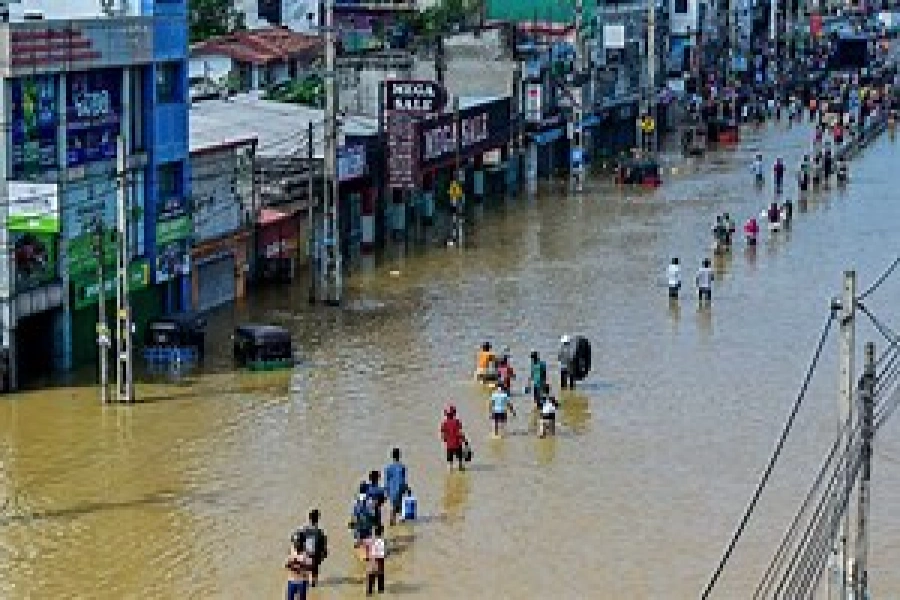
The situation last year turned worse after Koshi River toppled electricity towers along the Duhabi-Kataiya cross border transmission line at West Kushaha in Sunsari. With the collapse of the transmission line, the electricity supply from India got disrupted. This compelled the NEA to run Kulekhani, the only storage-type hydroelectricity project, for additional hours from the monsoon itself.
Thirdly, the rise in water level in the Kulekhani reservoir has been satisfactory so far. Last year, water level in the reservoir was at a record low. "The water level rose to 1509 meter on Saturday, which was the highest recorded water level in Kulekhani reservoir last year," Bhat said, adding, "Moreover, we can still expect monsoon to continue for a few more months."
The water levels in Kulekhani rose up to 1530 meters in 2007 that was record high, according to Bhat. Kulekhani is the lifeline of the electricity supply system, which is only brought into operation during peak hours and in dry season when all other projects generate the lowest electricity.
Also, water levels have increased in all the rivers across the country. Its impact would last till the dry season, said Bhat. Water levels in the rivers will remain high even in dry season if there was good monsoon rains, he explained. Last year, water levels in the rivers had receded to the lowest.
Likewise, Bhat expects that the government´s campaign of replacing the traditional bulbs by compact fluorescent light (CFL) bulbs may help save some MWs of electricity in the coming months. The NEA officially launched the campaign last week coinciding its annual day.
The NEA, however, has failed to address the problem of power leakage, which poses a major challenge to the authority. There is at least 20 percent power leakage from its transmission lines.
thira@myrepublica.com
Related story
Alia Bhatt's picture doing aerial yoga will give you ultimate f...