– Lihaaf (The Quilt), Ismat Chughtai
ihaaf” (The Quilt), published in the 1940s, is probably Chughtai’s most celebrated and controversial story. This short story, written in the first person, is about a young teenage girl, hardly 14, who is sent to her aunt Begum Jan as her mother has to go to Delhi. There, at Begum Jan’s house, the little girl experiences sexuality for the first time.[break]
This story deals with a young girl who is exposed to the complex subject of lesbianism at her aunt’s house away from her mother. Begum Jan is married to a man who has relationships with younger men. This man provides Begum Jan with everything she could ever desire for but fails to maintain a good physical and emotional relationship with her. In turn, Begum Jan starts to develop hush-hush relationships with young maids working in their house to pacify her physical and emotional needs.
Bijay Gajmer
When the narrator comes to stay with her aunt, she thinks Begum Jan to be a very nice person. But slowly she gets scared as well as inquisitive. This story is about the dichotomy she has to face there, she is intrigued by the grounds of sexuality but she is scared to walk on it. She is inquisitive about what it is to be young and beautiful, and identify oneself in the world.
In the above quote, the girl expresses her insecurity at her aunt’s place. She wonders why her mother doesn’t come to take her away. She knows that Begum Jan is fond of her but she is scared by her presence. The paradox here is that her mother sent her to Begum Jan’s place for security from younger men at her home, but she is exposed to terrifying truths there which makes her more insecure.
I have always been interested in stories that deal with women’s issues. This particular story is also like that. In this story, Begum Jan’s husband fails to keep her happy which further takes her to terrible lengths to pacify her soul.
Even today, homosexuality, especially lesbianism, is frowned upon in most societies. These women have to go through a lot to live. There is always this fear of humiliation and prosecution from the society. And what’s more? Women in our society have nowhere to go once their families disown them. “Lihaaf” explores many grounds of feminism and women’s issues which inspire me. The particular quote above is special because it summarizes all such grounds in the insecurity felt by the little girl who also is curious to walk on them.
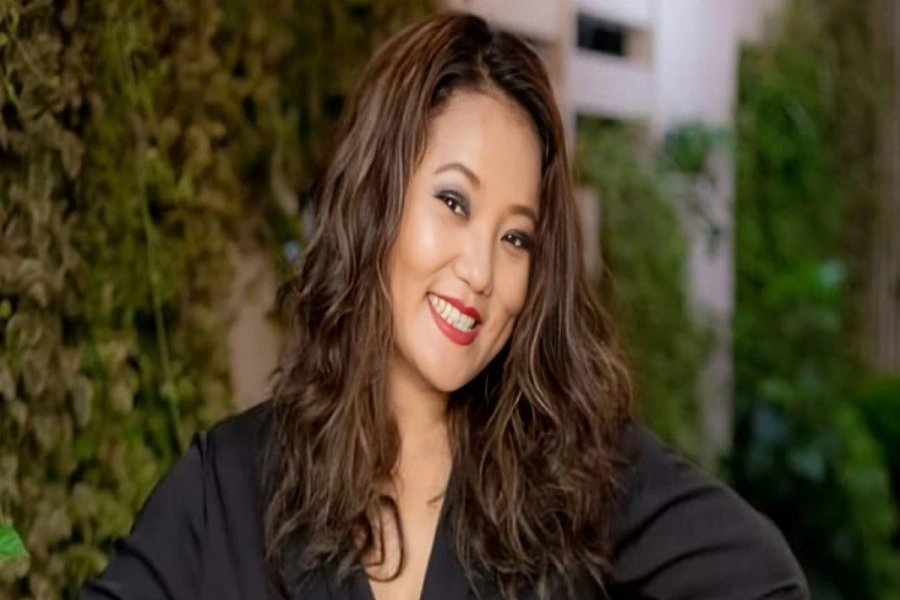
ABOUT DHUNGEL
Dhungel is Professor of English at the Central Department of English at Tribhuvan University since 1996. She completed her PhD in 2008. Her thesis had been on silence but now she is more interested in women’s issues. She loves reading books, stories and writings concerning women’s experiences and women’s rights, especially by women writers. Her area of expertise is writing and composition on women issues.
She believes that women in our side of the world are very resilient, perseverant and dynamic. She particularly relates to the views of Malala Yousafzai and believes that education for women should be mandatory as education can literate women and empower them.
“Though most talks of feminism come from the western side, to understand feminism better, one should explore the eastern world and culture, as our religious texts show that feminism was practiced here since a long time. Only later did patriarchy take over our society and women were overshadowed” says Dhungel. She also adds that our culture always gave space for women to stand up and make their presence count. It’s the patriarchy that is to be blamed for the condition of women today in this part of the globe.
DHUNGEL’S five picks
Jeevan Kada ki Phool by Jhamak Ghimire
The writer has broken down boundaries and has proved that she is an intellectual and creative despite her physical inabilities. In this book, she has written her own life struggles and experiences she has had to face for being doubly marginalized: one as a woman, the other as being physically challenged. She talks about how life in fact is a balance of both flowers and thorns; it had been thorns when her family despised her and treated her like an animal, and it had been flowers when her sister helped her fight her inabilities and encouraged her to become ‘the’ Jhamak Ghimire as she is today.
In Search of Sita: Revisiting the Mythology, Editedby Malashri Lal and Namita Gokhale
This book is basically about the analyses of Sita, a symbol of chastity as presented in our Hindu myth. When Sita agrees to do the Agneepariksha, Agni, the god of fire, refuses to touch her. This book shows how feminism was practiced a long time ago in this eastern side of the world. Women know who they are; it’s the men who are unsure. This book also talks about our culture giving women space but the society distorting these notions and confining women. Along with Sita, this book also talks about Draupadi and Kunti and their roles in our culture.
Phoolko Aankhama by Ani Choying Drolma
This is yet another inspirational struggle story on my list. This bestselling autobiography of Ani Choying Drolma tells her story of how she became a Buddhist nun. Initially, she didn’t want to become one but her family and society forced her into becoming one. This book is basically about the struggles she faced all that way to what she has become today. Ani didn’t have a happy childhood. But she persevered and struggled and came to the position she is at today.
Galpa: Short Stories by Women from Bangladesh, Edited by Firdous Azim, Niaz Zaman
This is yet another collection of short stories on women, this time from Bangladesh. There is one particular story called “Arshinagar” by Jharna Raman which has touched me. It is about a woman who slips between the roles of a wife and a mother in a family. Her husband’s sexual advances do not interest her; she bears the role like a mere duty like brushing one’s teeth or using the bathroom. The only thing she’s concerned about is her child. As a whole, the collection is about women’s experiences in patriarchal Bangladesh.
Women Writing in India Volume II: The Twentieth Century Edited by Susie J. Tharu and Ke Lalita
These groundbreaking collections offer 200 texts from 11 languages, along with a new reading of cultural history that draws on contemporary scholarship on women and on India. This volume contains stories such as “Lihaaf” and “Neech” (Lowborn). “Neech” is a story by Razia Sajjad Zaheer about a woman called Shyamali belonging to the so called low caste. She works for rough landlords who look at her with voyeuristic gaze and exploit her. Unable to bear it, she ultimately leaves the household and starts her own teashop and empowers herself. This collection contains many such stories about women’s struggles and power which makes it a wonderful page turner.
Related story
ICC T20 World Cup: England set Nepal a challenging 185-run targ...