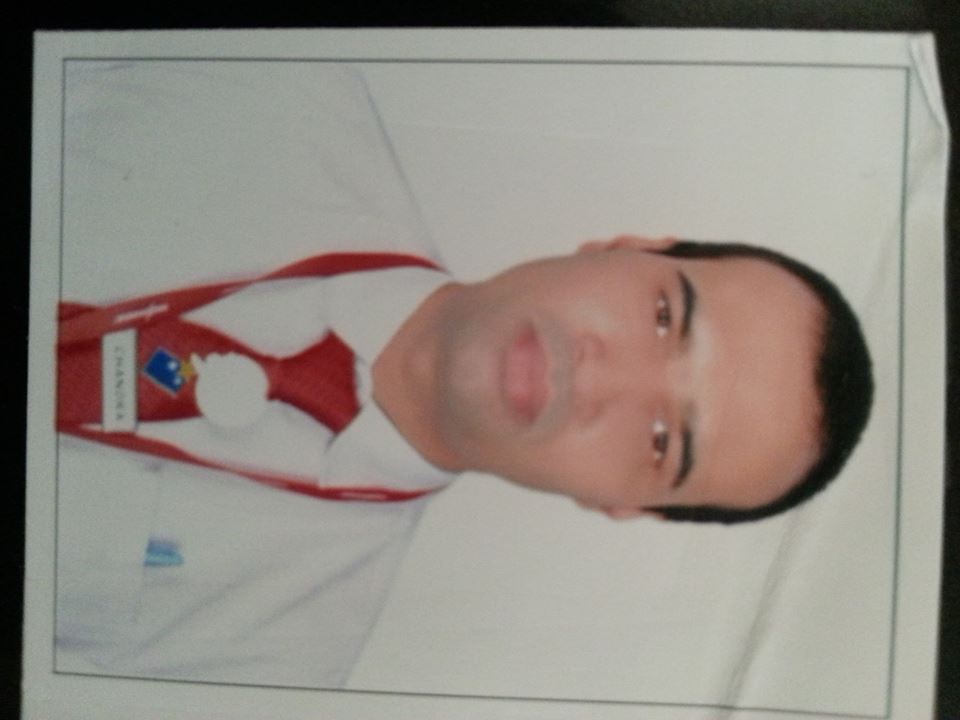
Mukarung has been writing for the past 15 years and has been penning poems since his childhood days. He has four poem anthologies and a previous novel, “Hetchakuppa,” to his credits besides the recent and critically acclaimed Damini Bheer that brought him into the latest limelight.
The Week’s Roshani Dhamala & Cilla Khatry met up with the recently honored Mukarung to talk about his writing career. [break]
Excerpts from the interview:
Could you tell us about your writing journey?
I’ve been writing poems since I was 10 years old. But I was very shy to share it with anyone. When I was studying in the eighth standard, I participated in a poetry contest organized at my school and won the first prize. Then, in the ninth standard, I participated in a district-level contest and stood first again which highly motivated me to write. The turning point came, however, after I moved to Kathmandu. I recited one of my poems at an event and a well known poet commented on how someone from my community had written such a good poem. Though he must’ve meant it as a compliment, I was deeply affected by it and decided to pursue writing to prove that people from our community too can write, and for that matter, write well.
What do you prefer to write – poetry or prose?
I just love to write. I write essays, poems and stories. I have even penned a few songs. I think like someone who loves to write and makes a living out of the craft, and it shouldn’t matter what you’re writing as long as you’re writing. I’ve dedicated a decade completely to writing and I’ve written essays, poems and stories during this period and I’ve liked writing them all. So it’s very difficult for me to choose, and in fact, I don’t want to or see the need to choose either. However, I believe poetry can be very powerful. My love for poetry is evident in “Damini Bheer,” as its language form is almost poetic.
Your works have elicited controversies for carrying a specific political agenda. Why is there always a strong political ideology in your fiction?
During my “Hetchakuppa” period, there was a lot of controversy regarding the political stance of the characters in it but I felt it was important to assert their beliefs to shed new light on the People’s War that took place in our country. A lot of negative things are said about the war, but if you delve deeper, you can see that it brought about a lot of positive changes as well. I believe our lives center around politics and we can never be free of it. Every person carries his own beliefs and ideologies. To separate a person from his political beliefs would be to tell an incomplete story. I’ve always tried to do justice to my characters by keeping them true to their convictions.
Your wife has also written a book – “Lekhakko Swasni” (A Writer’s Wife) – in which she has fictionalized you. What do you have to say about that?
I’ve always been known to fictionalize real characters in my books. In my wife’s book, she turned the tables on me when she fictionalized me. For a change, I was a character in somebody’s book. And it felt good. I got to understand how many of my characters must’ve felt likewise. I read the first draft of the book and gave her my feedback. Then I read it only after it was published. I liked the narration and the subject matter. The book is more about her and less about me, just as the title suggests, and I’m glad about that.
Where do you find the inspiration to write?
I’m not someone who can allocate a specific time to write and then start writing. I have to be inspired, I say, and that’s quite easy as I find inspiration in things people would consider mundane. Snippets of conversations, specific scenes, and random people are some of the ingredients I draw inspiration from. Sometimes I hop on a bus or step inside a roadside eatery and observe the surroundings. Just looking out of the bus window and seeing things pass by you or hearing people talk to one another can give you so many ideas. You have to be a listener and an observer to be able to draw inspirations from everyday happenings.
KESHAB THOKER
What value does the Madan Puraskar hold for you?
I never wrote with the intention of winning any awards or being praised. I write because that’s the only thing I know and I find stories that I want to share everywhere I go. I didn’t even submit my novel to the award committee for its honorable members’ consideration. The publishers did it. That being said, the Madan Puraskar is an esteemed award and I’m very happy to have received it. I think it’s an honor not only for me but for everyone in the book and my community as well. Also, being acknowledged for your work motivates you to work harder and do better, and I can say that winning the award has inspired me to keep on writing and produce worthy works.
What advice do you have for emerging writers?
I tell everyone I meet who wants to write and asks me for advice that one shouldn’t be in a rush to get published. First, you have to have a story to tell. Then you have to spend a chunk of time researching the story before deciding if it’s worthy of being told. Inspiration is of paramount importance but I firmly believe that more than inspiration, you have to be ready to put in a lot of efforts. Hard work makes all the difference. It reflects on your writing. I also think it’s a good idea for writers to share notes and discuss their work in progress. The quality of work you produce will be exponentially better if you do it with the help of other writers. I advise writers to focus less on themselves and more on their continuing work.
About Mukarung’s novel – Damini Bheer
“Damini Bheer” is Mukarung’s second novel. The fictional narrative depicting the lifestyle of the marginalized community in Bhojpur (his native place) was awarded this past year’s Madan Puraskar. Mukarung actually started out writing the sequel to his first book “Hetchakuppa.” About 35,000 words already into the story, he stopped working on it and started another, which went to bag the prestigious Madan Puraskar.
“During the course of my research for the sequel to ‘Hetchakuppa,’ I reached Damini Bheer after which I started working on another novel altogether,” says Mukarung, adding that roads were being constructed in the area, and the thought of the changes the place would undergo after the roads were built sparked a theme which became the plot of the novel.
Mukarung spent three years on research for the book that took around six months to write. He spent time with the locals, many of whom went on to become characters in the novel.
“During the road construction, there were many groups formed at Damini Bheer (precipice). These groups had their own political ideologies and thus became rivals as time passed,” says Mukarang, explaining that he pursed only one group in order to keep the story from going off its kilt.
Damini Bheer, which Mukarung rewrote 23 times, was initially 100,000-words-long but the final version finishes off at 72,000 words, making it a rather concise reading for a novel.
On Mukarung’s bookshelf
Aaja Ramita Chha
by Indra Bahadur Rai
The novel is set in the Darjeeling of the 1950s when the awareness of the district’s majority Nepalis and their identity and language in India first started taking shape, a precursor to the present movement for a separate Gorkhaland. The book is largely about the Nepali-speaking community in Darjeeling and their struggles. I’m particularly attracted by the way the author creates his characters, less around their political footing, in spite of the steady political backdrop of the novel. The story’s main protagonist is intriguing, and it’s very easy for readers to get a glimpse of themselves in him.
Essay Collection
by Shanker Lamichhane
This essay collection is outstanding and I admire the collection for its contemporariness. Before this collection was published, I believe there was a specific way essays were written but this anthology has paved the path for a new way of writing. I give credit to the writer for showing readers and other writers alike that we don’t have to stick to the same old ways of writing and that there can be different approaches while penning essays.
Dhobighat Express
by Roshan Sherchan
This collection of essays is the best example of flawless writing. The writer has fictionalized facts and that, in my opinion, is what sets Roshan Sherchan apart from other writers. Among all essay collections, this one challenges your ability to think and comprehend things. “Dhobighat Express” is undoubtedly a product of an elevated intellectual understanding. It’s not an easy reading but I still highly recommend it.
Loo
by Nayan Raj Pandey
Nayan Raj Pandey is a prolific writer. “Ular” is also good but “Loo” is better in terms of content and narration. The novel depicts life at the borders, and the hardships faced by people protecting their country. The almost graphic narration of the ways our soldiers serve us never fails to enthrall me. A unique view of nationality from the perspective of soldiers guarding the borders is also explored in the book, and that makes it a gripping reading.
Kholako Geet
by Upendra Subba
Upendra Subba is my friend but I’m not being a partisan when I say I absolutely love his poems. His poems are simple yet powerful. This anthology of poems, in particular, is unique in its handling of metaphors and imageries. The poems pick up commonplace experiences and issues, father-son relationship, for example, and deal with them in ways that arrest readers. Everybody can understand his poems and that’s one reason why he’s one of my most favorite poets.
Related story
Chhakka Panja bags 10 D Cine Awards (with photos)