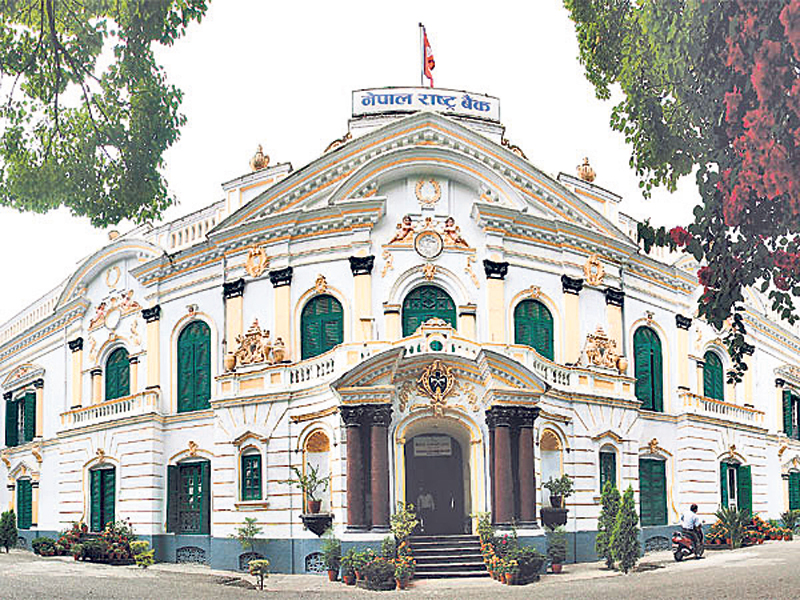
KATHMANDU, April 6: Nepal Rastra Bank (NRB) has overhauled its foreign exchange rules, making it easier for importers, IT firms, online earners, and foreign-affiliated colleges to access dollars—while specifically encouraging trade through the Chobhar Dry Port.
Amending the unified directive on foreign currency transactions for banks and financial institutions (BFIs), the NRB has reduced a number of steps required for BFIs to issue LCs. Under the revised provisions, importers must now follow a two-step online submission of related documents, down from three steps earlier. "This must be notified to the central bank via electronic means," reads the NRB's revised directive.
To promote the use of the Chobhar-based dry port, the NRB has permitted importers to switch customs points when importing goods. This means that goods for which an LC was issued for one customs point can now be imported using the dry port instead. In addition to LCs, the central bank has also allowed goods to be imported using draft- or TT-based payments, provided the import is routed through the Chobhar inland container depot in Kathmandu.
The NRB has also reduced the deposit amounts importers must submit when supplying goods from abroad. Under the new arrangement, industries are required to deposit only one percent of the import value, while commercial organizations must deposit three percent—applicable to imports processed through customs offices that have implemented an electronic payment system.
Foreign exchange reserves reach Rs 2.255 trillion
The NRB's circular also provides special incentives to the information technology sector. Industries exporting IT-related services are now allowed to make payments of up to US $100,000 annually for the purchase of software or other technology.
Similarly, Nepali citizens earning income online have been permitted to make payments of up to $25,000 annually for technology services purchased through banking instruments. The NRB has also stated that BFIs may send advance payments of up to $100,000 to aviation service providers when sending engines or airplane parts abroad for repair.
The foreign exchange usage limit for educational institutions affiliated with foreign universities has been significantly expanded. Previously capped at $25,000 per year, the foreign exchange facility for such institutions has been raised to $500,000 (or equivalent) annually for payment of affiliation and examination fees. To qualify, institutions must submit documents including a recommendation from the Ministry of Education and an agreement with the affiliated university.
At a time when the NRB has faced criticism for failing to utilize its excessive foreign currency reserves, the central bank has become more flexible in providing foreign exchange for various purposes. According to the NRB, the country's gross foreign exchange reserves increased by 27.5 percent annually to reach Rs 3.413 trillion as of mid-March 2026.