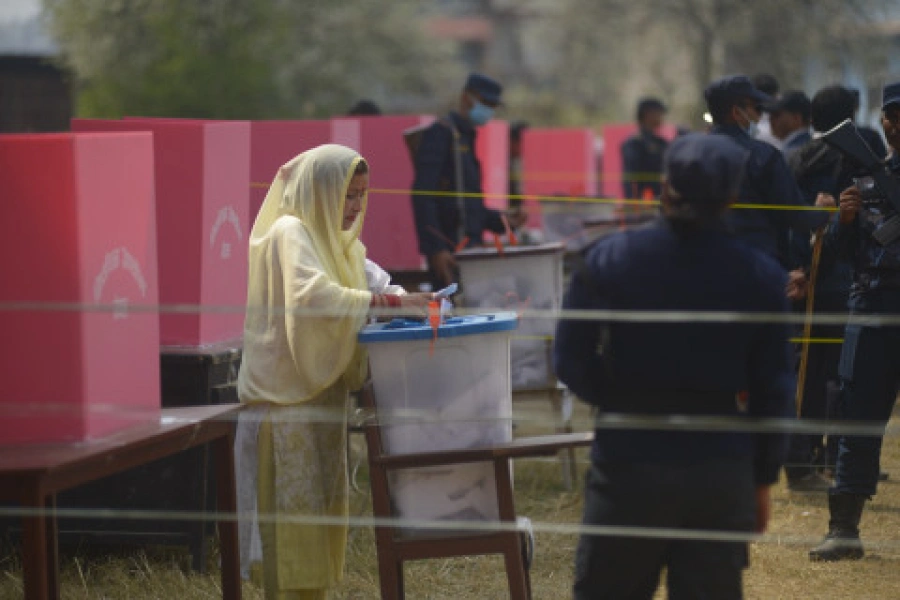
On September 8, Nepal’s youth forced a reckoning long in the making. A youth-led uprising, born of years of frustration with corruption, arrogance, and elite indifference, brought the political establishment to its knees in just 36 hours. The immediate spark was horrific: nineteen students, still in school uniforms, were gunned down by state forces and hundreds more were injured. The following day anarchists set fire to public offices, vandalized property, and looted businesses. By September 12, parliament was dissolved, and an interim government was sworn in, led by a former Chief Justice known for integrity and her anti-corruption stance.
The death toll has climbed to seventy-four. But out of sorrow has risen a new resolve—a call that Nepal belongs to its people. The corrupt parties’ belief that they could plunder the nation forever has finally crumbled.
The youth were not seeking power but dignity, not fighting for parties or ideology but demanding answers Nepal’s rulers have ignored for far too long: Why does corruption flourish while public services collapse? Where is the transparency democracy promised? Do citizens have any right in this country?
Historically, Nepal’s democratic journey has been marked by repeated hard-won struggles. In 1950, a revolt ended a century of Rana autocracy and opened the door to democracy—only for it to be shut a decade later by absolute monarchy. My generation grew up under that regime, where even demands for the most basic rights were met with force. In 1990, a people’s movement restored multiparty democracy, but corruption and patronage soon hollowed it out. In 2008, another uprising abolished the monarchy, and in 2015 Nepal declared itself a federal democratic republic. But the republic has delivered neither the substance of democracy nor its promise.
History explains it, but the crushing burdens of the present left Nepal’s youth with no choice.
Juju’s never-ending journey thriving to work for the society

First, take education, which is a dead end. Unless parents can afford costly private schools, children attend public schools where there is no real learning. More than half fail the national Grade 10 exam; of those who continue, one-third fail Grade 12. And UNICEF finds that over half of children aged 9–14 lack even basic literacy and numeracy expected in Grades 2-3. These failures slam every door—no higher education, no jobs, no future in their own country. For countless families, exile becomes the only option.
This brings us to the bitter truth of a jobless economy. Nearly six million Nepalis—more than half of the labour force—have taken foreign work permits. Each year, for every 100 youth who reach working age, 150 leave for low-wage foreign jobs.Still, the official youth unemployment rate (certainly an underestimate) stands at 23 percent. The few jobs that exist are monopolized by party syndicates.
For those who cannot escape the country, even basic healthcare is out of reach. Political leaders bypass domestic hospitals for treatment abroad at public expense. The wealthy and middle class turn to private clinics, while ordinary citizens are left to languish in crumbling, understaffed public facilities—despite Nepal being one of the most heavily taxed countries in the region.
On top of these eroded services and heavy taxation, citizens are forced to pay bribes for even the most basic government services. Corruption has seeped into every corner of daily life, the final assault that Gen Z refused to accept.
Compounding these burdens is a distorted economy. Remittances—one-third of GDP—sustain households but also drive up the cost of food, schools, and housing. Soaring costs have eroded living standards. Industries, strangled by inflated costs, have withered, taking jobs with them. What remittances sustain in households, they destroy in the economy.
Then comes another failure: Nepal sits between China and India, two nations that together produce nearly a quarter of global output. No other country has such vast markets at its doorstep, yet Nepal has no vision, no policy, no strategy to benefit. A country of $43 billion GDP, Nepal exports only $3 billion against imports of $14 billion. Instead of trading with its neighbors, Nepal trades its people. Remittances paper over the widening trade gap, masking weakness rather than curing it.
Nothing shows Nepal’s squandered chances more starkly than the gap with India and China. In the early 1980s, Nepal’s income was comparable to theirs; today, at less than US$1,500 per person per year—2.7 per cent of Canada’s—a Nepali earns half as much as an Indian and one-fifth as much as a Chinese. Policy—not destiny—made the difference. China and India built ecosystems; Nepal built patronage networks. Where they trained talent, Nepal drained it. Where they exported products, Nepal exported people and their dreams. While their leaders implemented bold programs, Nepal’s leaders sabotaged their nation.
The difference lay in mindset. China and India set out to build; Nepal’s elites chose decay.
These are only the visible burdens. Countless others made life suffocating, finally pushing Nepal’s youth to rise, unwilling to accept a future of betrayal and wasted potential.
For generations Nepalis were poor, but there was hope. Over time, that hope turned to despair—and on September 8, even peace-loving and forgiving Nepalis had no choice but to rise.
Their demand is simple: a system that serves ordinary citizens, not political cartels and patronage networks. They want schools that teach, hospitals that heal, jobs that reward merit, and leaders who answer to the people.
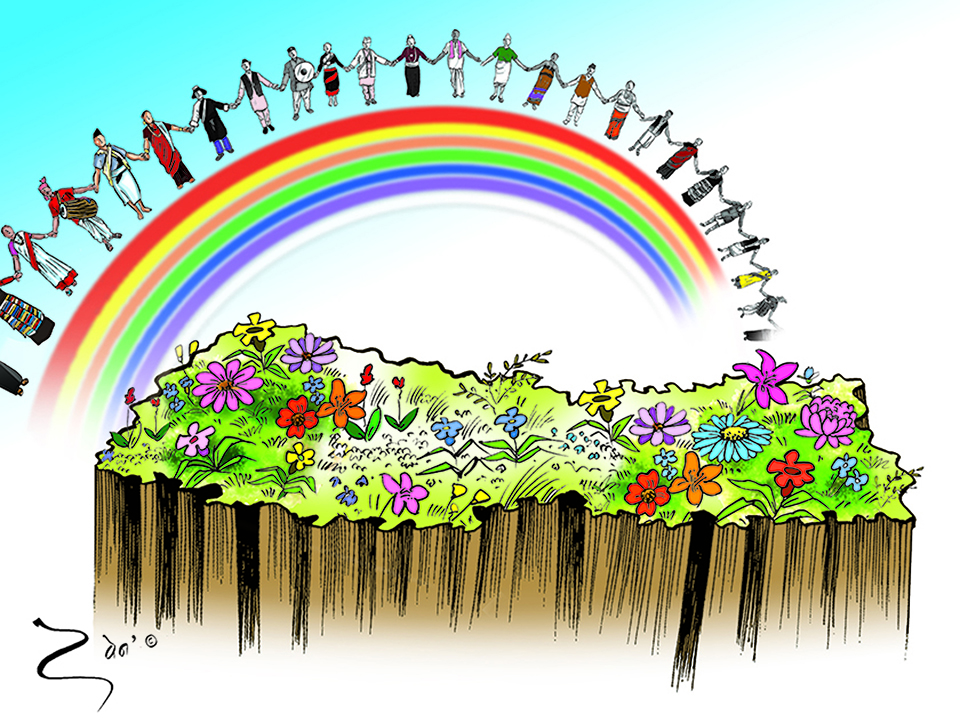
The Gen-Z uprising carries a clear message: Nepalis are done with empty slogans. They want a republic worthy of the name—rooted in dignity, fairness, and opportunity. This movement has given the country a new heartbeat. For a nation long gripped by despair, where few dared believe change was possible, this uprising is a reminder that hope for democracy was never dead. It was waiting for the youth to awaken it—and to reset the republic on a better road.
The author holds a PhD in Economics and writes on economic issues in Nepal and Canada.