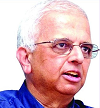
Baidya pitched for a people’s republic while Dahal in his political paper at the gathering pleaded for the institutionalization of the federal democratic republic.
Following frantic parleys, the two factions buried their differences, temporarily, and agreed to settle for a People’s Federal Democratic National Republic (PFDNR).

Although Dahal and Baidya agreed on a joint PFDNR document, Maoist leaders representing the two separate factions define the consensual document differently. Party leaders close to Dahal claim that the document has permanently buried the agenda for a people’s republic. But those representing the hardline faction argue that the document has correctly addressed the spirit of the people’s republic.
“The joint document includes the essence of a people’s republic,” says Baidya.
Another party leader Khim Lal Devkota, however, claims that the Maoist party will never return to people’s republic.
Great Leadership: A Road Less Traveled

Criticizing the hardliners, who called for the immediate launch of an insurrection to establish a people’s republic, Devkota says, “Those leaders who are advocating people’s republic have failed to realize the spirit of the peace process.”
He says the hardliners’ demand for making people’s republic the party’s immediate course of action is against the spirit of the Maoists’ historic meeting at Chunbang in 2005. The Maoist central committee meeting, held in Chunbang, Rolpa had decided to accept federal democratic republic as the party’s ideological course.
With the two factions’ ideological differences written large all over the party, Maoist internal power dynamics are likely to seriously affect national politics in future. The hardliners’ push for people’s republic has already raised suspicion among other parties over the Maoist commitment to multi-party democracy and human rights.
“Obviously, Prachanda for the first time came under heavy pressure from the hardline faction,” says a Maoist Central Committee (CC) leader. The hardliners’ influence can also be observed in the fact that Dahal didn’t dare to go for voting when Baidya registered his dissenting document at the party´s Central Committee meeting in October. Sensing the strength of the Baidya faction, Dahal rather chose to let both documents go to the party’s state committees for a broader discussion prior to the national cadres’ assembly.
Party insiders say 12 CC members including Baidya, Netra Bahadur Chand, Ram Karki, Dharmendra Bastola, Hit Man Shakya, Dev Prasad Gurung, CP Gajurel, Haribhakta Kandel, Indra Kumar Sigdel and Narayan Sharma stood in favor of "people’s republic" during the Central Committee meeting while 18 members including Barsa Man Pun, Jayapuri Gharti, Dr Baburam Bhattarai, Ram Bahadur Thapa, Janardan Sharma, Nanda Kishor Pun, Hisila Yami, Dinanath Sharma and Post Bahadur Bogati supported Dahal’s document.
Dahal’s self-confidence was dented especially by five neutral members including Devendra Poudel, Pampha Bhusal, Krishna Bahadur Mahara, Janardan Sharma and Matrika Yadav.
“Prachandaji (Puspa Kamal Dahal) couldn’t push his document strongly enough as he thought the neutral leaders may throw their weight behind Baidya,” said a Maoist CCleader.
The neck to neck factionalism was also noticed during the Maoist national cadres’ assembly. Although the leaders of 13 groups out of 21 expressed their support for Dahal, members from within the groups including six group leaders backed Baidya’s document during the assembly. Party sources said many members including Dinesh Sharma in the group led by Khim Lal Devkota presented dissenting views against the leader.
“Such a position was noticed in many other groups also,” says the central leader.
With a significant number of leaders and cadres in Baidya’s fold, Maoist chairman Dahal’s commitment to institutionalizing a federal democratic republic is fraught with challenges.
“I haven’t yet dropped my ´people’s republic´ agenda and I will raise this issue during the party’s national convention in future,” says Maoist senior leader Baidya.
Left political analyst Shyam Shrestha, however, claims that the hardline within the CPN-Maoist will not influence the party’s future policies and programs. “Although the hardliners will keep up their pressure against the leadership shedding their revolutionary character, I don’t think it will affect the party’s future policies,” says Shrestha.
He also argues that the newly cobbled joint document has provided psychological solace to the hardliners.
“Hardliners have serious concern over the revisionist attitude of the party leadership and Prachanda is quite clever in settling such issues,” says Shrestha.
Devkota also admits that the revolutionary attitude advocated by the hardliners has quickly attracted the cadres nationwide. “But I don’t think the party can challenge its own past commitment to the peace process and adopt ´people’s republic´ as its ideological course,” says Devkota.
However, it’s not easy to predict right away how the Maoist national convention will outline the party’s ideological course, given the considerable strength of the hardliners within it.